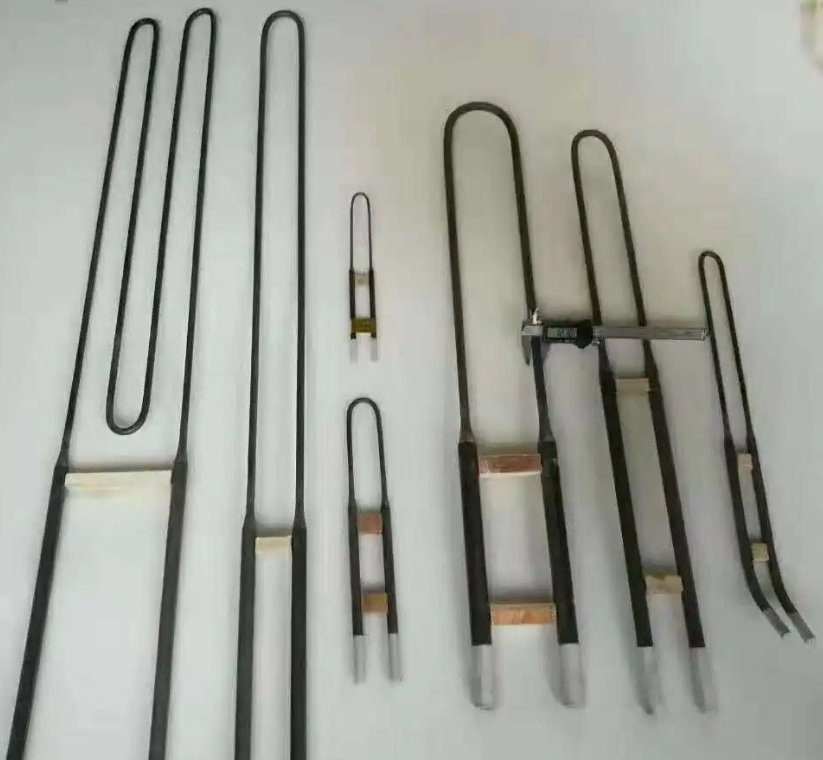
Mosi2 furnace heating element standards and quality checks explained: learn how resistance matching, oxidation stability, and dimensional accuracy improve alloy furnace safety, life, and performance
Choosing a mosi2 furnace heating element is rarely just a matter of reaching a target temperature. In alloy processing, the real question is whether the element can hold stable heat, resist oxidation, fit the furnace design, and keep performing through repeated thermal cycles.
That is why standards and quality checks matter so much. A weak point in material consistency or dimensional control can lead to uneven heating, shortened service life, unexpected shutdowns, or safety concerns inside high-temperature equipment.
For plants handling sintering, heat treatment, laboratory firing, or alloy-related thermal processes, the evaluation of a mosi2 furnace heating element should connect compliance, manufacturing quality, and actual operating conditions rather than nameplate data alone.
Why the standard baseline matters
A MoSi2 element works in an aggressive environment. High temperatures, oxidizing atmospheres, loading cycles, and installation stress all influence its performance.
Standards create a common language for judging whether the product is suitable for industrial furnace service. They also reduce uncertainty when comparing different batches or suppliers.
In practice, the most useful checks are not limited to one certificate. They combine material verification, electrical behavior, dimensional tolerance, mechanical integrity, and traceable production records.
This is especially relevant in the alloy sector, where furnace temperature stability directly affects structure, hardness, surface condition, and process repeatability.
What a MoSi2 heating element must prove
A mosi2 furnace heating element is expected to deliver more than high-temperature capability. It must maintain predictable electrical resistance, support uniform heat generation, and develop a protective surface layer during service.
The protective silica film is one of the core performance features. When the element composition and production process are controlled well, this layer helps defend against oxidation at elevated temperatures.
If that protective behavior is unstable, the element may age faster or fail earlier. For safety review, that risk matters as much as peak temperature rating.
Key evaluation dimensions
Chemical composition consistency of molybdenum disilicide material
Density and microstructure uniformity after forming and sintering
Resistance tolerance and current-carrying stability
Dimensional accuracy at cold end, hot zone, and terminal sections
Surface condition, crack control, and joining integrity
Oxidation resistance under target furnace atmosphere
Expected service life under cycling conditions
Standards usually reviewed during supplier assessment
There is not always one single global standard covering every operating detail of a mosi2 furnace heating element. Assessment usually combines product standards, quality management systems, and internal furnace specifications.
The most common reference points include ISO-based manufacturing control, inspection procedures, and test documentation that can be traced to each production batch.
Check area Why it matters Typical evidence
Quality management Confirms process discipline and record control ISO 9001 system, batch reports, inspection flow
Material verification Reduces variation in oxidation and electrical behavior Composition data, density results, microstructure checks
Dimensional inspection Protects fit-up and heating zone accuracy Tolerance sheets, calibrated measurement records
Electrical testing Supports balanced loading and stable operation Resistance values, matching data, lot comparison
Safety and durability Helps prevent premature breakage in service Thermal cycle results, visual inspection, failure analysis
For imported or multi-region projects, document consistency matters almost as much as the test itself. The records should be clear enough to support installation, audit, and replacement planning.
Quality checks that deserve closer attention
Several inspection items are often treated as routine, but they have a direct effect on failure risk. These are the checks that usually deserve a second look.
Material consistency
The element body should show consistent composition and density from batch to batch. Variation here can change oxidation behavior, resistance drift, and hot-zone performance.
Resistance matching
Resistance values should stay within a controlled range. Poor matching can create temperature imbalance across zones, especially in multi-element furnace layouts.
Surface and structural integrity
Hairline cracks, weak transitions, and surface defects may not look severe during incoming inspection. Under repeated heating, they can become the start point of breakage.
Dimensional precision
Length, diameter, terminal geometry, and hot-zone dimensions must match the furnace design. Even small errors can affect contact quality, installation stress, and temperature distribution.
Oxidation and service-life behavior
A mosi2 furnace heating element should be assessed for long-term behavior, not only initial performance. Oxidation stability, thermal shock response, and aging trend are all part of the real quality picture.
How these checks affect alloy furnace operation
In alloy production and heat treatment, heating element quality influences more than maintenance cost. It also affects metallurgical consistency.
An unstable mosi2 furnace heating element can create cold spots or local overheating. That may alter grain behavior, oxidation on workpiece surfaces, or final mechanical properties.
Where furnaces run long cycles, the value of a reliable element is even higher. Stable resistance and low failure probability support predictable schedules and safer shutdown planning.
This is one reason many buyers compare MoSi2 elements with other heating technologies, including GD Type Silicon carbide heating element, depending on temperature range, atmosphere, and process design.
What a dependable supplier should be able to show
A credible supplier should provide more than a datasheet. The stronger signal is a repeatable manufacturing system supported by traceable inspections and export-level quality discipline.
Liao yang jia xin carbide co ltd has been focused on SiC heating elements, MoSi2 heating elements, protective pipes, and graphite products since 2007, with long production experience and broad overseas delivery.
That background matters because international use usually pushes suppliers toward tighter documentation, steadier batch control, and better understanding of varied furnace applications.
Clear production lot identification
Routine dimensional and resistance inspection
Defined acceptance criteria for cracks and surface defects
Practical guidance for installation and start-up
Experience with export markets and application differences
A practical review path before approval
A useful review process starts with the furnace itself. Temperature range, atmosphere, operating cycle, mounting method, and power control mode should be defined before judging the element.
Then compare the supplied mosi2 furnace heating element against both product data and inspection evidence. A good match on paper is not enough if tolerance control or batch traceability is weak.
For replacement planning, it also helps to check whether the supplier can maintain consistency across future orders. That point is often overlooked until mixed batches create operating imbalance.
If the furnace portfolio includes lower or different temperature duties, reviewing alternatives such as GD Type Silicon carbide heating element may also clarify where each heating element type fits best.
Where to focus next
The most effective decision is usually built on a short checklist: confirm material consistency, verify resistance matching, review dimensional tolerances, ask for oxidation and cycle data, and connect all of that to the real furnace load.
For any mosi2 furnace heating element, the goal is not simply passing inspection at delivery. The better goal is dependable behavior across the full service period.
That makes the next step straightforward: align internal acceptance criteria with furnace conditions, compare supplier evidence carefully, and treat service-life stability as a core quality requirement rather than an afterthought.