
MoSi2 furnace heating element parameters explained: temperature, resistance, surface load, and atmosphere compatibility for alloy furnaces. Learn how to improve stability and service life.
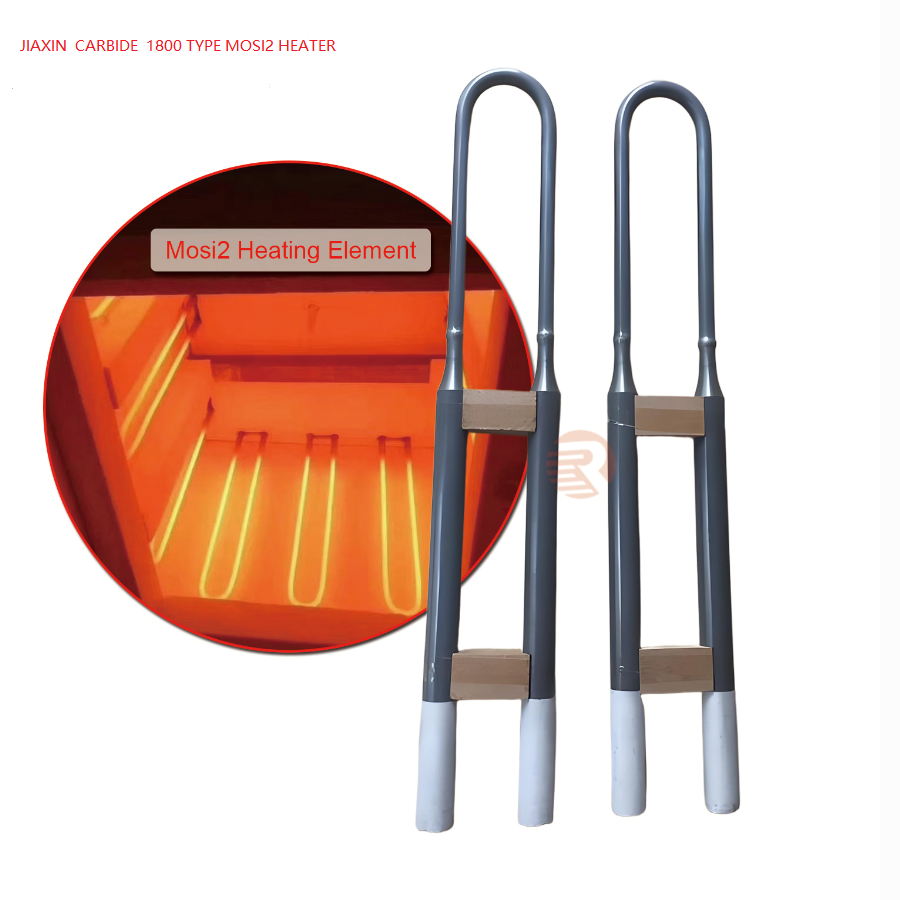
Understanding the key technical parameters of a mosi2 furnace heating element matters because furnace stability is never controlled by temperature alone. In alloy processing, daily results depend on how the element behaves under load, how fast it ages, and how well it matches the furnace structure.
A mosi2 furnace heating element is widely used where clean high-temperature heating is required. Its value becomes clear in sintering, heat treatment, powder metallurgy, and laboratory furnaces, where repeatable thermal performance affects product quality, operating safety, and maintenance cost.
For operations linked to the alloy industry, parameter knowledge is practical rather than theoretical. It helps prevent element breakage, uneven heating, unnecessary shutdowns, and poor temperature control. It also improves communication when comparing furnace parts across suppliers and production sites.
Why MoSi2 elements remain important in alloy furnaces
MoSi2 heating technology is trusted for one main reason: it can work at very high temperatures while forming a protective silica layer on the surface. That oxide film slows further oxidation and supports long-term service in many oxidizing atmospheres.
This makes the mosi2 furnace heating element suitable for alloy-related thermal cycles that demand cleanliness and strong radiant heating. Compared with lower-temperature element materials, it supports a wider process window and more stable operation at elevated temperatures.
Global demand also favors suppliers with production depth and field experience. Liao yang jia xin carbide co ltd has focused on SiC heating elements, MoSi2 heating elements, silicon carbide protective pipes, and graphite products since 2007, with products supplied across Europe, Asia, and North America.
The parameters that define real performance
When reviewing a mosi2 furnace heating element, several specifications deserve close attention. They are connected, so reading one value without the others often leads to wrong assumptions.
Maximum operating temperature
This is usually the first number checked, but it should not be treated as the normal working temperature. The practical setpoint must consider furnace design, atmosphere, element spacing, and cycle frequency.
In alloy heat treatment, running too close to the limit for long periods shortens service life. A reasonable margin often gives better long-term output than chasing the highest possible temperature.
- Electrical resistance and resistance tolerance
Resistance determines how the element converts electrical power into heat. Matching resistance values across a set is essential for uniform power distribution, especially in multi-zone furnaces.
A stable resistance tolerance also helps with replacement planning. If one new element differs too much from the installed group, current imbalance can appear and local overheating may follow.
- Hot zone and cold end dimensions
The hot zone produces the effective heating. The cold ends pass through insulation and connect to the power supply. Their length and diameter affect heat distribution, installation safety, and terminal temperature.
Incorrect cold end design can create heat leakage, weak terminal contact, or stress around the furnace wall. In practice, geometry matters as much as raw material grade.
- Surface load
Surface load is the power carried per unit surface area. It strongly affects element temperature, oxidation rate, and expected lifetime. High surface load can increase heating speed, but it also increases thermal stress.
For alloy furnaces with frequent cycling, a balanced surface load is often more valuable than maximum heating speed. It usually leads to steadier operation and fewer sudden failures.
- Atmosphere compatibility is not a secondary issue
A mosi2 furnace heating element performs best in oxidizing atmospheres because the silica film can form and renew itself. In reducing atmospheres, hydrogen-rich environments, or vacuum conditions, that protection may weaken.
This does not automatically rule out use in special atmospheres, but it changes the risk profile. The actual process gas, dew point, and contamination level need to be reviewed before choosing the element type.
Atmosphere compatibility also affects nearby components. In some furnace structures, a silicon carbide protection tube may be considered where thermal shielding or component isolation is part of the overall design strategy.
- Mechanical limits often decide service life
MoSi2 elements are strong at temperature but still brittle in handling. Damage often starts during transport, installation, or maintenance rather than during normal heating.
Mechanical stress can come from misaligned holders, tight clamping, poor wall openings, or thermal expansion mismatch. Even a small installation error may create hidden stress points that later become cracks.
This is especially relevant in alloy furnaces that see rapid heating and cooling. Repeated thermal shock increases the importance of proper support spacing and free expansion allowance.
Common installation checks
- Confirm that element spacing supports even radiation across the workload.
- Keep terminal connections clean and mechanically stable.
- Allow enough clearance for thermal expansion through the furnace wall.
- Avoid impact loading during assembly or replacement.
- Check whether insulation debris may contact the hot zone.
How to read key parameters together
Single values rarely tell the full story. A good evaluation looks at temperature, resistance, dimensions, atmosphere, and loading conditions as one operating system.
| Parameter | What it influences | What to watch |
| Operating temperature | Heating capacity and aging rate | Do not treat peak rating as routine setpoint |
| Resistance value | Power balance and control stability | Match replacement elements carefully |
| Hot zone size | Heating uniformity | Fit the chamber and load pattern |
| Surface load | Service life and response speed | Avoid pushing load too high for cycling furnaces |
| Atmosphere compatibility | Oxidation behavior and stability | Review gas composition and contamination risks |
This combined reading is where many operational improvements begin. It turns specification sheets into decisions that actually support furnace uptime.
- Typical situations in alloy processing
Different alloy processes stress a mosi2 furnace heating element in different ways. The same model may perform well in one furnace and poorly in another because the thermal profile changes.
For sintering, stable radiant heat and repeatable high-temperature soaking are often the priority. For heat treatment, cycle frequency and ramp control may matter more. In laboratory and pilot lines, fast response and dimensional compatibility can become the leading concerns.
Where contamination control is critical, component selection around the element also deserves attention. In some layouts, pairing the heating system with a properly chosen silicon carbide protection tube can support durability in exposed zones.
What usually causes avoidable problems
Most failures are not caused by one dramatic event. They develop from small mismatches that stay unnoticed during setup and early operation.
- Running the furnace above a sensible working margin for long periods.
- Mixing old and new elements without checking resistance grouping.
- Ignoring atmosphere changes after process adjustments.
- Using terminal connections that loosen during thermal cycling.
- Selecting dimensions based only on chamber size, not heat pattern.
These issues may look minor at first, but they often explain drifting temperature uniformity and shortened element life.
A practical way to move from data to decision
When comparing a mosi2 furnace heating element for replacement or a new furnace project, start with the real process window. Check normal operating temperature, peak temperature, atmosphere, cycle pattern, and expected uniformity.
Then review electrical matching, element geometry, and installation constraints together. This avoids buying a technically correct part that still performs poorly in the chamber.
For alloy production, the useful next step is to create a simple parameter checklist for each furnace line. Once the same values are reviewed every time, it becomes easier to compare options, reduce unexpected failures, and judge whether the current heating setup is still the right fit.