Introduction: Why SiC Heating Elements Are Becoming Essential in Semiconductor Manufacturing
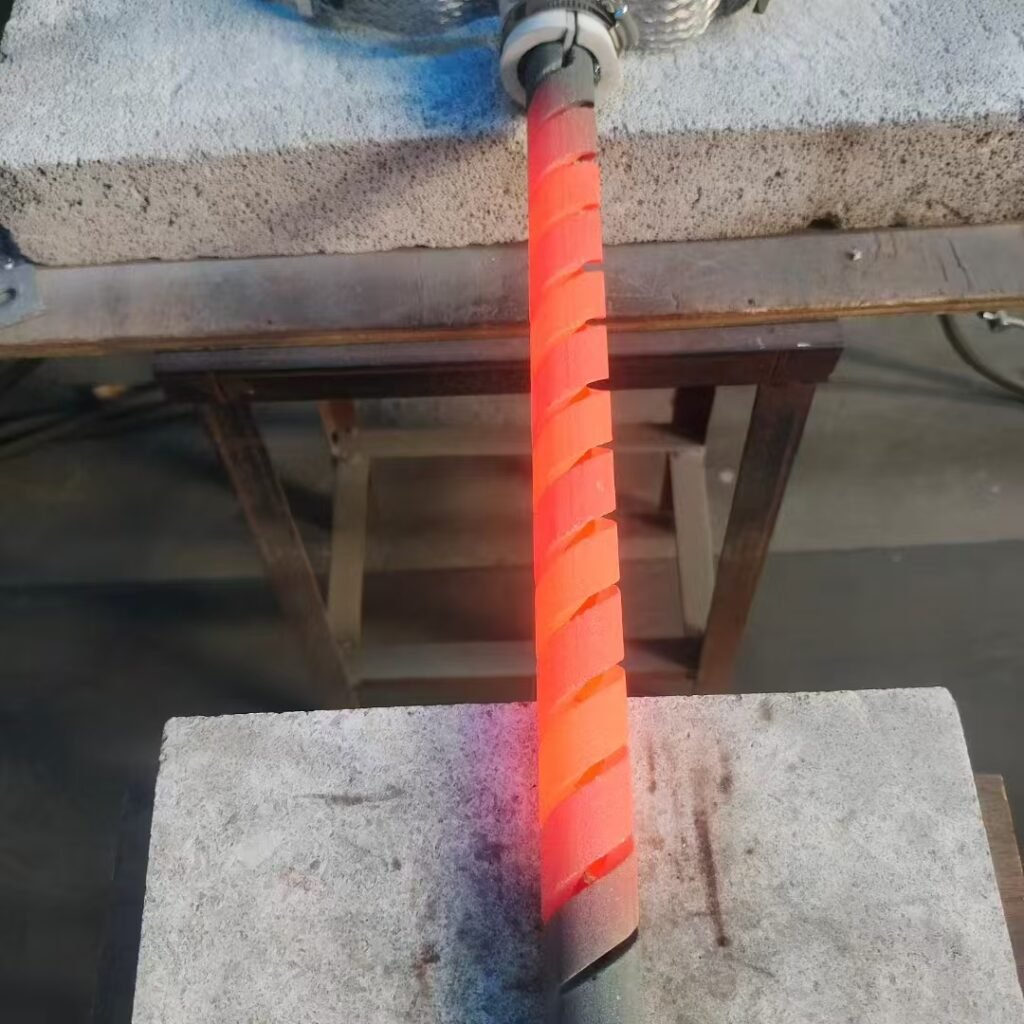
The semiconductor industry is entering an era of increasingly advanced manufacturing. As logic chips move toward smaller process nodes such as 3nm and 2nm, while 3D NAND structures continue to increase in layer count, thermal processing requirements are becoming more demanding than ever before. Semiconductor manufacturers must achieve higher precision, better process stability, and stricter contamination control to maintain wafer yield and device performance.
In semiconductor fabrication, heating systems are not simply used to increase temperature. They directly influence critical processes such as crystal structure modification, oxide growth, thin-film deposition, and material transformation. Even small temperature differences across a wafer can affect product consistency and manufacturing efficiency, especially in advanced 300mm wafer production lines.
Among various high-temperature heating technologies, silicon carbide (SiC) heating elements have become an important solution for semiconductor equipment because of their excellent thermal stability, high-temperature capability, chemical resistance, and low contamination characteristics.
This article explains why semiconductor manufacturers choose SiC heating elements, their main advantages, typical applications, and how to select the right type for different semiconductor processes.
Why Semiconductor Manufacturing Requires High-Performance Heating Elements
Modern semiconductor processes require extremely accurate thermal control. Whether in diffusion furnaces, oxidation systems, rapid thermal processing (RTP), chemical vapor deposition (CVD), or atomic layer deposition (ALD), temperature stability directly affects wafer quality and production results.
Several key requirements define semiconductor-grade heating systems.
1. Ultra-High Cleanliness Requirements
Contamination control is one of the most important challenges in semiconductor manufacturing. During high-temperature processing, impurities from heating materials can migrate into wafers and negatively affect electrical performance.
Metal contamination from elements such as iron (Fe), copper (Cu), sodium (Na), and nickel (Ni) may increase leakage current, reduce device reliability, and cause wafer defects. Therefore, semiconductor equipment requires heating materials with extremely high purity and minimal particle generation.
SiC heating elements provide significant advantages because they avoid many contamination problems associated with traditional metal heating components. Their stable ceramic structure helps maintain a cleaner processing environment.
2. Extremely High Temperature Uniformity
Temperature uniformity is critical in semiconductor manufacturing because it determines the consistency of wafer processing.
In processes such as oxidation, diffusion, and thin-film deposition, temperature variations can influence:
Oxide thickness uniformity
Doping concentration consistency
Film deposition rate
Wafer stress and deformation control
Advanced semiconductor nodes require extremely narrow thermal process windows. Heating systems must provide stable and uniform thermal fields to ensure repeatable manufacturing results.
SiC has excellent thermal conductivity, allowing heat to spread efficiently and reducing localized hot spots. This makes SiC heating elements highly suitable for applications requiring precise temperature distribution.
3. Fast Heating and Cooling Capability
Semiconductor manufacturers increasingly require faster production cycles and tighter thermal budgets. Processes such as Rapid Thermal Processing (RTP) and Rapid Thermal Annealing (RTA) often require wafers to reach temperatures above 1000°C within seconds.
Heating elements used in these applications must provide:
Rapid temperature response
Stable heat output
Accurate temperature control
Reliable performance during repeated thermal cycles
SiC heating elements can quickly reach operating temperatures while maintaining excellent thermal stability, helping improve production efficiency and process consistency.
4. Corrosion Resistance and Long-Term Stability
Semiconductor processes often involve aggressive gases, including oxygen (O₂), nitrogen (N₂), argon (Ar), ammonia (NH₃), and chlorine-based atmospheres.
Heating components must withstand these environments without rapid degradation or contamination. SiC materials offer excellent chemical resistance and maintain stable performance under demanding operating conditions.
What Are Semiconductor-Grade Silicon Carbide Heating Elements?
Silicon carbide heating elements use the electrical resistance characteristics of SiC to generate heat in high-temperature applications. Compared with traditional metal heating elements, SiC provides higher temperature capability, better oxidation resistance, and stronger chemical durability.
Key characteristics include:
Operating temperatures above 1600°C
Excellent oxidation resistance
High thermal conductivity
Fast heating response
Stable thermal field distribution
Compatibility with air and protective atmospheres
For semiconductor applications, the most important advantages are high purity, low contamination risk, and excellent temperature uniformity.
Common semiconductor-grade SiC heating element designs include:
CVD SiC Coated Graphite Heaters
These heaters use high-purity graphite as the internal heating structure with a high-purity chemical vapor deposition (CVD) SiC coating. The coating prevents particle release and protects the graphite core during high-temperature operation.
High-Purity Silicon Carbide Rod Heating Elements
High-purity SiC rods are manufactured with controlled electrical resistance characteristics and are widely used in high-temperature furnace systems requiring stable heating performance.
Core Advantages of SiC Heating Elements in Semiconductor Manufacturing
1. Improved Thermal Field Uniformity
In semiconductor processing, temperature accuracy is often more important than maximum temperature capability.
Because SiC has strong thermal conductivity, it distributes heat more evenly and reduces temperature differences inside furnaces. This improves wafer uniformity, increases process stability, and helps reduce defect rates.
For diffusion and oxidation furnaces, stable thermal fields are directly related to manufacturing yield.
2. Faster Thermal Response
SiC heating elements can rapidly establish stable temperature conditions. This makes them particularly valuable for RTP and RTA systems, where rapid temperature changes are essential.
Benefits include:
Shorter processing cycles
Higher equipment productivity
Lower thermal stress on wafers
Improved process repeatability
3. Lower Contamination Risk
High-purity SiC materials reduce the risk of metal ion contamination compared with many conventional heating materials.
Their resistance to powdering and particle generation makes them suitable for advanced semiconductor manufacturing environments where cleanliness directly impacts device performance.
4. Longer Service Life
High-quality SiC heating elements can operate reliably for extended periods when properly selected and maintained.
Longer service life provides several advantages:
Reduced furnace downtime
Lower replacement frequency
Improved equipment utilization
Lower overall operating costs
Typical Applications of SiC Heating Elements in Semiconductor Manufacturing
Diffusion Furnaces
Diffusion processes introduce dopants into silicon wafers at high temperatures, commonly between 900°C and 1200°C.
SiC heating elements provide stable and uniform thermal environments, helping achieve consistent doping results across wafer batches.
Thermal Oxidation Furnaces
Thermal oxidation creates silicon dioxide (SiO₂) layers used in semiconductor devices.
Since oxide thickness is highly temperature-dependent, precise heating control is essential. SiC heating elements improve oxidation uniformity and process repeatability.
CVD and ALD Equipment
Chemical vapor deposition and atomic layer deposition require highly controlled temperatures to achieve uniform thin films.
Heating performance affects:
Deposition rate
Film thickness
Film stress
Layer consistency
High-purity SiC heating solutions are widely used in advanced deposition equipment.
Power Semiconductor and SiC Wafer Manufacturing
The growing demand for electric vehicles, renewable energy systems, and power electronics has increased interest in SiC-based semiconductor devices.
High-temperature equipment used in crystal growth, annealing, and related processes requires stable thermal environments, making SiC heating elements an important component.
Semiconductor Ceramic and Electronic Material Sintering
Many electronic materials, including aluminum nitride substrates, alumina ceramics, and power module insulation materials, require high-temperature sintering.
SiC heating elements provide efficient and stable heat sources for these manufacturing processes.
How to Select the Right SiC Heating Element
Choosing the correct SiC heating element depends on several factors.
Process Temperature
Different temperature ranges require different materials and designs:
Below 1200°C: Standard high-purity SiC is generally suitable
1200°C–1400°C: High-purity RSiC or CVD SiC may be preferred
Above 1400°C: Specialized high-temperature solutions should be considered
Cleanliness Requirements
For advanced semiconductor nodes, CVD SiC-coated heaters and high-purity RSiC elements are preferred because of their superior contamination control.
Standard industrial processes may use other SiC grades depending on requirements.
Furnace Type and Process Atmosphere
The furnace structure, heating zone design, and operating atmosphere all influence element selection.
Vertical semiconductor furnaces may require multi-zone heating control, such as 3-zone, 5-zone, or 7-zone configurations, to compensate for heat loss and improve temperature uniformity.
The process environment, including oxidizing, nitrogen, argon, or vacuum conditions, must also be considered because it affects element lifetime.
SiC vs. MoSi₂ Heating Elements: Which Is Better?
Both SiC and molybdenum disilicide (MoSi₂) heating elements are widely used in high-temperature industrial applications.
Generally:
SiC heating elements are suitable for long-term operation below approximately 1400°C
MoSi₂ heating elements are preferred for temperatures above 1500°C
Ultra-high-temperature applications may require MoSi₂ solutions
For semiconductor diffusion, oxidation, and general heat-treatment systems, SiC often provides an excellent balance of performance, reliability, and operating cost.
Frequently Asked Questions
Are SiC Heating Elements Suitable for Advanced Semiconductor Equipment?
Yes. High-purity CVD SiC and RSiC heating elements are widely used in advanced semiconductor manufacturing equipment, including logic chip, 3D NAND, and power semiconductor processes.
Do SiC Heating Elements Cause Particle Contamination?
High-purity semiconductor-grade SiC has extremely low particle release after proper purification and surface treatment, making it suitable for advanced manufacturing environments.
What Factors Affect SiC Heating Element Lifetime?
Main factors include:
Operating temperature
Gas atmosphere
Thermal cycling frequency
Electrical design
Surface loading conditions
Proper design and maintenance can significantly extend service life.
Conclusion
As semiconductor technology continues advancing toward smaller nodes, higher-density memory, and more powerful electronic devices, thermal processing equipment must achieve higher levels of precision, cleanliness, and reliability.
With excellent temperature uniformity, high-temperature stability, corrosion resistance, and low contamination characteristics, silicon carbide heating elements have become a critical solution for semiconductor furnaces, oxidation systems, CVD/ALD equipment, and power semiconductor manufacturing.
For semiconductor equipment manufacturers and wafer fabs, selecting the right SiC heating element can improve process stability, increase production yield, reduce downtime, and lower long-term operating costs.