Meta Description
Proper installation of a SiC heating element for lithium battery sintering extends equipment life by months.
Introduction
Correct installation dictates operational success and prevents premature industrial component failures. Properly fitting a SiC heating element for lithium battery sintering decides whether you get eight months or 18. Why do industrial components fail early? Most installation guides get everything backwards, causing unnecessary thermal downtime.
Bottom Line Up Front
o Most terminal failures that we open up result from cold ends running exceedingly hot above 300°C.
o Limit the measured resistance spread in a parallel group to within 10%.
o Ramp the first firing slowly at 100 to 150°C per hour up to 600°C.
o Lithium vapor produces a much more rapid removal of the protective silica film than plain air.
o New cold ends do not survive unsealed element ports and die within weeks instead of months.
o Continuous cathode calcining lines are designed for 6 to 14 months of service life.
Why Does Lithium Battery Sintering Kill Elements Faster Than Ceramic Firing?
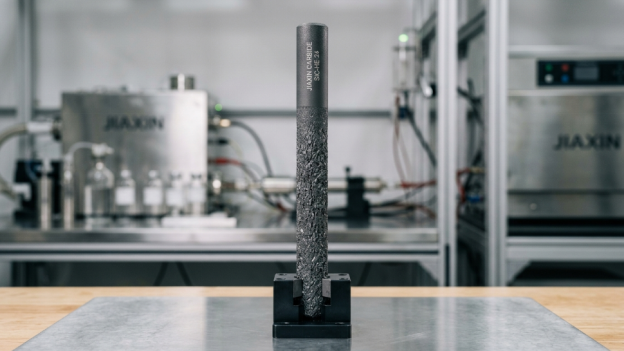
Here, the rod that lasts three years in a ceramic kiln might last less than a year because the lithium carbonate and lithium hydroxide vapor volatilizes off of the cathode powder.
This vapor then condenses on cooler surfaces, ruining the protective silica coating that is necessary to preserve a silicon carbide heating element. We have a furnace service desk and the pattern remains exactly the same. After month seven, we get a call from cathode plants, instead of month 30.
The saggars in a roller hearth or pusher firing of NCM, NCA, or LFP powder have a temperature range of 750°C to 950°C and last for hours. The lithium species flow out of the powder bed with the atmosphere and drop wherever the temperature decreases. This includes the cold ends of all sic heating elements on the roof or side wall.
The anode lines are less chemically harsh and more dust loading harsh. This dust coats the hot zone and alters radiant behavior. In either case, choosing a heating element to work with battery material puts you in a completely different frame of mind than choosing one to work with tableware.
One correction we constantly make is that a sic battery furnace does not require a hotter element. It simply needs a better protected one. Buyers purchasing a sic lithium-ion battery project are likely to over specify the temperature and under specify the sealing. They then ponder why the 1500°C rated rod failed rapidly at 900°C.
What Should You Check Before The Element Leaves Its Crate?
Before cutting the packing straps, be sure to check the measured cold resistance against the certificate. You must also check the length of the hot zone and cold end against your furnace wall thickness.
Next, compare the diameter of the terminal to your clamp hardware and inspect the visual appearance of the aluminized cold ends. Saving 10 minutes here prevents a complete shutdown three weeks later.
Confirm each of the numbers from the silicon carbide heating elements technical data document that came with the crate, rather than relying on the most recent purchase order. Manufacturers change hot zone divisions between manufacturing lots and no one informs the maintenance team.
The only value measured from the heating rod element that allows you to sensibly group rods is the resistance of the element at room temperature. It is important to know that silicon carbide heating element resistance will increase at a constant rate as they continue to be used. Therefore, a used rod and a new rod are electrically different parts, even though they appear identical.
Read The Drawing Before You Read The Datasheet
Before even opening the roof, you will know how the sic elements are grouped. Every furnace panel schematic has a heating element symbol, which is typically a plain rectangle in the load branch. Series and parallel groups age out in totally different ways. That is the wiring portion of the work and is a critical part that most technicians overlook.
Think of a toaster wire, which is the classic heating element example on everyone’s first visit, and then put that thought away. Silicon carbide is quite unlike regular resistance wire. You will find the heating element explained correctly in any element datasheet. As the element rod is heated, the resistance decreases up to approximately 700°C, before increasing again, and then steadily increasing for the entire life of the element.
| Check | Target Value | What Happens If Skipped |
| Cold resistance | Within 5% of certificate | Low resistance rod burns out first |
| Parallel group spread | 5 to 10% maximum | Uneven load creates a hot rod |
| Hot zone vs width | Ends 10 to 25mm inside lining | Cold end gets oxidized in the heat |
| Terminal diameter | Exact clamp bore match | Arcing and burned straps occur |
7 Essential Tips On Installation
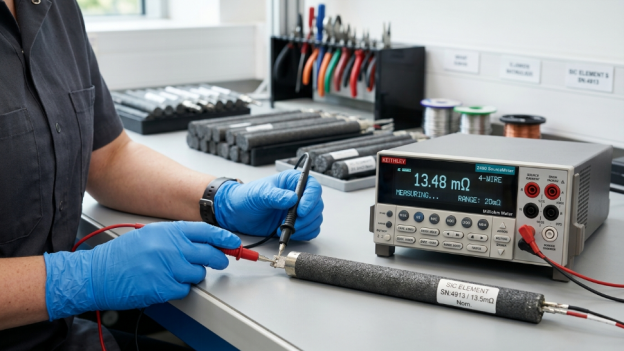
1. Group The Rods By Measured Cold Resistance First
Prior to putting a single rod anywhere near the sic furnace, unpack everything and measure all the rods at ambient temperature with a milliohm meter to create groups.
Sorting can be accomplished in 40 minutes on a 40-rod chamber. If ignored, you will regret it a week later. The branches should be parallel and the rods in the parallel branch should be contained between a 10% range. The tighter the tolerance the better, and with high value cathode lines we push it to 5%.
What To Record On The Bench
- Batch Number: Transcribe exactly what is stamped on the cold end.
- Cold Resistance: Record in ohms at ambient temperature.
- Position Number: The position that corresponds to the furnace layout drawing.
- Install Date: The date used for comparing all sic heating element resistance changes in subsequent years.
2. Set The Hot Zone Inside The Lining, Not Across It
The end of the hot zone should be within the chamber itself, so that the turn to the cold end is buried deeply in the refractory wall. Leave 10 to 25 mm of margin on each side depending on the thickness of the lining. If not done correctly, the transition zone remains in the brick, overheats locally, and ruptures in a few cycles. Prior to ordering the ED rod type SiC heating elements from JIAXIN-CARBIDE, you should specify the hot and cold lengths specifically for this reason.
3. Seal Every Element Port Against Lithium Vapor
This is the one crucial difference that distinguishes a battery furnace set up from a regular one. If any vapor leaks out through a loose port, it will condense on the cold end. This creates a conductive deposit which will rapidly cause a dangerous hot spot.
Sealing Materials That Hold Up
- Ceramic Fiber Blanket: Tightly packed around the rod, never stuffed loosely.
- Fiber Board Collars: Fitted at the outer face to close the annular gap.
- Organic Sealants: Do not use them near the port because channels are created when the binders burn off.
Attention: A new cold end only lasts about three to six weeks with an unsealed element port on any sic lithium line. We have had to replace sets twice for one customer without anyone checking the packing.
4. Support The Element, Never Constrain It
The coefficient of expansion of silicon carbide is approximately 4.5 x 10^-6 per Kelvin. On a 1500 mm rod heated to 1000°C, that equals about 6.5 mm of growth. If both ends are locked up tightly, something will absolutely break.
At temperature, horizontal sic rods also sag due to their own weight. Check the sic heating elements suppliers’ guidelines for the maximum unsupported span for your diameter. If applicable, add intermediate support in chambers wider than the maximum. Vertical installations avoid the sag problem. However, there must be a suitable means of hanging the installation to ensure that no bending load is transferred to the hot zone.
5. Fit The Clamp Squarely, Then Recheck It Twice
Once the cover is squarely fastened, double check it twice. The contact area is key. Two-point contact of a sic heating element clamp on the aluminized band will cause an arc to occur. An arc occurring at a terminal is a slow-motion failure you will hear before you see.
The Stainless-steel M type terminal clamps, with a diameter that corresponds exactly with the terminal size, are especially suitable. Remember it is all about hand firm pressure and not torque wrenches. Tightening too much crushes the aluminized layer and damages the surface you depend on.
Clamp Checks That Take Two Minutes
- Circumferential Contact: Ensure full wrap on the aluminized band with no gaps.
- Clamp Position: Do not place it on the transition; it must be positioned entirely on the cold end.
- Recheck Points: Check again 24 hours into the run and after the first full cooldown.
6. Route Straps So The Terminals Stay Cool
Hooks must not be fastened tightly. Aluminum braided terminal straps cope with the movement as the rod expands, while a rigid copper bar cannot. If there is any tension created on the strap, it is ultimately translated into a bending moment on a fragile ceramic.
Maintain proper ventilation of the terminal box. A lithium line may be fitted with the cold end running above 300°C, where exothermic oxidation is rapid. On top of that, vapor is deposited on the lithium lines to produce the crumbly grey terminal we see in half of the failed returns.
7. Ramp The First Firing Slowly And Log Every Hour
A gentle first cycle is required for new rods and new refractory. Heat up at 100 to 150°C per hour up to 600°C before transferring to your other program. Every hour, record the current on each group during the first ramp.
You will only receive a breakthrough warning when the current in the two groups is uneven. It is so much easier to pull one rod on day one than to hunt down a temperature deviation in month four.
Pro Tip: Take a photo of each terminal before closing the panel. When something breaks down six months later, that picture puts an end to the debate about whether the clamp moved.
What Happens In The First 90 Days After Startup?
Resistance rises more rapidly during the first few hundred hours and gradually levels off to a slow drift. Expect to move a transformer tap once in the first month and observe the recovery time in the high temperature furnaces decrease after the break in settles.
Record what you learn in the log each week during this window. You can use this as the standard baseline for all future replacements.
Your silicon carbide heating controller, which is typically SCR based and followed by transformer tapping, reflects a heavy work rate compared to what the operator thinks it is doing. Constant voltage provides decreasing power as the rods get older.
If the furnace is not adjusted with the taps, it takes longer to get to the set point. It sits longer and quietly increases the amount of oxidation exposure per cycle.
Monitor the sic heating element temperature instead of just the chamber setpoint temperature. The temperature of heating element rods is naturally above your process temperature. That difference is greater the more you surface load the rods. There is nothing that will extend the life of any silicon carbide furnaces as much as derating the process from 8 W/cm2 down to maybe 5 W/cm2, and this is the least expensive option.
Before your next order there are two questions that you should answer truthfully. How many cold to hot cycles is the line subjected to each week? And does your transformer really have any remaining taps that are usable?
Choosing A SiC Heating Element For Lithium Battery Sintering Over MoSi2, Graphite, Or Metal
It is still occasionally referred to as a glow bar furnace, even though it used to be known as Globar in the 1920s. There is plenty of brand language in this business. The term Globar heating elements is somewhat misleading and ends up referring to the generic rod type that most plants purchase.
| Element | Element Temp | Application | Characteristics |
| SiC rods | 1,400 to 1,500°C | Continuous calcining | Resistance ageing needs tap adjustment |
| MoSi2 | 1,700 to 1,800°C | Short R&D batches | Brittle when cold, pest oxidation |
| Graphite | 2,000°C+ | Vacuum work | Oxidizes rapidly above 500°C in air |
| Metal wire | 1,200 to 1,400°C | Preheating zones | Sags and fails against Li vapor |
A mosi2 heating element is excellent at peak temperatures and remains fairly flat on power output over the life of the element. However, at room temperature, mosi2 heating elements are extremely delicate. If a maintenance crew works around a loaded kiln, they will likely break them. For applications requiring temperatures above 1,100°C, the normal selection is the U shape MoSi2 heating elements which operate up to 1,600°C and beyond.
This cannot be done in flowing air, so graphite heating elements are appropriate only for vacuum or inert atmosphere applications. The metal heating element used in the preheat section is inexpensive, but it is quickly attacked by lithium vapor.
The format of the heating rod element in silicon carbide is the simple default for the 700 to 1000°C temperature range. They are predominantly used in this range for heating element for battery material work across furnaces of this type. The free-standing rod can be changed in minutes as opposed to an embedded heating element cast into a refractory panel.
What Does A Full Element Set Actually Cost To Own?
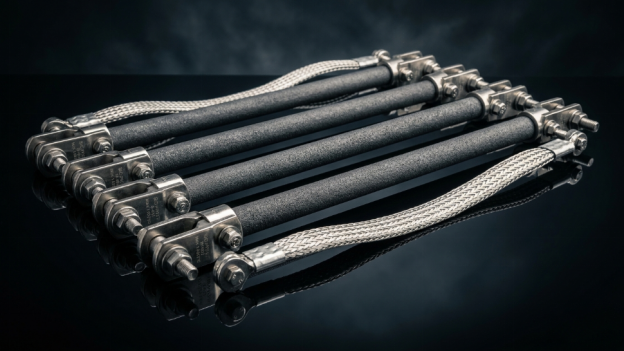
Invest in the full set, not just a single rod. One rod is inexpensive compared to a furnace. If a furnace needs a 40-rod chamber replaced twice annually, plus clamps and straps, and eight hours of downtime per replacement, this cost outweighs the sic heating elements price. Obtain your quotes thinking that way.
Published price figures for different heating element sizes are not truly meaningful unless accompanied by the heating element diameter, hot zone length, and resistance tolerance. Comparing two quotations for a sic heating element price can result in a difference higher than 40%.
That happens because they refer to totally different performance specs, such as different grain structures, different cold end treatments, and different resistance grading disciplines.
There are three questions you need to ask when you find a sic heating element for sale at a super low unit cost. Are there individual measurements and stamps of resistance? Do they release matched sets of rods? What is the range of tolerance? All three have straightforward answers from quality heating element manufacturers.
In import planning, a silicon carbide heating element HS code will usually be coded as 8516.80 for electric heating resistors. Some customs authorities have a tendency to bring similar articles under heading 8545, together with carbon and graphite electrical articles. Always confirm the correct sic heating elements HS code treatment with your broker.
Do not forget to budget for the hardware you will need. Clamps, straps, insulation fittings, and silicon carbide furnace tubes protecting the thermocouple wear according to their particular design. A new sic heater element bolted under oxidized clamps will not perform properly from day one.
A good sic heating elements supplier will check your drawings prior to providing you with a quotation. When a quotation comes in and no one has phoned you to ask for your voltage, chamber width, or atmosphere, that is a massive warning sign.
Long-Term Ownership: What Fails First On A Cathode Line
- Terminals fail first, and hot zones fail second. For lithium bearing processes, we see much more cold end damage in our returns data compared to fractures at the hot zone. This outcome is exactly the opposite of what most people think.
- SiC lithium processing lines suffer damage step by step and not all of a sudden. The resistance of a rod continues to increase and output decreases until the controller has to back off the setpoint. Then one day the furnace is simply unable to maintain the setpoint at full tap.
- In many plants, a silicon carbide sic heating element becomes bankrupt at about 1.4 to 1.6 times its new cold resistance. All time silicon carbide sic heating elements are changed; you should allot them in groups by age to make the arithmetic simple.
- There is one limitation that nobody talks about when quoting. Resistance ageing is a true annoyance in operation. SiC rods will be a source of frustration if your furnace does not have a transformer tapping and there is no intent to install one. MoSi2 has a far greater ability to hold power over a longer period of time, and for a few plants this is the main reason why they choose it.
- You may only need to replace individual rods or the complete set depending upon the exact value of an hour of downtime to you. The high value cathode lines practically always perform a substitution by group. A pilot furnace cannot reasonably be expected to do the same. Try running your own calculations on that reasoning.
- Years back a plant manager we were working with insisted that all rods be wiped with isopropanol before they would fit. This was probably not necessary, but his sets did last. You can make what you will from that story.
- Our former error was advising our customers to go for the top level of the sic heater. The role of grade is quite insignificant compared to sealing, grouping, and cold end temperature. We stopped leading with grade as a priority about 10 years ago.
People Also Ask
What Is The Highest Temperature For A Battery Sintering Heating Element?
The normal surface temperature of the element is 1,400 to 1,450°C. However, the battery calcining temperature rarely exceeds 1,000°C, which gives this element months of endurance under calcining conditions in lithium carrying atmospheres.
Is It Possible To Combine New And Used Sic Rods Within One Furnace?
No, this is not recommended in a parallel group. As the resistance of the rod changes, the excess current is pushed into the newer rod. You must replace them together or maintain the measured cold spread within 10%.
How Often Should Elements Be Changed On The Lithium Line?
Most continuous cathode lines last for 6 to 14 months. Monitor the resistance and not just the calendar time. Reaching about 1.4 times the baseline resistance is the practical retirement point.
Do SiC Elements Work In Nitrogen Or Vacuum Environments?
There is a limit of roughly 1,100°C because SiC requires an oxidic film. Inert and vacuum conditions completely remove this vital passivation. Graphite is much more suited for those specific environments.
What Is The Correct Value For The Clamp Torque On The Cold End?
You should use hand pressure to tighten and never rely on torque wrench pressure. Screws that are too tight will crush the aluminized contact surface. Repeat this check after 24 hours and subsequent to the first drop in temperature.
Final Words
Installation ultimately decides operational success. Seal ports securely, group rods by resistance, and strictly monitor cold ends. A correctly fitted SiC heating element for lithium battery sintering earns its keep quietly. Prevent unwanted thermal failures and drastically extend equipment lifespan. Visit JIAXIN-CARBIDE online today to safely review layouts and explore premium high temperature industrial solutions.
Author Bio
Mr. David – The Senior Furnace Application Engineer at Liaoyang Jiaxin Carbide Co., Ltd. with 21 years of commissioning experience in the field of high temperature heating element systems, and certified to NFPA 86 furnace safety practice, in line with IEC 60584 thermocouple tolerance.