Title:Can MoSi2 Heating Elements Melt Non-Ferrous Metals?
https://jiaxincarbide.com/product/electric-heating-elements/Keyword:MoSi2 heating elements,non-ferrous metal melting,alloy furnace,electric heating
Description:Learn when MoSi2 heating elements work for non-ferrous metal melting, including aluminum, brass, bronze, and copper alloy furnaces.
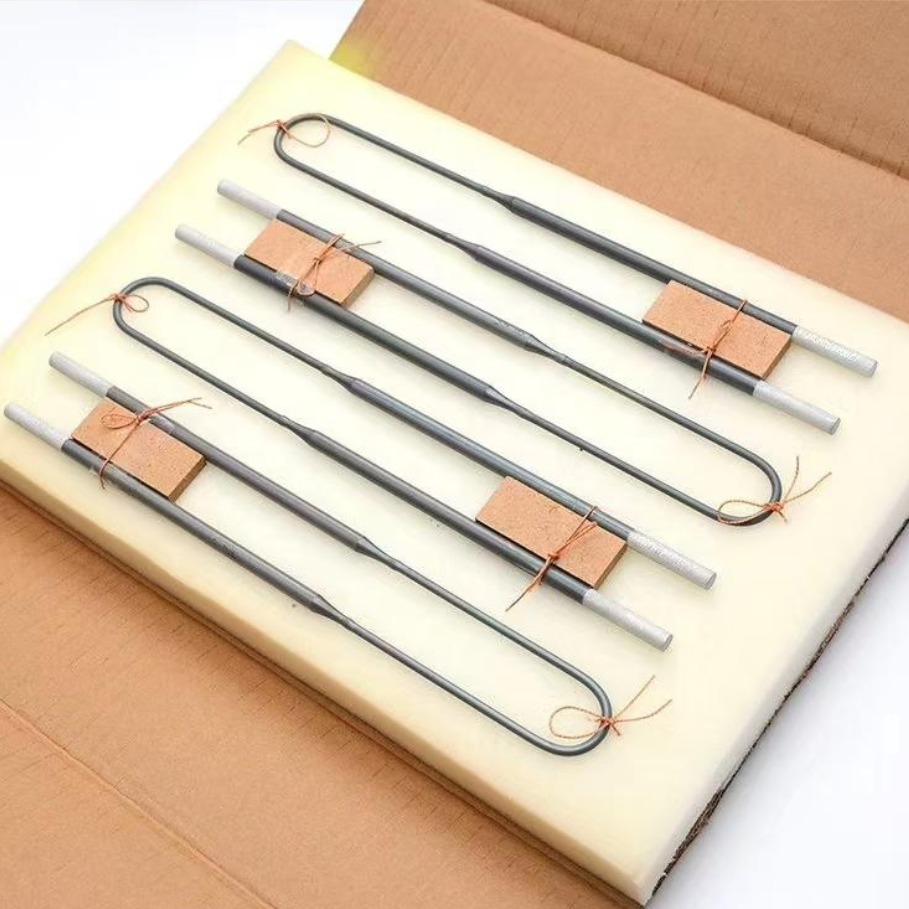
Can MoSi2 heating elements be used in non-ferrous metal melting? Yes
—
when furnace design, atmosphere, and contamination control are right. Learn key limits, best-fit alloys, and how to improve service life.
Can MoSi2 heating elements be used in non-ferrous metal melting? In many cases, yes, but only under the right furnace design and process conditions.
The real answer depends on melting temperature, furnace atmosphere, crucible arrangement, thermal cycling, and how directly the elements are exposed to metal vapor or flux.
For buyers, furnace builders, and plant operators, the key question is not simply whether MoSi2 works, but whether it will deliver stable output, acceptable service life, and safe operation.
In practical terms, MoSi2 heating elements are often suitable for non-ferrous metal melting applications involving aluminum, brass, bronze, copper alloys, and selected specialty metals.
They are especially attractive when the process requires clean electric heating, fast temperature rise, consistent control, and operation in oxidizing atmospheres at elevated temperatures.
However, they are not a universal solution for every melting furnace.
If the furnace atmosphere is reducing, if metal vapors attack the element surface, or if the operating layout creates severe local overheating, service life can fall sharply.
This is why the best purchasing decisions are based on alloy type, process temperature, furnace structure, and protection strategy rather than on element material alone.
What Is the Core Search Intent Behind This Question?
People searching “can MoSi2 heating elements be used in non-ferrous metal melting” usually have a strong commercial or technical evaluation intent.
They are rarely looking for a textbook definition.
Most want to know whether MoSi2 heaters are a safe and cost-effective option for actual melting work, and what limits they should understand before buying.
In many cases, the searcher is comparing heating technologies for a new furnace project, a retrofit, or a replacement plan after short element life with another solution.
They need a clear yes-or-no framework, backed by operating conditions rather than vague claims.
What Decision-Makers Usually Care About Most
For furnace manufacturers, procurement managers, maintenance teams, and production engineers, the most important concerns are practical.
They want to know whether MoSi2 elements can reach and hold the required melt temperature with stable power and manageable operating cost.
They also care about how atmosphere, flux, splash, and thermal shock will affect element lifetime in day-to-day production.
Another major concern is furnace downtime.
If an element choice creates frequent replacement cycles, poor temperature uniformity, or safety risks around the hot zone, any theoretical efficiency benefit becomes less valuable.
That is why readers in this market need application guidance, not generic product promotion.
Short Answer: Yes, But Suitability Depends on the Melting Process
MoSi2 heating elements can be used in non-ferrous metal melting, especially in electrically heated furnaces where the process atmosphere is oxidizing or neutral and the temperature is properly controlled.
They are widely valued for high operating temperature, rapid heat-up, and excellent oxidation resistance in air.
For aluminum and many copper-based alloys, MoSi2 can be a strong choice when the furnace is designed to shield the elements from direct contamination.
In these setups, the elements usually heat the chamber or muffle indirectly rather than contacting molten metal.
That distinction matters.
MoSi2 is generally a chamber-heating solution, not a component that should be exposed directly to molten bath contact, corrosive slag accumulation, or uncontrolled reducing gases.
So the right question is not whether MoSi2 can melt non-ferrous metals at all.
The right question is whether your furnace can create a stable environment where the element’s strengths are preserved.
Why MoSi2 Heating Elements Are Attractive for Non-Ferrous Melting Furnaces
MoSi2 heaters have several characteristics that fit non-ferrous melting operations well.
First, they can operate at very high element temperatures, which gives furnace designers useful thermal headroom above the actual alloy melting point.
That helps with faster warm-up, responsive temperature recovery, and consistent batch processing.
Second, MoSi2 forms a dense protective silica layer during operation in oxidizing atmospheres.
This oxide film is the main reason the material performs so well in air at elevated temperatures.
For industrial users, that means lower oxidation-related failure risk compared with some other high-temperature element materials in the same environment.
Third, MoSi2 supports accurate temperature control.
In non-ferrous melting, this is important because overheating aluminum, brass, or bronze can increase oxidation loss, metal burn-off, composition drift, and quality inconsistency.
With proper power design, MoSi2 allows operators to approach target temperatures quickly while maintaining tighter process stability.
Finally, electric resistance heating offers a cleaner process than fuel-fired alternatives in many applications.
That is relevant for shops that prioritize product cleanliness, emission control, indoor working conditions, or quality-sensitive alloy production.
Which Non-Ferrous Metals Are the Best Fit?
Aluminum and its alloys are often the easiest starting point when evaluating MoSi2 for melting.
The melting range is relatively low, and furnace chamber temperatures can be managed without pushing the element close to its upper practical limit.
When the furnace is properly lined and the crucible arrangement prevents splash contamination, MoSi2 can perform very reliably.
Brass and bronze can also be suitable applications.
These alloys require higher process temperatures than aluminum, but they still fall well within the capability range of MoSi2-based furnace systems.
The main caution is not simply temperature.
It is fume chemistry, zinc vapor in some brass processes, flux behavior, and the possibility of chamber contamination over time.
Copper melting is also possible, especially in smaller batch furnaces, lab furnaces, or controlled industrial applications where temperature uniformity and cleanliness matter.
However, copper processes often run hotter and can create more demanding thermal and atmosphere conditions.
That means the furnace design quality becomes even more important.
For specialty non-ferrous alloys, the same rule applies: the alloy itself is only one variable.
Actual suitability depends on the complete thermal and chemical environment inside the furnace.
What Can Limit MoSi2 Performance in Metal Melting?
The main risks come from atmosphere mismatch, chemical contamination, and poor installation layout.
MoSi2 performs best in oxidizing conditions because its protective surface layer remains stable there.
In reducing atmospheres, that protection can break down, leading to accelerated attack and shortened service life.
Metal vapor is another concern.
Some non-ferrous melting processes release vapors that can condense or react within the hot zone.
When these vapors deposit on the element surface, they may damage the protective layer or create localized corrosion and overheating.
Fluxes and splash are equally important.
If molten metal, slag, or aggressive flux reaches the element, physical and chemical damage can happen quickly.
Even when direct contact is rare, repeated contamination can cause uneven resistance behavior and premature failure.
Thermal cycling also matters.
Frequent start-stop operation, rapid cooling, or poor temperature control can increase stress on the elements and connected furnace components.
MoSi2 is robust in high-temperature service, but it still performs best when the operating cycle is engineered with realistic ramp and hold conditions.
Indirect Heating Design Is Usually the Safer Choice
In most non-ferrous melting applications, MoSi2 heating elements should be used in an indirect heating arrangement.
That usually means the elements heat the chamber, insulation structure, or muffle while the metal is melted in a crucible.
This design reduces the chance of direct splash, vapor attack, and accidental mechanical damage.
It also helps the furnace maintain more uniform heat distribution around the crucible.
That matters because non-uniform heating can increase melt time, create hot spots, and reduce product consistency from batch to batch.
A well-designed indirect system usually includes proper element spacing, adequate insulation, predictable airflow behavior, and a crucible position that avoids concentrated radiant stress.
These details strongly influence both melting efficiency and element life.
For users evaluating suppliers, this is an important point.
The element material may be high quality, but poor chamber design can still cause disappointing field performance.
How to Judge Whether MoSi2 Is Right for Your Furnace
A practical evaluation should begin with five questions.
What alloy are you melting, what is the real working temperature, what atmosphere exists during operation, how are the elements protected, and how often does the furnace cycle?
If the alloy melts in a moderate non-ferrous temperature range and the furnace operates in air or another suitable atmosphere, MoSi2 is often worth serious consideration.
If the design isolates the elements from vapor, splash, and aggressive residues, the case becomes much stronger.
On the other hand, if the process depends on reducing gas, produces heavy metallic fumes, or exposes the hot zone to severe contamination, another heating solution may be more appropriate.
Element selection should also consider maintenance access, replacement time, and power matching.
Many failures blamed on heater material are actually caused by incorrect watt loading, flawed layout, or weak supporting hardware.
That is why technical consultation before procurement is valuable.
Business Value: Where MoSi2 Can Improve ROI
From a commercial perspective, MoSi2 heating elements can create value when process stability and long-term furnace performance matter more than lowest initial purchase price.
For many manufacturers, the real cost driver is not the element alone.
It is the combined effect of energy use, downtime, batch consistency, replacement frequency, and operator intervention.
When MoSi2 is matched correctly to the process, users may gain faster heating response, cleaner production conditions, and more repeatable temperature control.
These benefits are especially relevant in export-oriented foundries, precision alloy processing, laboratory furnaces, and furnaces serving quality-sensitive downstream industries.
At the same time, ROI depends on disciplined system design.
Using a premium high-temperature element in the wrong atmosphere or an unprotected chamber does not produce premium performance.
In that case, operating cost rises because replacement frequency rises with it.
Why Engineering Support Matters More Than a Simple Product Quote
For this type of application, buyers benefit more from process-based guidance than from catalog-only selling.
The best supplier should ask about furnace size, alloy type, target temperature, cycle pattern, insulation design, crucible material, and chamber atmosphere.
These inputs determine not only whether MoSi2 can be used, but what shape, dimension, resistance specification, and installation method should be selected.
Customized heating layout design is often the difference between acceptable and excellent field performance.
That includes power calculation, hot-zone arrangement, clamp and connection matching, and recommendations for protection tubes or other furnace accessories where needed.
For industrial buyers, this support reduces trial-and-error costs.
It also lowers the risk of ordering technically correct elements that are operationally mismatched to the real furnace condition.
Final Verdict
So, can MoSi2 heating elements be used in non-ferrous metal melting?
Yes, they often can, and in many applications they perform very well.
They are particularly suitable where clean electric heating, high-temperature capability, oxidation resistance, and stable control are required.
But success depends on more than the element name.
It depends on alloy type, chamber atmosphere, contamination control, thermal cycle, and furnace structure.
For aluminum, brass, bronze, and many controlled copper-alloy processes, MoSi2 is frequently a practical and efficient solution when used in a properly designed indirect heating furnace.
For harsher environments involving reducing atmospheres, heavy vapor attack, or direct contamination risk, careful technical review is essential before selection.
The most reliable conclusion is this: MoSi2 is not automatically right for every non-ferrous melting job, but under the right conditions, it is a proven and high-value heating option.
For buyers and furnace builders, the smartest next step is to evaluate the complete operating condition and match the element design to the real thermal process.