Keyword: can MoSi2 heating elements be repaired after failure,MoSi2 heating elements,alloy furnace
Description :Can MoSi2 heating elements be repaired after failure? Learn how to assess damage, find root causes, and choose safer replacement for alloy furnaces.
When a furnace suddenly loses heat, maintenance teams need a fast, accurate way to judge the condition of a failed MoSi2 heating element. A practical assessment not only identifies the root cause of damage, but also answers a common question: can MoSi2 heating elements be repaired after failure? Understanding the failure mode, operating environment, and replacement criteria is essential for reducing downtime and protecting furnace performance.
How should a maintenance team inspect a failed MoSi2 heating element first?
A failed molybdenum disilicide heating element should never be judged by breakage alone. In alloy and high-temperature furnace operations, the real issue is whether the element failed from aging, overload, contamination, thermal shock, installation stress, or furnace design imbalance.
Before deciding whether can MoSi2 heating elements be repaired after failure, maintenance personnel should isolate the power supply, confirm the furnace has cooled safely, and record the exact position of the failed element inside the hot zone.
Step-by-step field assessment checklist
- Check whether the element is physically broken at the hot zone, cold end, weld area, or terminal connection point.
- Look for surface bubbles, abnormal oxidation, dark contamination, localized melting, or glaze-like deposits from furnace vapors.
- Measure resistance against the original specification or compare with parallel elements from the same furnace chamber.
- Inspect clamps, conductive braids, holders, ceramic supports, and insulation parts for looseness or overheating marks.
- Review furnace temperature records, power loading, atmosphere changes, and recent shutdown or rapid heating events.
This first-pass inspection helps teams separate a true element failure from a system-related failure. In many alloy processing furnaces, the element is only one part of a wider thermal circuit that includes power supply, support fixtures, atmosphere control, and lining condition.
Can MoSi2 heating elements be repaired after failure, or is replacement usually safer?
In most industrial cases, the practical answer is that replacement is safer, more stable, and more economical over the full operating cycle. This is especially true when the element has fractured in the hot zone or shows severe structural damage.
The question can MoSi2 heating elements be repaired after failure often comes from plants trying to avoid downtime. However, MoSi2 elements operate at very high temperatures and depend on stable electrical resistance, oxidation behavior, and mechanical integrity. A damaged element rarely returns to original performance after improvised repair.
When repair attempts are not recommended
- The hot zone has snapped or cracked through the heating section.
- Resistance has drifted so far that load balancing with neighboring elements is no longer possible.
- The element suffered contamination from metallic vapors, alkali attack, glass splash, or refractory dust buildup.
- Terminal overheating has changed the cold-end structure or damaged the contact area.
- The furnace process demands tight temperature uniformity, such as powder metallurgy, dental zirconia sintering, or laboratory thermal testing.
Short-term patching may appear to restore heating, but it often creates uneven current distribution, unstable temperature rise, and repeat failure. For alloy heat treatment and non-ferrous metallurgy, those risks can be more expensive than a planned replacement.
What failure modes should maintenance teams distinguish?
Not all failed elements fail in the same way. Correct diagnosis improves spare planning and helps answer whether can MoSi2 heating elements be repaired after failure in a technically realistic manner.
The table below gives a practical comparison of common failure modes seen in high-temperature industrial furnaces.
| Failure mode | Typical symptoms | Likely root cause | Repair or replace |
| Hot zone fracture | Open circuit, visible break, sudden temperature loss | Thermal shock, aging, mechanical vibration, overload | Replace |
| Terminal overheating | Burn marks near clamp, unstable current, loose contact | Poor clamping force, oxidation at contact, undersized connector | Element often replaced; hardware also corrected |
| Progressive resistance change | Slower heating, imbalance between zones | Natural aging, contamination, process cycling | Usually replace by matched set or selected grouping |
| Surface contamination attack | Deposits, blistering, localized weak points | Glass vapor, alkali, metal splash, refractory powder | Replace and solve atmosphere issue |
This comparison shows why visual inspection alone is not enough. The same furnace shutdown can come from very different mechanisms, and each mechanism leads to a different maintenance decision and spare element strategy.
Why alloy and metallurgy furnaces face special risk
In alloy processing, furnace atmosphere may include oxides, metal vapors, dust, and frequent thermal cycling. These conditions can accelerate contamination and create non-uniform heat loading. That is why element assessment must include both electrical data and furnace process data.
Which measurements give the most reliable judgment?
A maintenance team should combine physical observation with measurable indicators. This reduces guesswork and avoids replacing good hardware while missing the true reason for failure.
Recommended evaluation points
- Cold resistance comparison: compare the suspect element with unused stock or neighboring elements of the same type.
- Dimensional check: verify hot zone diameter, cold-end geometry, center distance, and any visible deformation.
- Terminal connection condition: inspect clamp pressure, oxidation, conductive belt condition, and ceramic insulation integrity.
- Atmosphere review: note process materials, binder burn-off, volatilized compounds, and possible reaction byproducts.
- Power loading history: check whether the element was driven beyond suitable watt loading for its size and furnace design.
When plants ask can MoSi2 heating elements be repaired after failure, these measurements usually reveal that the larger problem is mismatch between operating conditions and element specification, not a simple isolated break.
How do you decide between single replacement and full set replacement?
This decision affects cost, heating uniformity, and future downtime. Replacing one element may be acceptable in some furnaces, but in tightly controlled thermal systems, mixed aging can create uneven current sharing and temperature distribution.
The table below helps maintenance and purchasing teams evaluate replacement scope more realistically.
| Assessment factor | Single element replacement | Grouped or full set replacement | Recommended use case |
| Element age spread | Small spread, similar resistance values | Large spread, mixed service life | Use full group replacement if aging is uneven |
| Temperature uniformity demand | Moderate process tolerance | Strict temperature consistency required | Full set preferred for critical sintering or alloy treatment |
| Shutdown cost | Lower immediate material cost | Higher upfront cost, lower repeat stoppage risk | Choose by total downtime impact, not piece price only |
| Electrical balance | Possible mismatch with aged elements | More consistent load distribution | Important for multi-zone high-temperature furnaces |
For buyers and maintenance managers, the correct choice is not always the cheapest piece-by-piece option. It is the option that protects production rhythm, energy efficiency, and furnace stability over the next operating cycle.
What procurement details are often missed when replacing MoSi2 elements?
A common reason repeat failures occur is that the replacement element matches only general dimensions, not the actual furnace condition. In practice, correct procurement requires more than ordering a similar shape.
Critical data to confirm before ordering
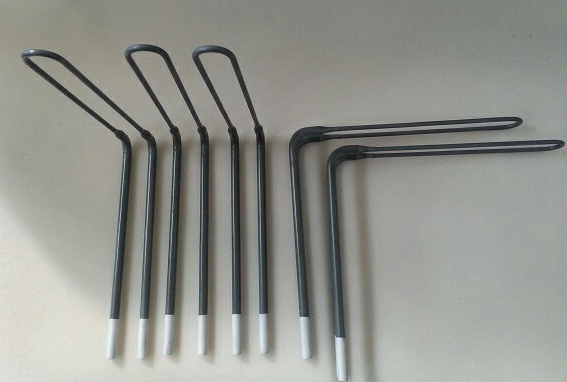
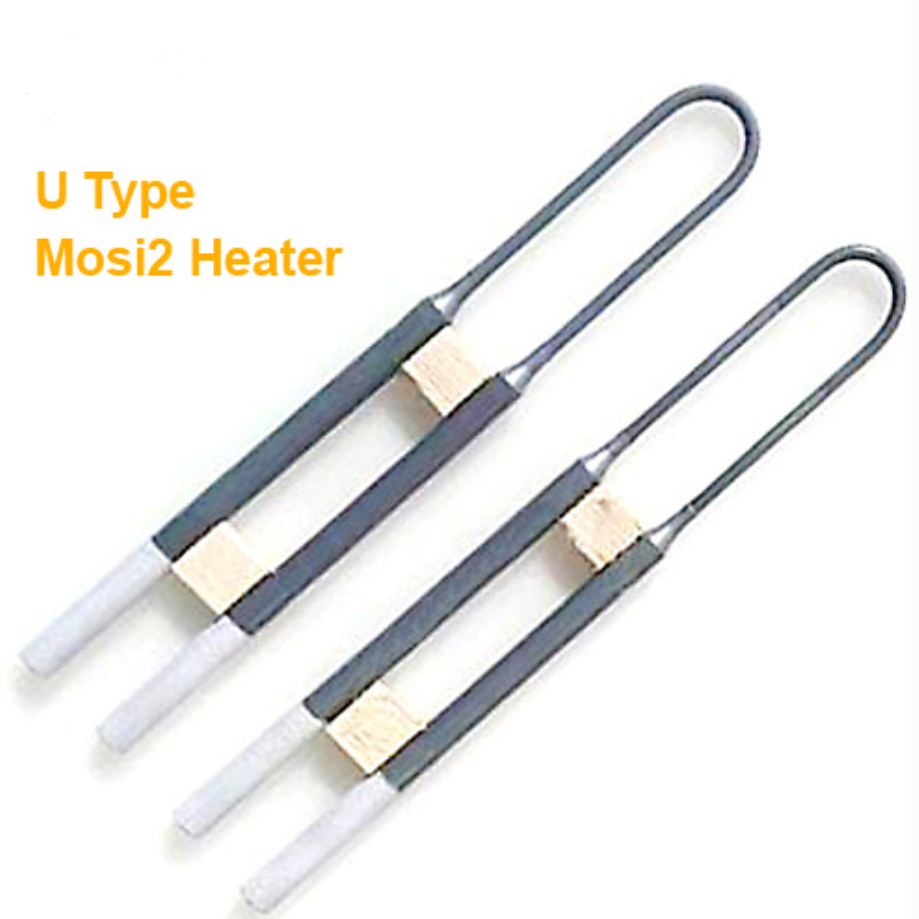
- Element type and geometry, such as U-shape, W-shape, straight, or customized hot zone arrangement.
- Hot zone length, cold-end length, diameter, center distance, and terminal interface details.
- Operating temperature range, furnace atmosphere, and process materials that may release corrosive vapors.
- Voltage, phase arrangement, control method, and target watt loading in the actual furnace chamber.
- Accessory compatibility, including clamps, conductive belts, support bricks, insulation bushings, and holder spacing.
Liaoyang Jiaxin Carbide Co., Ltd. supports OEM and ODM production based on drawings, technical parameters, and special furnace conditions. That matters when a standard catalog size does not fit legacy equipment or process-specific heating layouts.
The company’s engineering team also provides free kiln heating power calculation, heating layout design, and operating guidance. For buyers dealing with urgent element failure, this reduces the risk of replacing one damaged part while leaving the original design problem unsolved.
How can plants reduce repeat failures after replacement?
If a team keeps asking can MoSi2 heating elements be repaired after failure, the better long-term question may be how to prevent the next failure. Repeat breakdowns usually indicate a process or installation issue that deserves correction.
Practical prevention measures
- Avoid fast heating and cooling sequences beyond the furnace design limit, especially after maintenance shutdowns.
- Keep terminal connections tight and clean, and replace worn clamps or oxidized conductive components on time.
- Control contamination from volatilized compounds, alkali-bearing materials, metallic splash, and excessive refractory dust.
- Verify that support spacing and installation alignment do not introduce bending stress or vibration points.
- Maintain a spare stock plan based on actual consumption cycle rather than emergency-only purchasing.
Because Liaoyang Jiaxin Carbide integrates production, inspection, global supply, and technical after-sales support, customers can coordinate not only the new heating elements but also matched accessories such as clamps, conductive belts, and insulation fittings in one procurement cycle.
FAQ: common maintenance and purchasing questions
Can MoSi2 heating elements be repaired after failure if only one side is cracked?
A visible crack is already a structural warning. Even if the element has not fully separated, the crack can propagate under thermal cycling. In most industrial furnaces, replacement is the safer option because the remaining life becomes difficult to predict.
Is it acceptable to replace only one failed element in a multi-element furnace?
Yes, but only when resistance matching, service age, and temperature uniformity remain within acceptable process limits. In precision sintering and alloy heat treatment, grouped replacement is often more reliable than isolated piece replacement.
What information should be sent to a supplier for fast troubleshooting?
Send element drawings or dimensions, furnace temperature range, voltage and power data, photos of the failed part, installation layout, atmosphere description, and the exact failure location. This allows a supplier to evaluate whether the issue is sizing, material selection, loading, or installation related.
How quickly can replacement planning be organized for export orders?
Lead time depends on whether the element is standard or custom, the order quantity, and accessory requirements. Liaoyang Jiaxin Carbide supports sample trial orders, reasonable MOQ, controllable production lead time, fumigated wooden export packaging, and trade terms such as FOB, CIF, and DAP.
Why choose us for MoSi2 element assessment and replacement planning?
For furnace operators in alloy, ceramics, glass, powder metallurgy, laboratory heating, and new energy applications, failure analysis should lead directly to a practical replacement plan. Liaoyang Jiaxin Carbide combines more than 19 years of R&D, manufacturing, inspection, export service, and technical after-sales support in high-temperature heating components.
If your team is asking can MoSi2 heating elements be repaired after failure, we can help you judge the failure mode and prepare the next step with clearer data. You can consult us for dimension confirmation, resistance matching, furnace heating layout review, accessory compatibility, sample support, delivery timing, export packaging details, and quotation communication based on drawings or working conditions.
For urgent shutdown cases, sharing photos, operating temperature, voltage, element size, and failure symptoms will speed up technical feedback. This helps reduce misordering, shorten downtime, and improve the reliability of your next replacement cycle.
Pingback: Why Choose a Direct Manufacturer for MoSi2 Heating
Thank you , please add me by whatsapp : +8615804230746