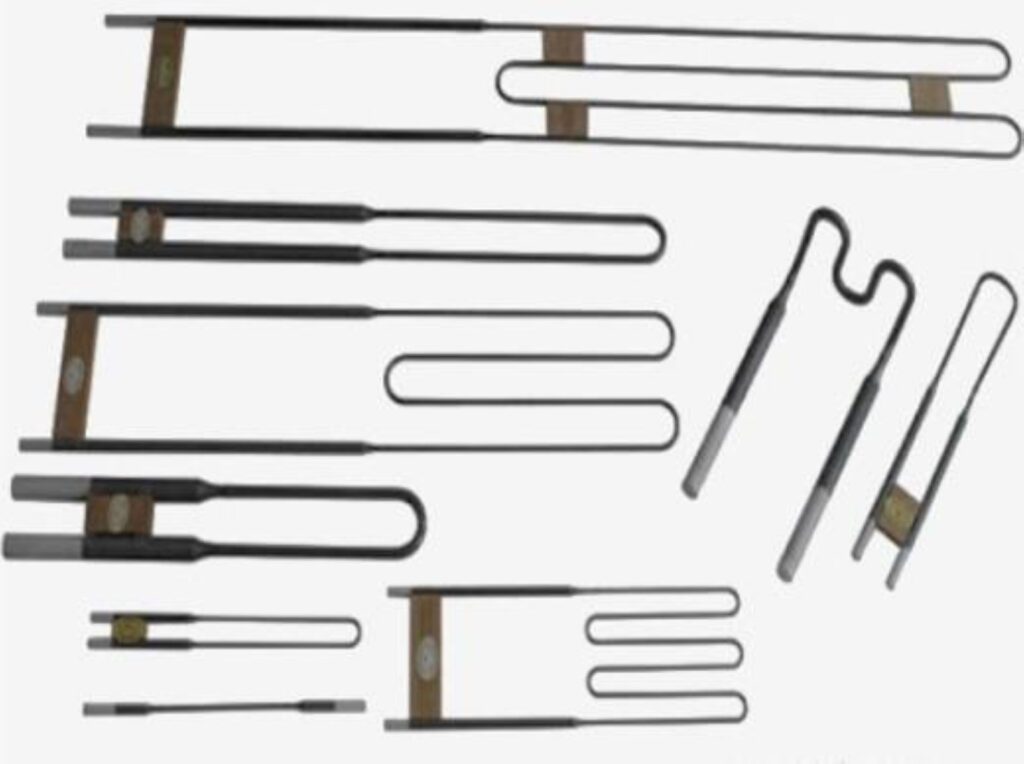
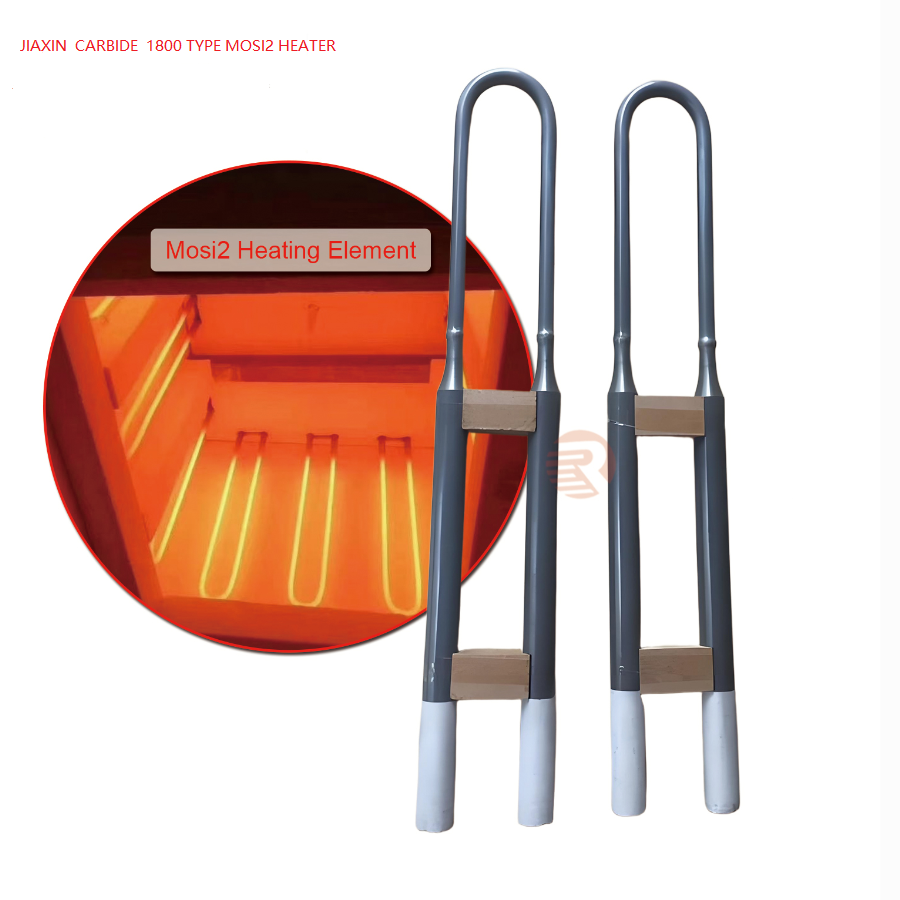
In most industrial purchasing cases, the answer is usually between 7 and 30 days, depending on drawing complexity, dimensions, operating temperature requirements, order quantity, and the manufacturer’s production capacity. For urgent maintenance projects, some standard or semi-custom specifications may be delivered faster, while highly customized elements for special furnace structures often require a longer production cycle.
For buyers, this is not just a delivery question. Lead time directly affects shutdown planning, spare parts inventory, installation schedules, and overall furnace operating cost. If you understand what really influences production time, you can make better sourcing decisions and reduce both project delays and procurement risk.
What Is the Typical Lead Time for Custom MoSi2 Heating Elements?
When buyers ask, “what is the lead time for custom MoSi2 heating element production,” they usually want a practical estimate, not a vague promise. In real manufacturing, the typical lead time often falls into three ranges based on customization level.
For standard dimensions with minor adjustments, production may take around 7 to 12 working days. For moderate customization, such as changes in hot zone length, cold end structure, terminal size, or resistance matching, the lead time is often 12 to 20 working days.
For complex custom orders, especially those involving special shapes, high operating temperatures, matched sets for large furnaces, or strict tolerance and resistance requirements, production may take 20 to 30 working days or longer. This is especially true when additional testing or export packaging requirements are involved.
That is why experienced buyers do not judge a supplier only by the shortest quoted delivery date. A realistic timeline supported by process control, inspection standards, and communication clarity is usually more valuable than an aggressive promise that leads to delays or inconsistent quality.
Why Does Custom Production Lead Time Vary So Much?
The biggest reason is that MoSi2 heating elements are not purely off-the-shelf products. Even when the product category is the same, each furnace may require different dimensions, electrical characteristics, mounting conditions, and thermal performance targets.
Some projects require exact matching with an existing furnace design. Others involve replacement for worn elements from another brand, where dimensions, terminal configuration, and resistance values must be carefully verified before production starts. This adds engineering review time before manufacturing can even begin.
Lead time also changes according to batch size. A small order may move quickly if the factory already has compatible material and tooling available. A larger order may require more scheduling coordination, more sintering capacity, and more time for batch resistance sorting and final inspection.
In addition, export-oriented orders often involve stronger packaging standards, labeling requirements, and shipping coordination. These do not always change manufacturing time itself, but they can affect the total order cycle from confirmation to dispatch.
Which Production Stages Have the Greatest Impact on Delivery Time?
To understand what is the lead time for custom MoSi2 heating element production, it helps to break the process into stages. Buyers who understand these stages can identify where delays are most likely and how to prevent them.
The first stage is technical confirmation. The manufacturer reviews drawings, voltage, wattage, hot zone dimensions, cold end dimensions, terminal style, operating temperature, furnace atmosphere, and installation method. If information is missing or inconsistent, this stage can become the first bottleneck.
The second stage is raw material and production planning. Even a capable factory needs to arrange suitable production lots, mold compatibility, and scheduling for forming and high-temperature sintering. If the specification is unusual, preparation time may increase.
The third stage is machining and shaping. Custom bends, dimensional tolerances, and matched pair or matched set requirements all affect processing complexity. Elements intended for high-uniformity heating often need tighter control than general-purpose replacements.
The fourth stage is sintering and stabilization. This is one of the most critical parts of production because it directly affects density, oxidation resistance, electrical behavior, and service life. A supplier that rushes this stage may shorten time on paper but create reliability problems later.
The final stage is testing, sorting, and packaging. Resistance testing, dimensional measurement, appearance inspection, and export-safe packaging all take time. For international buyers, this stage matters because fragile heating elements need careful packing to avoid breakage in transit.
How Do Specification Complexity and Furnace Conditions Affect Lead Time?
Not all custom MoSi2 elements are equal in production difficulty. A straight element with common dimensions is much easier to manufacture than a design that must fit a specialized industrial furnace with tight structural constraints.
If the element must operate at very high temperatures, under frequent thermal cycling, or in a demanding atmosphere, the design review usually becomes more detailed. The manufacturer may need to optimize dimensions, recommend protective accessories, or adjust resistance matching to support stable operation.
Lead time often becomes longer when buyers request full customization based on old samples without clear drawings. Reverse-checking dimensions from samples can be done, but it usually requires more engineering confirmation than production from a complete technical drawing.
Projects involving complete heating system matching may also need power calculation and heating layout review. This additional technical support creates value for the buyer, but it should be factored into the procurement schedule from the beginning.
How Can Buyers Shorten the Lead Time Without Sacrificing Quality?
Buyers have more influence over lead time than they often realize. The fastest way to avoid delay is to provide complete and accurate technical information at the inquiry stage. This includes drawings, dimensions, operating temperature, power requirements, quantity, and application environment.
It also helps to confirm whether the order is a direct replacement, a new furnace build, or a trial sample. Each scenario requires a different production and inspection approach. Clear project context allows the manufacturer to propose the most efficient route.
Another effective step is to standardize specifications whenever possible. If your furnace design allows the use of common diameters, standard lengths, or regular terminal structures, the manufacturer can usually reduce preparation time and improve scheduling flexibility.
Buyers should also distinguish between true urgency and poor planning. If the elements are for routine replacement, ordering before the shutdown window is far better than relying on emergency manufacturing. Preventive purchasing almost always reduces cost and pressure.
Finally, work with a supplier that offers technical review before production. Free support such as heating power calculation, layout suggestion, and operating guidance can prevent specification errors that would otherwise cause remake delays or installation problems later.
What Risks Come With Very Short Quoted Lead Times?
A very short quotation may sound attractive, but buyers should ask what is being shortened. In some cases, the answer is harmless, such as the use of stocked semi-finished materials for common models. In other cases, the shortcut may affect consistency or service life.
If technical confirmation is rushed, the buyer may receive elements with unsuitable dimensions or incorrect resistance values. If testing is simplified, batch consistency may become unstable. If packaging is weak, the product may arrive damaged even if it was produced on time.
For this reason, the better question is not only “what is the lead time for custom MoSi2 heating element production,” but also “what quality controls are included within that timeline?” Delivery speed has value only when the product can be installed and used reliably.
Serious manufacturers are usually willing to explain their process, inspection items, and realistic scheduling basis. That transparency is often a better sign than a generic promise of immediate shipment for highly customized products.
What Should Buyers Ask Before Placing an Order?
To judge whether a quoted lead time is realistic, buyers should ask a few practical questions. First, ask whether the quoted time starts from inquiry, drawing approval, or payment confirmation. Different suppliers calculate lead time differently.
Second, ask whether the timeline includes resistance testing, dimensional inspection, and export packaging. If not, the actual dispatch date may be later than expected. Third, ask whether the supplier has experience with your furnace application and target operating temperature.
It is also useful to ask whether sample orders are available. A sample trial can reduce risk for new projects, especially when replacing nonstandard elements or validating a furnace design before full-scale procurement.
For recurring demand, ask whether the supplier can keep your drawings and production records for repeat orders. This often helps shorten future lead times because dimensions, resistance range, and inspection requirements are already documented.
How Experienced Manufacturers Keep Lead Times Stable
Stable lead time does not come only from large capacity. It comes from coordinated engineering, disciplined quality control, and export experience. Manufacturers with mature systems can identify specification risks early and avoid delays caused by preventable errors.
For example, integrated suppliers that combine R&D, customized production, inspection, global sales, and after-sales support usually handle communication more efficiently than fragmented sourcing chains. The buyer gets faster technical confirmation and fewer misunderstandings between departments.
Factories with full-process quality control also tend to deliver more predictably. When raw material inspection, high-temperature sintering, resistance testing, and dimensional checks are standardized, production scheduling becomes more reliable across batches.
Global trade experience matters as well. Suppliers familiar with FOB, CIF, DAP, fumigated wooden export packaging, and overseas technical support can help buyers plan the entire procurement cycle, not just the factory production window.
Final Answer: How Long Should You Expect?
In practical terms, buyers should usually expect custom MoSi2 heating element production to take about 7 to 30 working days, with the exact lead time depending on specification complexity, quantity, technical confirmation quality, and inspection requirements.
If your order is based on complete drawings and standard structural parameters, lead time is often shorter. If your project involves special furnace conditions, strict matching requirements, or large-volume production, it is reasonable to expect a longer but more controlled schedule.
The most important takeaway is that lead time should be evaluated together with quality assurance, engineering support, and supplier experience. A reliable production schedule is not simply the shortest one. It is the one that delivers the correct heating element, in stable quality, ready for safe installation and long service.
For industrial buyers, understanding what is the lead time for custom MoSi2 heating element production makes procurement more strategic. It helps reduce shutdown risk, improve maintenance planning, and build a stronger basis for long-term sourcing decisions.
Tôi thấy trang này khá uy tín xn88 link TONY07-20
please add me by whatsapp :+8615804230746
email : jiaxincarbide@outlook.com
Sau khi thử xn88 gaming , mình thấy đăng ký tài khoản khá nhanh và tiện. TONY07-20
please add me by whatsapp :+8615804230746
email : jiaxincarbide@outlook.com