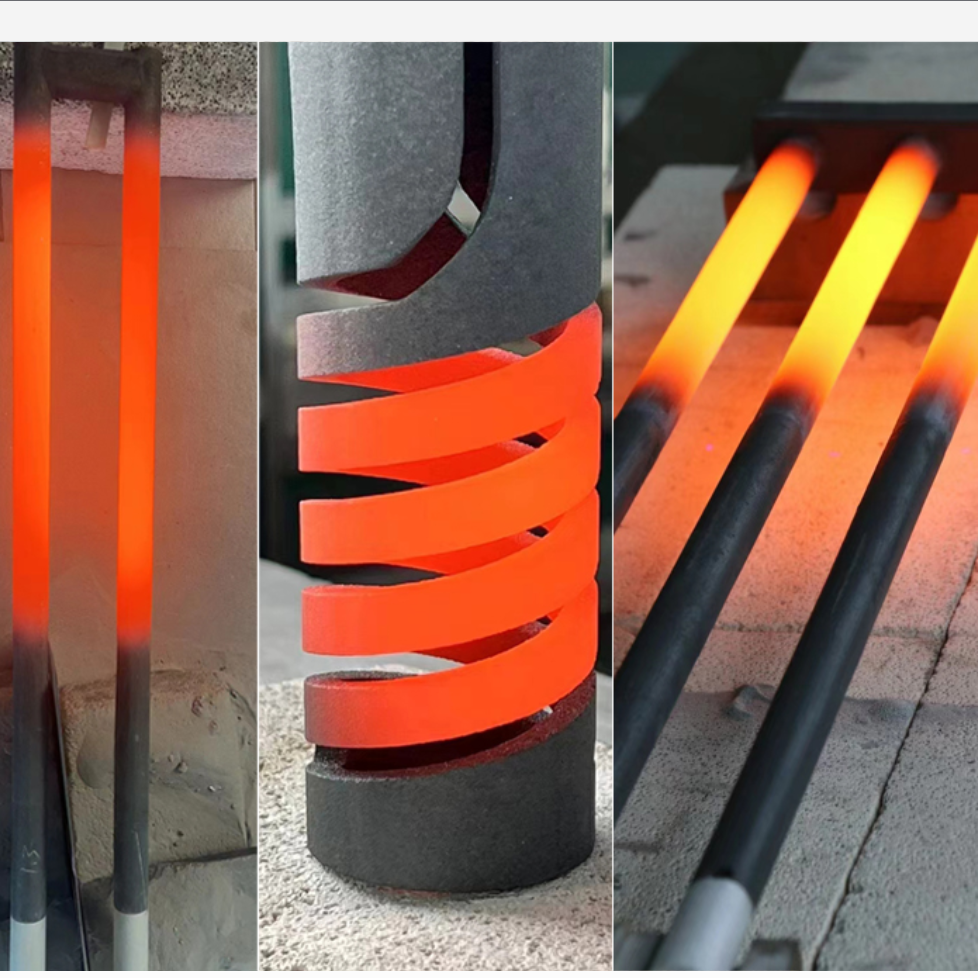
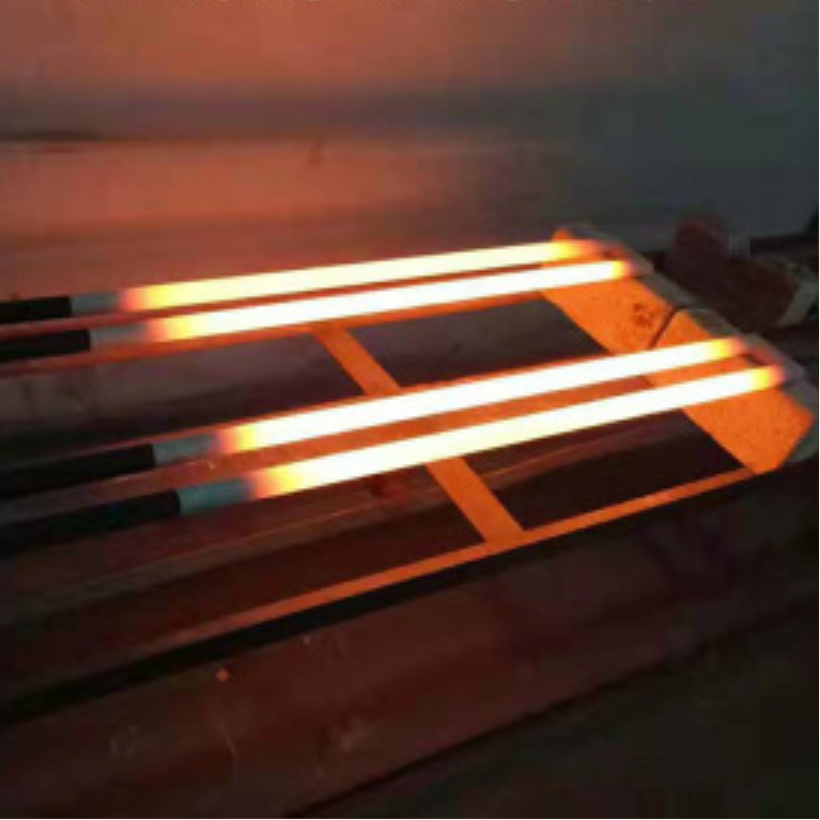
Can silicon carbide heating elements be used in vacuum furnaces? The answer depends on temperature range, vacuum level, and material compatibility. In alloy heat treatment and high-temperature processing, understanding the limits and advantages of SiC elements is essential for stable performance and cost control. With decades of manufacturing experience, Liaoyang Jia Xin Carbide helps global customers choose reliable heating solutions for demanding furnace applications.
For alloy producers, furnace designers, and maintenance teams, this is not a simple yes-or-no question. Vacuum heat treatment often runs across 600°C to 1600°C, and element behavior changes significantly as oxygen partial pressure drops. A heating solution that performs well in air may age faster, react differently, or fail to deliver expected service life under vacuum.
Silicon carbide heating elements remain widely used because they offer fast heat-up, strong radiation efficiency, and practical cost control. However, in vacuum furnaces for alloy annealing, brazing, sintering, or stress relieving, selection must be based on vacuum level, process temperature, hold time, and the metallurgical sensitivity of the load.
How Silicon Carbide Elements Behave in Vacuum Furnace Environments
Silicon carbide elements generate heat effectively in many industrial furnaces, but their operating mechanism is closely linked to the formation of a protective silica layer on the surface. In oxidizing atmospheres, this layer helps stabilize the element. In a vacuum furnace, especially at deeper vacuum levels, that protective condition can weaken.
This is why the answer to “Can silicon carbide heating elements be used in vacuum furnaces?” depends on process details. In low or medium vacuum service, and in carefully controlled thermal cycles, SiC can still be practical. In high vacuum, extended high-temperature exposure may accelerate surface decomposition or resistance drift.
- The Key Technical Limitation
At elevated temperatures, silicon carbide may begin to dissociate if the surrounding atmosphere does not support a stable oxide film. For alloy heat treatment, this becomes more critical above about 1200°C to 1300°C, especially when vacuum levels move from rough vacuum into high vacuum ranges such as 10-2 mbar or lower.
That does not mean SiC is unusable. It means furnace engineers must define 4 basic parameters before selection: target temperature, vacuum degree, process duration, and load chemistry. Nickel alloys, tool steels, powder metallurgy parts, and copper-based alloys can each impose different contamination and thermal uniformity requirements.
- Where SiC Can Still Be a Good Fit
- Low-vacuum or partial-vacuum alloy heating processes
- Furnaces operating in the 800°C to 1200°C range
- Applications with shorter holding times, such as 30 to 90 minutes
- Systems that alternate between vacuum and inert gas backfill
- Installations where lower initial element cost matters more than maximum element life
In many alloy plants, real operating practice is not continuous deep vacuum. Instead, the chamber may be evacuated, heated, and then backfilled with nitrogen or argon for part of the cycle. In these hybrid conditions, silicon carbide elements can sometimes offer a workable balance between heating speed and budget.
Why Alloy Processing Makes the Decision More Sensitive
Alloy furnaces demand not only temperature, but also repeatability. A variation of ±5°C may be acceptable in one stress-relieving process, while another vacuum brazing cycle may require tighter chamber performance. Heating element degradation can shift resistance, alter zone balance, and affect part-to-part consistency over 3 to 12 months of production.
The table below compares typical suitability of silicon carbide heating elements across common vacuum furnace conditions used in alloy manufacturing.
| Process Condition | Typical Range | SiC Suitability |
| Rough vacuum heat treatment | Around 1 to 100 mbar, 800°C to 1100°C | Generally feasible with correct design and cycle control |
| Medium vacuum alloy processing | 10-1 to 10-2 mbar, 1000°C to 1250°C | Conditionally suitable; monitor service life and resistance drift |
| High vacuum brazing or sintering | Below 10-3 mbar, often above 1200°C | Usually not the first choice; alternative elements are often preferred |
| Vacuum plus inert gas cycles | Evacuation followed by argon or nitrogen backfill | Often practical for selected alloy heat treatment applications |
The main conclusion is clear: silicon carbide heating elements can be used in some vacuum furnaces, but they are not universal for all vacuum levels. The deeper the vacuum and the higher the temperature, the more carefully users should evaluate alternative heating materials.
Selection Criteria for Alloy Heat Treatment and High-Temperature Processing
When evaluating whether silicon carbide heating elements belong in a vacuum furnace, alloy manufacturers should review at least 5 procurement factors. These are not only engineering questions. They directly affect maintenance intervals, spare part planning, production stability, and total operating cost across 6 to 24 months.
1. Temperature Window and Holding Time
Short cycles at 900°C to 1150°C are very different from 6-hour holds at 1350°C. For alloy stress relieving, homogenizing, or preheating, SiC may perform well if the cycle stays inside a moderate thermal band. For demanding high-vacuum sintering above 1300°C, performance risk rises sharply.
2. Vacuum Level and Gas Transition Strategy
Some furnaces run only a brief pump-down stage before introducing argon. Others stay under high vacuum for the full heating and soak period. This difference matters. If the process includes a stable inert atmosphere during the hottest part of the cycle, silicon carbide elements may see less severe degradation than in prolonged deep vacuum exposure.
3. Alloy Cleanliness Requirements
For aerospace-grade alloys, medical alloys, or high-value brazed assemblies, contamination control is often stricter than for general industrial components. Buyers should assess whether any vapor interaction, particle release, or element aging byproducts could influence surface quality, brazed joint integrity, or final metallurgical properties.
4. Maintenance Access and Replacement Frequency
If a vacuum furnace shutdown costs 1 to 3 production days, element life becomes a major commercial factor. Lower purchase cost can lose value quickly if replacement frequency is too high. In alloy production lines with continuous weekly scheduling, predictable maintenance can be more important than initial price.
The following table provides a practical decision matrix for alloy furnace buyers comparing silicon carbide with another common high-temperature option.
| Decision Factor | Silicon Carbide Heating Elements | MoSi2 Heating Elements |
| Typical application strength | Efficient heating for many conventional and moderate-atmosphere furnace duties | Strong option for very high-temperature service in suitable furnace atmospheres |
| Vacuum suitability | Best for selected low to medium vacuum conditions | Often considered when higher temperature tolerance is needed, subject to furnace design |
| Cost positioning | Often lower initial cost | Often higher initial cost with different life-cycle economics |
| Common alloy industry use logic | Chosen when process conditions are moderate and budget matters | Chosen when temperature ceiling and process margin are more critical |
This comparison does not mean one element is always better. It shows that alloy furnace selection is process-specific. A supplier able to provide both SiC heating elements and MoSi2 heating elements can usually support more accurate matching rather than forcing one material into every furnace design.
Common Alloy Furnace Applications and Practical Use Cases
In alloy manufacturing, the best use of silicon carbide in vacuum-related service often appears in transitional or mixed-atmosphere processes rather than extreme high-vacuum operations. Many real production lines are designed around throughput, not laboratory-level vacuum purity, so practical operating windows are broader than theoretical limits suggest.
Stress Relieving and Annealing
For certain ferrous alloys and non-ferrous alloys, stress relieving may run between 550°C and 900°C, while annealing may extend to 950°C or 1100°C. In these ranges, if vacuum is moderate and the hottest stage is supported by inert gas, silicon carbide elements can be a reasonable and economical choice.
Preheating Before Forging or Further Thermal Processing
Some alloy shops use low-vacuum or controlled-atmosphere chambers for preheating billets, fixtures, or specialized tooling. Here, cycle speed and robust heating matter more than ultra-clean high-vacuum performance. SiC elements can deliver strong radiant output and relatively simple replacement logistics.
Powder Metallurgy and Sintering Limits
This is where caution becomes essential. Powder metallurgy alloys and advanced sintering operations may require high vacuum, high temperature, and very low contamination. If the process sits at 1250°C to 1450°C for long periods, silicon carbide heating elements are usually less favorable than alternatives chosen specifically for that furnace regime.
Three Frequent Mistakes Buyers Make
- Assuming vacuum is a single condition instead of a range from rough vacuum to high vacuum.
- Comparing element price without estimating replacement interval, downtime, and yield impact.
- Ignoring alloy sensitivity, especially when surface finish or brazed joint quality is critical.
These mistakes often lead to overspecification or underspecification. In both cases, production cost rises. A well-matched element reduces thermal instability, avoids unnecessary shutdowns, and supports more consistent alloy properties batch after batch.
How to Evaluate Suppliers and Build a Reliable Furnace Heating Plan
A vacuum furnace element is never just a spare part. In alloy plants, it is part of a wider heating system that includes chamber design, insulation, supports, protective tubes, power control, and thermal zoning. Supplier capability therefore matters as much as basic material selection.
What to Ask Before Ordering
- What vacuum range will the furnace actually run during the hottest 20% of the cycle?
- What is the normal process temperature and the maximum occasional peak temperature?
- How long is each hold stage: 15 minutes, 2 hours, or more?
- Is the load steel, nickel alloy, copper alloy, or powder metallurgy material?
- Are protective pipes, graphite components, or alternative element materials also needed?
Why Integrated Product Support Matters
Liaoyang Jia Xin Carbide focuses on developing, manufacturing, and supplying SiC heating elements, MoSi2 heating elements, silicon carbide protective pipes, and graphite products. For alloy furnace buyers, this matters because the heating solution is often a combination of components rather than a single item purchased in isolation.
Established in 2007 and supported by more than 20 years of production experience, the company serves customers in the USA, Germany, France, Poland, Spain, Turkey, Russia, Ukraine, Japan, Korea, Singapore, Vietnam, Thailand, Iran, and other markets. For B2B buyers, export experience can reduce communication gaps around dimensions, replacement matching, and application guidance.
A 5-Step Evaluation Workflow
- Confirm the real furnace atmosphere at each stage of the thermal cycle.
- Define the target temperature range and maximum hold duration.
- Review alloy cleanliness requirements and acceptable maintenance intervals.
- Compare SiC, MoSi2, and related protection components as a complete package.
- Request a tailored recommendation based on drawing, size, and process conditions.
This structured approach usually leads to better procurement outcomes than choosing by price list alone. In alloy processing, a heating element that lasts even 20% longer or improves uniformity over dozens of cycles can have a measurable impact on uptime and scrap control.
Final Recommendation for Buyers Asking if SiC Works in Vacuum Furnaces
So, can silicon carbide heating elements be used in vacuum furnaces? Yes, but only in the right window. For alloy heat treatment under low to medium vacuum, moderate temperatures, or vacuum-plus-inert-gas cycles, SiC can be an effective and economical solution. For deep vacuum and prolonged high-temperature service, a different element choice is often safer.