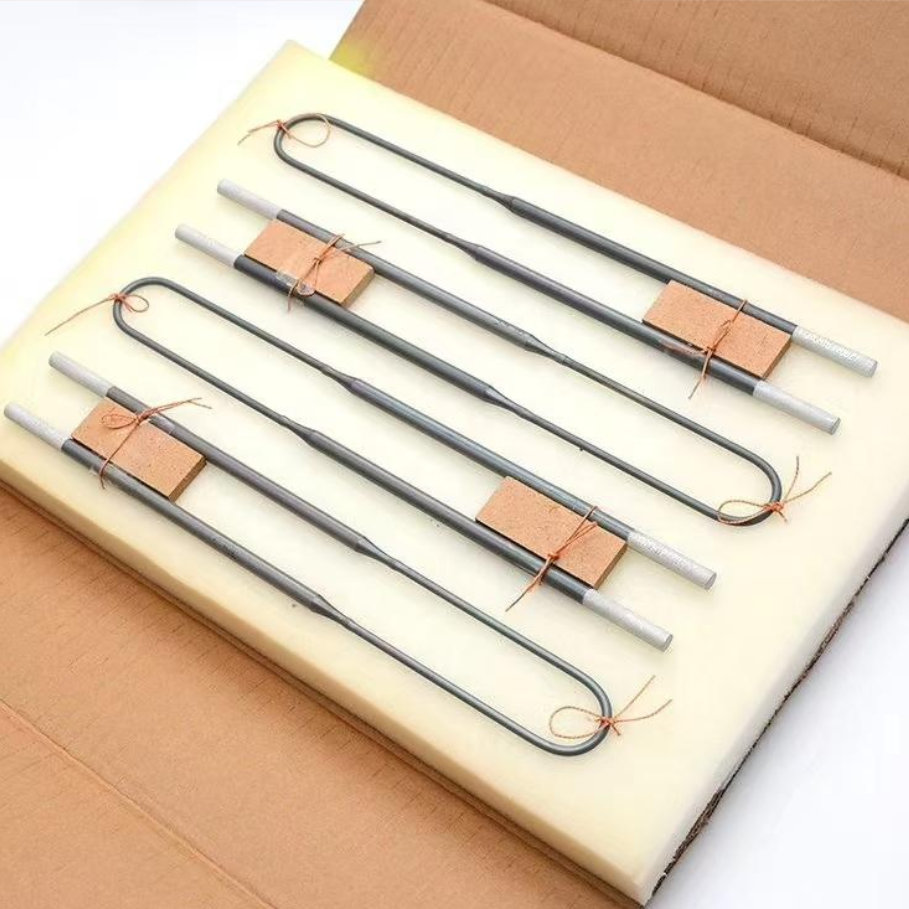
A mosi2 furnace heating element is rarely selected on temperature rating alone.
In ceramic, glass, and laboratory furnaces, the real difference comes from atmosphere, cycling frequency, load shape, and maintenance access.
That is why the same heating alloy can perform very differently across production lines.
Where stable high-temperature output is required, molybdenum disilicide remains a dependable choice because it combines oxidation resistance, quick response, and long operating life.
In actual furnace projects, those strengths matter most when downtime is expensive and thermal consistency affects product quality.
The more useful question is not whether a mosi2 furnace heating element works in general.
It is whether the element geometry, mounting method, and control strategy match the working scene.
Liaoyang Jiaxin Carbide has built its reputation around this practical fit.
Since 2007, the company has focused on SiC heating elements, MoSi2 heating elements, protective pipes, and graphite products.
Its export experience across Europe, Asia, and North America reflects a familiar reality.
Furnace conditions differ by market, process standard, and production habit, so application advice must stay grounded.
Ceramic kilns usually care more about temperature uniformity than peak temperature
Ceramic firing often looks straightforward from a distance.
Yet in practice, glaze development, body densification, and color stability depend on even heat distribution over long cycles.For this reason, a mosi2 furnace heating element is often chosen for shuttle kilns, chamber furnaces, and intermittent ceramic lines where repeatability matters more than sheer output.
The common mistake is to focus only on maximum furnace temperature.
Ceramic kilns also need attention to element spacing, radiant balance, wall reflection, and the thermal mass of shelves and setters.
If the load pattern changes often, the heating profile should be reviewed with the element arrangement.
A dense load near the hot zone can create local lag, even when the control system reports stable chamber temperature.
In these kilns, a practical adaptation step is checking whether replacement access is simple enough during maintenance shutdowns.
Where holders and terminals are exposed to repeated service work, the mounting detail can matter as much as the element itself.
That is where parts such as Mosi2 heating element two shank holders fit naturally into long-life kiln layouts.
Glass furnaces place more pressure on surface stability and contamination control
Glass melting and glass processing bring a different set of demands.
The concern is not only reaching high temperature, but holding a clean and predictable thermal field around sensitive material.
For specialty glass, laboratory glassware, and smaller technical furnaces, a mosi2 furnace heating element is valued because it forms a protective silica layer during operation.
That layer helps maintain oxidation resistance in air and supports stable service at elevated temperatures.
Still, glass applications are less forgiving when vapors, dust, or devitrification risks are present.
If batch materials release aggressive compounds, the heating system should be evaluated for chemical interaction, not only electrical load.
In small glass furnaces, fast heat-up is attractive, but ramp speed should match the vessel and refractory design.
Pushing response too hard can shift stress from the heating element to the furnace lining.
A better approach is balancing warm-up time against product sensitivity and maintenance interval.
That balance usually delivers more value than chasing the shortest possible cycle.
Laboratory furnaces need flexibility, but control precision comes first
Lab furnaces operate under a wider mix of conditions than production furnaces.
One week may involve sintering tests, while the next requires ash analysis, thermal treatment, or materials research.
Because of that variability, the mosi2 furnace heating element is often selected for high-temperature laboratory equipment that needs both responsiveness and repeatability.
The judgment point here is usually not output power alone.
It is how accurately the furnace can reproduce the same thermal history over multiple runs.
Small chambers can heat quickly, but they also magnify sensor placement errors and local radiation differences.
If samples are placed close to the hot zone, recorded chamber temperature may not reflect actual sample exposure.
That is why element selection should be reviewed together with control logic, thermocouple layout, and loading practice.
Where lab teams switch recipes often, keeping spare parts standardized also helps reduce unexpected downtime.
Different furnace scenes do not ask for the same priorities
A useful way to compare applications is to look at what each furnace is really trying to protect.
| Application scene | Main concern |
| Ceramic kilns | Uniform firing and repeatable product quality |
| Glass furnaces | Clean heating and stable surface performance |
| Laboratory furnaces | Precision, repeatability, and recipe flexibility |
This comparison explains why one mosi2 furnace heating element specification cannot be copied from one furnace type to another without review.
Selection decisions are usually won or lost in the details
When shortlisting a mosi2 furnace heating element, several checks deserve attention before final design approval.
- Confirm the real working temperature, not only the furnace nameplate rating.
- Review start-stop frequency, because thermal cycling changes service life expectations.
- Check chamber atmosphere and contaminants that may affect oxidation behavior.
- Match element shape and hot zone length to the useful heating area.
- Assess terminal design, holder reliability, and ease of on-site replacement.
- Compare operating cost with maintenance intervals, not purchase price alone.
These points sound basic, but many furnace retrofits fail because one of them is treated as secondary.
The usual misjudgment is assuming similar thermal processes create identical element requirements.
A glaze kiln, a glass annealing furnace, and a research chamber may all use high heat, yet the stress pattern on the element can be completely different.
A few ignored conditions create most of the avoidable failures
In real projects, the larger risk is not choosing MoSi2 technology itself.
It is overlooking the operating context around it.
One frequent issue is poor alignment between element design and furnace structure.
If the chamber leaves little allowance for expansion or service access, replacement becomes difficult and breakage risk increases.
Another issue is treating intermittent and continuous duty as though they place equal demands on the heating system.
They do not.
Intermittent cycling changes thermal shock exposure and should influence both selection and maintenance planning.
There is also a cost-side blind spot.
A lower initial quote may lead to more shutdowns, harder replacement, or weaker consistency over time.
In many furnaces, that hidden cost outweighs the original savings.
Where mounting durability is part of the concern, support components such as Mosi2 heating element two shank holders should be reviewed as part of the complete assembly, not as an afterthought.
What to line up before the next furnace decision
The best results with a mosi2 furnace heating element usually come from matching the heating alloy to a clearly defined operating scene.
For ceramic furnaces, that means protecting uniformity through layout and cycle planning.
For glass furnaces, it means checking atmosphere cleanliness and thermal stability together.
For laboratory furnaces, it means treating precision and flexibility as a combined requirement.
Before moving into procurement or retrofit work, it helps to document the real process temperature, atmosphere, load pattern, maintenance window, and control expectations.
That short review often reveals whether the current design basis is solid or incomplete.
With a manufacturer experienced in SiC and MoSi2 heating systems, protective components, and international furnace applications, those details can be turned into a more reliable selection standard for future projects.