What size silicon carbide heating element do I need? Learn how temperature, chamber size, voltage, and load affect SiC heater sizing for alloy furnaces and avoid costly mistakes.
If you are asking, “what size silicon carbide heating element do I need” for my furnace, the answer depends on temperature, chamber size, voltage, element layout and the material being processed. Choosing the right SiC heater size is critical for heating efficiency, service life and stable furnace performance. This guide explains the key selection factors and helps you avoid costly sizing mistakes.
For alloy heat treatment, non-ferrous melting support, powder metallurgy sintering, and related high-temperature furnace operations, element sizing is not a simple diameter choice. It directly affects watt loading, cold-end temperature, resistance stability, and whether the furnace can reach target temperature within a practical ramp time.
Buyers, furnace builders, and maintenance engineers usually need a sizing answer before placing a replacement order or designing a new heating zone. In most cases, the correct selection comes from 5 linked factors: furnace working temperature, usable chamber dimensions, available power supply, installation method, and load characteristics.
Key Factors That Determine Silicon Carbide Heating Element Size
When customers ask what size silicon carbide heating element do I need, the practical answer starts with thermal demand. In alloy industry furnaces, typical working temperatures may range from 900°C to 1,550°C, and that temperature band strongly influences element diameter, hot zone length, and total quantity of heaters.
Temperature Range and Furnace Duty Cycle
A furnace running at 1,000°C for intermittent batch heating does not require the same SiC heater configuration as a continuous furnace operating at 1,400°C for 20 hours per day. Higher operating temperatures generally require lower surface loading per element to protect service life and maintain stable resistance growth over time.
In alloy applications, duty cycle matters as much as peak temperature. A furnace used 2 to 3 times per week may accept a more compact layout, while a line running 24/7 usually benefits from conservative sizing, better heat distribution, and a reserve margin of roughly 10% to 15% in installed power.
Chamber Size, Heat Loss, and Load Weight
The internal chamber dimensions determine total radiation area and the length available for the hot zone. For example, a small lab furnace with a 300 × 300 × 500 mm chamber may use a very different rod length than a production furnace with a 1,200 × 800 × 1,500 mm chamber.
Load mass also changes the answer to what size silicon carbide heating element do I need. If your alloy parts weigh 50 kg per batch, heat-up demand is far lower than for 500 kg of dense metal fixtures, trays, and workpieces. Heavier loads require more installed kW and often more uniform multi-side heating.
Voltage, Phase, and Electrical Matching
Electrical conditions must match the heater size. Common industrial power supplies include 220V, 380V, 415V, and higher three-phase configurations. The element resistance at room temperature and operating temperature must be coordinated with transformer capacity, controller range, and series-parallel connection design.
If resistance is too low, current may become excessive during startup. If it is too high, the furnace may fail to reach setpoint efficiently. In practice, many furnace projects balance 3 things at once: target kW, allowable current, and a future aging margin for SiC resistance increase after long-term use.
The table below shows how major sizing variables influence selection in alloy furnace projects.
| Selection Factor | Typical Range or Condition | Impact on Element Size |
| Working temperature | 900°C–1,550°C | Higher temperature usually requires lower watt loading and more careful hot zone sizing |
| Chamber size | Small lab furnace to large production furnace | Determines rod length, quantity, layout spacing, and heat distribution |
| Power supply | 220V–480V, single or three phase | Controls resistance matching, current level, and connection method |
| Load weight | 50–500 kg or more per batch | Changes required kW and the number of active heating rods |
The main takeaway is that no single diameter or rod length fits every furnace. Correct sizing always combines thermal and electrical calculations, especially in alloy processing where dense loads and repeated thermal cycling can shorten heater life if the configuration is undersized.
How to Calculate the Right SiC Heater Configuration
A practical sizing process usually starts with total furnace power. If a chamber needs 24 kW to reach and maintain its process temperature, the next step is deciding how many silicon carbide heating elements will share that load and what individual wattage each rod should carry.
Step 1: Confirm Total Required Power
For alloy furnaces, required power is influenced by chamber volume, insulation grade, opening frequency, charge weight, and target heat-up time. As a rough engineering guide, some compact well-insulated furnaces may need only moderate installed density, while heavier-duty industrial units often require more power per cubic meter to maintain productivity.
If you need to heat from ambient to 1,250°C in 90 minutes rather than 180 minutes, installed power may need a meaningful increase. This is one reason a replacement project should not rely only on old rod dimensions if the production target has changed.
Step 2: Decide Quantity and Layout
After total kW is known, the element quantity is selected according to available installation space and uniformity requirements. Common layouts include 2-side, 3-side, 4-side, top, bottom, or U-shaped arrangements. In alloy heat treatment, 4-side layouts often improve temperature balance for dense metal loads.
- 2-side heating: simpler structure, lower initial cost, suitable for lighter loads
- 3-side heating: better balance for medium chambers and mixed batch production
- 4-side heating: preferred when strict temperature uniformity is required
- Top and bottom assistance: useful for trays, saggers, or stacked alloy parts
Step 3: Match Rod Diameter and Hot Zone Length
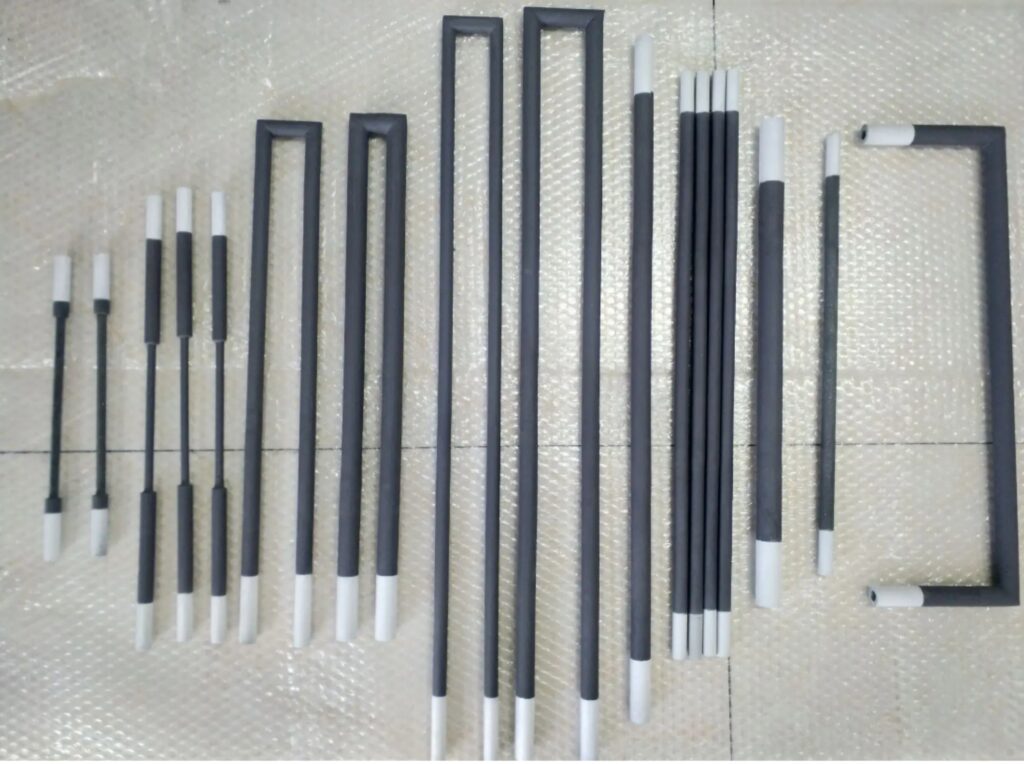
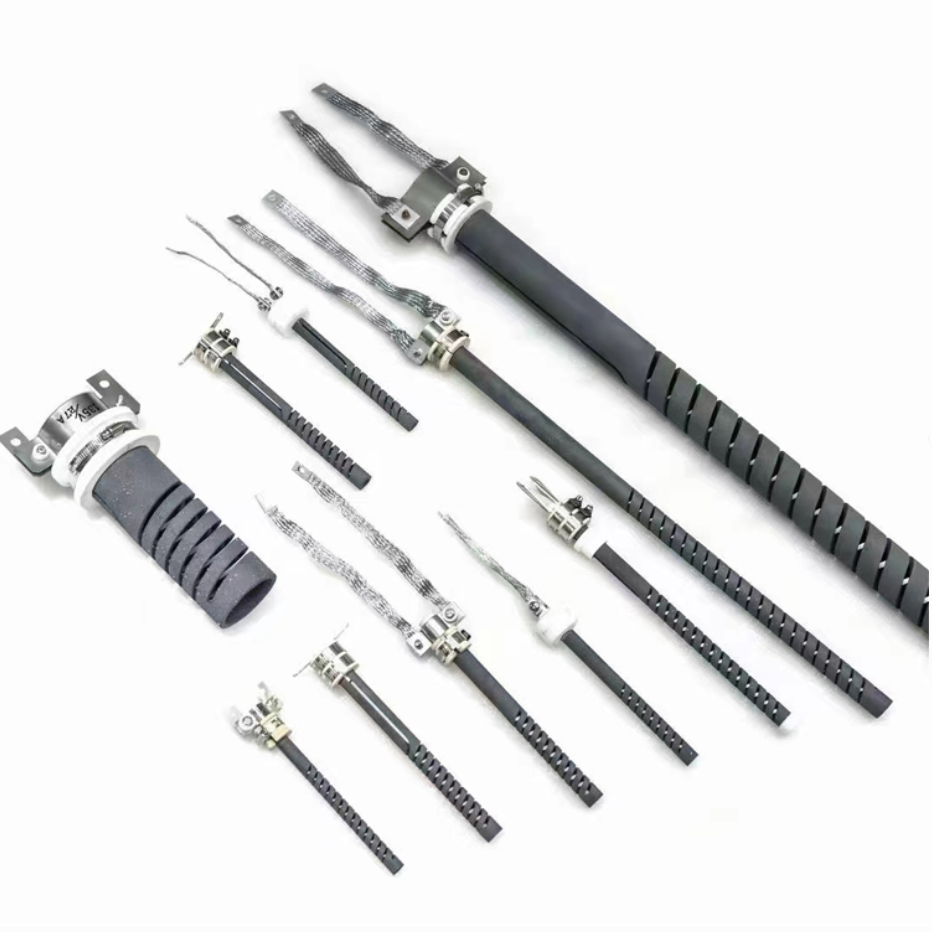
Silicon carbide heating elements are commonly selected by diameter, hot zone length, and cold end length. Larger diameters usually carry higher power and better mechanical strength, while longer hot zones distribute heat over a wider area. However, longer is not always better if the active zone extends beyond the effective chamber heating field.
A common mistake is choosing a rod only by overall length. The real focus should be the active hot zone versus wall thickness, brick opening position, and terminal exposure outside the furnace shell. Even a 20 to 30 mm mismatch in active placement can affect local overheating or cold spots.
Example of a Simple Allocation Method
Suppose an alloy furnace needs 36 kW total and the layout uses 12 SiC heaters. Each element then carries about 3 kW. The engineering team would next verify whether that 3 kW loading is suitable for the proposed diameter, hot zone length, and operating temperature band. If not, element quantity or dimensions should be adjusted.
The table below gives a simplified decision view used during preliminary furnace design and replacement planning.
| Project Item | Typical Input | Sizing Decision |
| Total furnace power | 12 kW, 24 kW, 36 kW, 60 kW | Determines required per-element wattage and total rod count |
| Heating layout | 2-side, 3-side, 4-side, top-bottom | Controls spacing, hot zone placement, and uniformity level |
| Element dimensions | Diameter plus hot/cold zone lengths | Must match furnace wall thickness, chamber depth, and electrical load |
| Electrical connection | Series, parallel, mixed grouping | Keeps operating current and voltage within controller range |
This type of structured calculation reduces the risk of selecting a rod that fits physically but fails electrically or thermally. In alloy production, that mismatch often leads to slow ramp-up, uneven sintering or heat treatment results, and premature element replacement.
Common Sizing Mistakes in Alloy Furnace Applications
Many replacement orders begin with only 3 data points: old rod length, diameter, and a photo. That is rarely enough. If the furnace was modified, insulation changed, or production shifted from light parts to denser alloy loads, the previous size may no longer be appropriate.
Choosing by Old Dimensions Alone
An old element may have been a compromise rather than an optimized design. If the furnace originally suffered from long heating cycles or uneven zones, repeating the same specification simply repeats the same problem. A proper review should include chamber drawing, terminal distance, supply voltage, and target process temperature.
Ignoring Resistance Aging
SiC elements gradually increase in resistance during service. In continuous or high-temperature alloy furnaces, this trend can become significant over months of operation. If the original electrical system has no voltage adjustment range or transformer tap margin, the furnace may struggle to maintain power as the rods age.
Overloading for Faster Heat-Up
Some users intentionally choose fewer rods and push higher wattage per element to shorten heat-up time. This can work briefly, but it often raises surface temperature, accelerates oxidation, and shortens service life. Saving 10% on initial element count may lead to much higher maintenance cost over the next 6 to 12 months.
Checklist Before Ordering Replacement Heaters
- Confirm furnace working temperature and normal holding temperature
- Measure chamber size and wall penetration depth
- Check voltage, current, and connection mode
- Record quantity of elements and their installation positions
- Review load type: alloy billets, powders, fixtures, trays, or mixed products
- Assess whether production cycle has changed in the last 12 months
If you are still asking what size silicon carbide heating element do I need after checking these items, the next step is technical calculation rather than guesswork. A complete sizing review usually prevents repeated shutdowns and mismatched spare inventories.
How a Custom Supplier Helps Reduce Selection Risk
In B2B furnace procurement, the best supplier does more than quote a rod price. A qualified manufacturer should evaluate drawings, power conditions, furnace structure, and operating targets before confirming element dimensions. That is especially important for alloy plants where process consistency affects product quality and energy cost.
Technical Support Beyond Standard Catalog Sizes
Liaoyang Jiaxin Carbide Co., Ltd. focuses on high-temperature industrial heating elements and matched furnace accessories, with support for OEM and ODM customization based on drawings, technical parameters, and special furnace working conditions. For buyers, this means sizing can be based on actual installation and power calculation rather than only standard dimensions.
Its engineering team can assist with heating power calculation, layout design, and operating guidance. For export customers managing multiple furnace models, this is useful because even small differences in chamber depth, terminal position, or process temperature may require different hot zone lengths or connection solutions.
Quality Control Points That Affect Real Performance
For silicon carbide heating elements, dimensional tolerance and resistance consistency matter in batch operation. If rods in the same furnace differ too much, some elements may run hotter than others, reducing uniformity and complicating power balancing. Inspection should include raw material control, sintering process stability, and finished resistance testing.
Export packaging and after-sales response also influence procurement success. For industrial users buying internationally, standard fumigated wooden packaging, controllable production lead time, and 24-hour inquiry response can reduce downtime risk when replacement elements are urgent.
Typical Information to Prepare for a Faster Quotation
To get an accurate answer to what size silicon carbide heating element do I need, prepare as many of the following items as possible:
- Existing element drawing or photo with key dimensions
- Furnace chamber size and wall thickness
- Operating temperature and heating cycle target
- Voltage, phase, and controller or transformer details
- Element quantity and layout position
- Material being processed, especially alloy type and batch weight
With these 6 inputs, a supplier can usually move from a general recommendation to a practical specification much faster, reducing the chance of rework, shipping delays, or installation mismatch.
Practical Buying Advice for Furnace Builders and End Users
If your project is a new alloy furnace, include heater sizing at the early design stage rather than after mechanical layout is fixed. Late-stage selection often forces compromises in terminal clearance, rod spacing, or electrical grouping. Early coordination can improve both thermal efficiency and maintenance access.
For New Furnace Projects
Ask the supplier to review 4 key items before fabrication: chamber drawing, target temperature curve, installed power plan, and expected production load. This helps determine whether standard SiC rods are sufficient or whether customized lengths, protection arrangements, or accessory fittings are needed.
For Replacement Orders
Do not assume that “same size” means “same performance.” Check whether the furnace now runs at a higher setpoint, uses different alloy material, or has aged insulation. Even when overall rod length stays unchanged, a revised resistance match or quantity adjustment may improve output and reduce recurring failures.
For International Buyers
Lead time, packing, and after-sales support should be part of the sizing decision. A technically correct element still creates problems if delivery is late or installation questions cannot be answered quickly. For this reason, many buyers prefer suppliers that can support samples, reasonable MOQ, FOB/CIF/DAP terms, and remote troubleshooting after shipment.
The right answer to what size silicon carbide heating element do I need is always application-specific. In alloy furnaces, correct sizing depends on at least 5 core parameters: temperature, chamber dimensions, electrical conditions, layout method, and production load. Getting these factors right improves heat-up speed, temperature uniformity, and service life while reducing avoidable replacement cost.
If you need support for new furnace design, replacement element matching, or customized SiC heater production, Liaoyang Jiaxin Carbide Co., Ltd. can assist with technical calculation, layout review, and tailored manufacturing based on your drawings and working conditions. Contact us now to get a customized solution, discuss product details, or learn more about high-temperature heating element options for your alloy furnace.
Pingback: SiC Heating Elements Resistance Aging Rate Explained
Add me by whatsapp : +86 15804230746
Pingback: How to Choose a Reliable SiC Heater Rod Supplier
thank you .
reply me by whatsapp:+8615804230746