1. Low-Temperature Oxidation Feature of Molybdenum Disilicide
Molybdenum disilicide boasts outstanding oxidation resistance under high temperatures. However, low-temperature oxidation and pulverization will occur within 400°C to 700°C. For this reason, avoid operating the heating element continuously at temperatures between 400°C and 700°C during application.
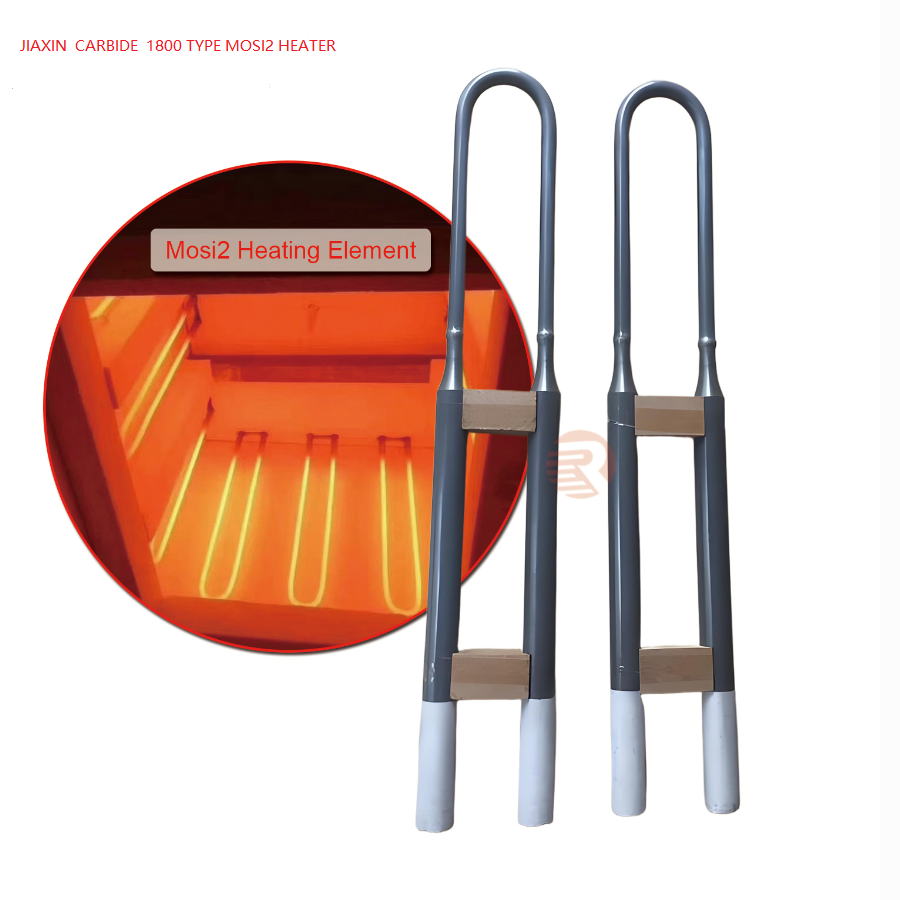
2. Resistance Properties of MoSi₂ Heating Elements
The resistivity of molybdenum disilicide heating elements rises along with temperature growth. Its resistivity at high temperature is roughly 10 times the value at low temperature.
Compared with metallic heating wires, MoSi₂ elements have far lower resistivity, operating under low voltage and high current conditions. Transformers are therefore required for normal operation. One critical risk needs attention: the resistance of standard MoSi₂ rods at low temperatures is only 1/10 of their resistance at working temperature. Direct application of full voltage will create current 10 times the rated operating current. This heavy current surge damages both the heating element and electrical control units.
This risk mainly appears when the furnace starts heating. If furnace temperature lags behind the set value, the power regulator will output maximum power. Low-resistance cold heating elements will bear full voltage and generate excessive current (the heating rod needs time to warm up). Recommended control rule: Limit the voltage loaded on cold elements to maximum one-third of rated working voltage during low-temperature heating. If current limiting is available, restrict current within the element’s rated operating current.
Temperature Controller Parameter Setting Example
Configuration case: One furnace equipped with 9 pcs Φ6/12 silicon molybdenum rods, grouped into 3 sets (3 pieces per set) with star connection. Single element rating: 10V, 150A, 1500W. The transformer outputs 35V to each group, rated group current 180A, controlled via thyristor power regulator.
| Ramp Time (min) | Target Temperature (°C) | Power Limit | Max Output Voltage (V) | Remarks |
| 30 | 300 | 20~30% | 7~10.5 | Restrict output voltage in initial heating stage to avoid heavy current surge. Set current ≤150A if current limiting function is supported. |
| 60 | 1000 | 100% | 35 | |
| 60 | 1500 | 100% | 35 | |
| …… | …… | …… | …… |
This parameter setup effectively eliminates current impact during startup.
Long-term service changes the internal structure of silicon molybdenum rods and increases brittleness. Severe current shock easily causes brittle fracture of elements, so proper parameter configuration becomes even more important for aged heating rods.
Another practical advantage: The resistance of MoSi₂ heating rods stays stable regardless of service duration. New and used elements can be mixed in one furnace, helping customers cut operating costs significantly.
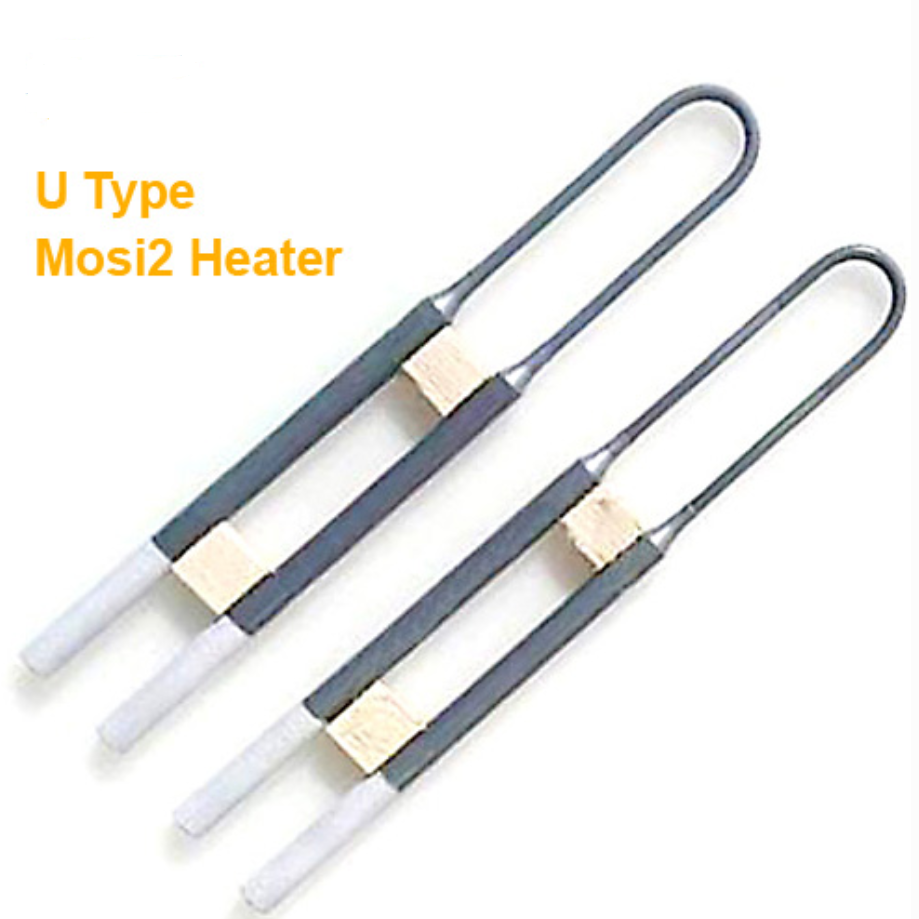
3. High-Temperature Softening Characteristic of MoSi₂Heating Elements
At low temperatures, molybdenum disilicide is high-strength yet highly brittle, similar to ceramic materials. Once temperature exceeds 1000°C, the material develops plastic softness like metal.
Since silicon molybdenum rods work continuously at high temperatures, their high-temperature softening property must be considered to prevent deformation and failure.
Horizontal installation: Reduce operating temperature appropriately. Higher temperature brings greater softening and larger bending deformation. Supporting brackets and heat dissipation design are necessary.
L-type heating rods: Gravity leads to deformation at high temperature. Deformed rods may contact furnace lining and burn out. Extra care is required during design and installation.
4. Self-Healing Protective Film of Molybdenum Disilicide Rods
A thin SiO₂ glass film forms naturally on the surface of MoSi₂ elements. This layer stops further oxidation of the base material under high temperature, which delivers the excellent high-temperature oxidation resistance.
However, the SiO₂ film and MoSi₂ substrate have different thermal expansion coefficients. For furnaces working with intermittent heating cycles under oxidizing atmosphere, repeated heating and cooling causes the surface film to peel off. This is an inherent property of silicon molybdenum heating rods.
When the SiO₂ protective layer flakes off, a new glass film will regenerate automatically once the element reheats in oxidizing conditions. This mechanism is known as the self-healing feature of MoSi₂ heating elements.
FAQ
Q: What is the maximum service life of a liao yang jia xin MoSi2 heating element?
A: A high-quality MoSi2 heating element from Liaoyang jiaxin gives more than 3000 hours of steady use when the air contains oxygen. In a vacuum or in an inert gas the same element can reach 5000 hours. Operators achieve this longer life when they keep up with regular checks and cleaning.
Q: Why do MoSi2 elements from a professional MoSi2 heating element manufacturer sometimes fail at low temperatures?
A: Failure between 400°C and 700°C is caused by “pesting,” a form of low-temperature oxidation where a protective SiO2 film cannot form. Liaoyang jiaxin improves material density to reduce this problem, but users still need to move through this temperature range quickly during startup.
Q: Can I use new and old elements together from my MoSi2 heater supplier?
A: Yes, because the resistivity of a MoSi2 heating element does not change much with use, unlike silicon carbide. New and old elements can therefore be used together in the same circuit without causing electrical imbalance.
Q: How does Liaoyang jiaxin ensure the quality of its MoSi2 heating element welding?
A: As a premier MoSi2 heating element manufacturer, Liaoyang jiaxin uses special welding methods to avoid defects such as core voids or incomplete welds. This stops the bubbling effect and localized overheating that often lead to early failure.
Q: What are the recommended surface loads for a MoSi2 heating element in a furnace?
A: A reliable MoSi2 heater supplier like Liaoyang jiaxin recommends surface loads based on furnace temperature. For example, the load should stay below 18 W/cm² at 1400°C. It should drop to below 8 W/cm² when the furnace reaches 1700°C. Following these values helps the element last longer.