Sourced and manufactured by Liaoyang Jiaxin Carbide Co., Ltd. | Official sites: https://jiaxincarbide.com/ and [http://jiaxin‑carbide.com/](http://xn--jiaxincarbide-um6g.com/)
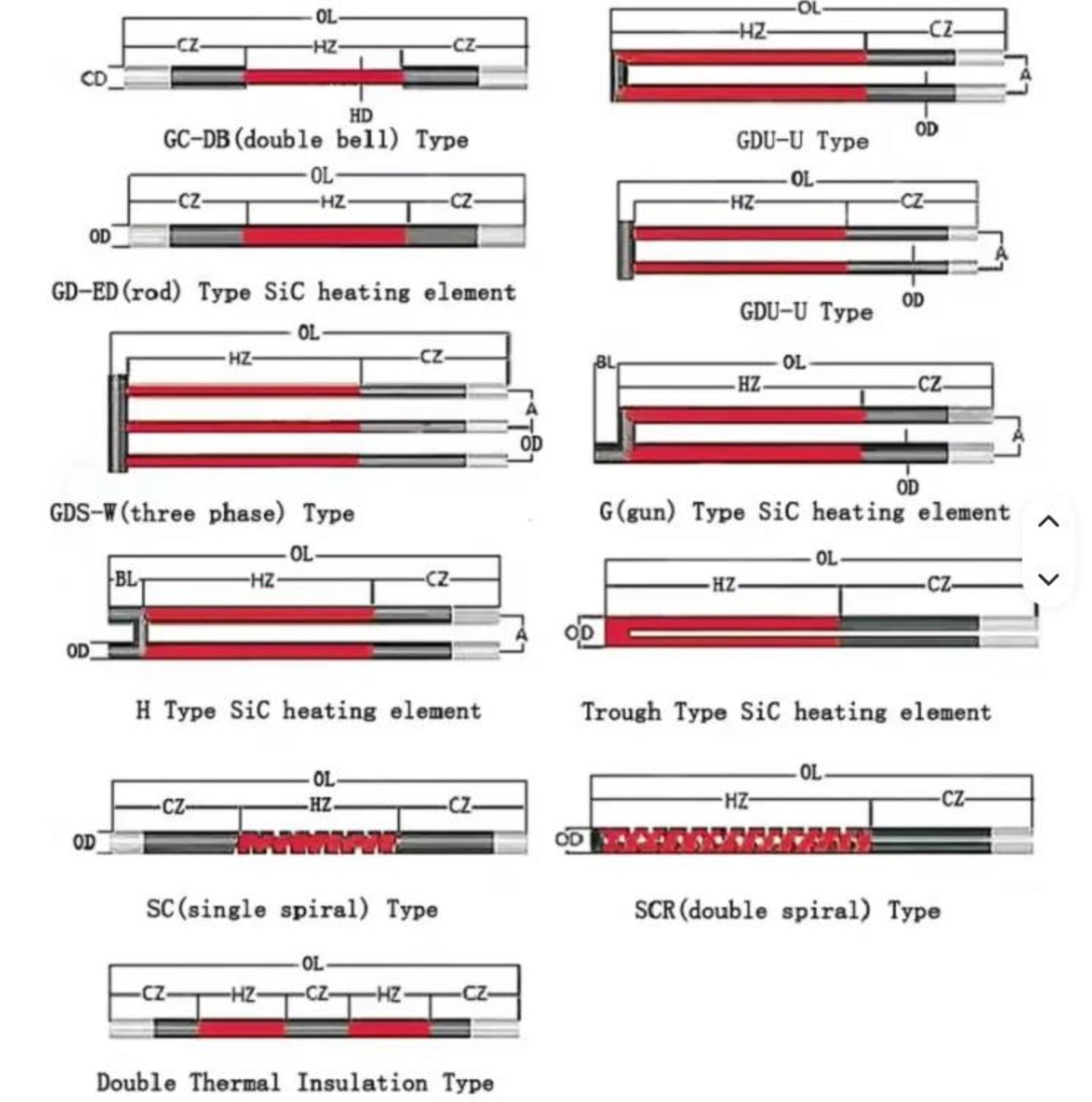
High‑temperature furnaces for ceramics, glass, metallurgy, powder sintering and lab equipment rely heavily on silicon carbide heating elements. When you start sourcing parts, you will quickly run across multiple SiC heating element types. Each SiC heating element types comes with distinct shapes, mounting rules, heat‑output behaviours and field‑use limits.
At Liaoyang Jiaxin Carbide Co., Ltd., a high‑tech manufacturer with over 15 years of production experience, we produce the full portfolio of SiC heating element types. Our factory ships U type SiC heating element, W type SiC heating element, spiral SiC heating element, straight rods and custom‑built units to customers across Europe, Southeast Asia, Russia, Korea and many other regions. If you visit our web portals https://jiaxincarbide.com/ and [http://jiaxin‑carbide.com/](http://xn--jiaxincarbide-um6g.com/), you can view real‑world product photos, application cases and full technical documentation for every SiC heating element types we supply.
Picking the right SiC heating element types is never only about maximum working temperature. Furnace chamber dimension, available installation clearance, voltage‑phase setup, target heating uniformity and ease of spare‑part replacement all weigh heavily on your final decision. Many furnace builders and plant operators reach out to Liaoyang Jiaxin Carbide Co., Ltd. for hands‑on advice before finalising their order of U type SiC heating element, W type SiC heating element or spiral SiC heating element.
Straight Type SiC Heating Element: Reliable Basic Rod Format
The straight‑rod SiC heating element sits as the most widely deployed baseline choice out of all SiC heating element types. Built as a simple single rod body, it includes a hot heating section plus low‑resistance cold terminal ends. Installers run these rods straight through furnace wall openings, either horizontally or vertically, based on your furnace layout.
Key practical strengths:
- Simple solid structure, low failure risk under normal operating cycles
- Fast installation and straightforward field replacement
- Broad range of available diameters and overall lengths
- Works well for large‑volume furnace chambers
- Good cost‑performance ratio for mass‑volume projects
You will spot straight‑rod SiC heating elements inside ceramic kilns, heat‑treatment furnaces, laboratory box furnaces and general industrial heating systems. One practical note: since every rod installs independently, your engineering team needs to lay out rod positions carefully to achieve consistent temperature zones inside the furnace.
Liaoyang Jiaxin Carbide Co., Ltd. keeps large stocks of standard straight‑rod SiC heating elements. You can check specifications and sample images on https://jiaxincarbide.com/ and [http://jiaxin‑carbide.com/](http://xn--jiaxincarbide-um6g.com/).
U type SiC heating element: One‑Side Mounting for Compact Furnace Layouts
Among popular SiC heating element types, the U type SiC heating element stands out for projects where you cannot access both sides of the furnace shell. Instead of using two separate straight rods, one integrated U‑shaped body creates two parallel heating legs. Both electrical terminals sit on the same outer side of the furnace wall.
For plant maintenance crews, the U type SiC heating element brings clear real‑world benefits:
- All wiring work completes on one furnace side
- Simplifies furnace wall opening design, fewer penetration holes
- Quick maintenance access for terminal clamps and connections
- Compact footprint, fits medium‑size and tightly‑built furnaces
- Multiple U‑shaped units can arrange around chamber walls to build balanced thermal zones
Common real‑world uses for U type SiC heating element: laboratory furnaces, ceramic kilns, powder‑sintering stations, metallurgical furnaces and glass‑heating equipment. When you place an order with Liaoyang Jiaxin Carbide Co., Ltd., you should pass over these parameters: rod diameter, hot‑zone length, cold‑end length, leg centre‑to‑centre gap, operating voltage and target power rating. Visit https://jiaxincarbide.com/ and [http://jiaxin‑carbide.com/](http://xn--jiaxincarbide-um6g.com/) to view actual production photos of finished U type SiC heating element products.
W type SiC heating element: High Heating Density for Confined Internal Space
The W type SiC heating element fills a niche among SiC heating element types when you need higher heating output without expanding your furnace internal footprint. One single W‑shaped piece combines multiple connected heating legs. Within limited installation space, you gain much larger effective heating surface compared with scattered individual straight rods.
Practical advantages of W type SiC heating element:
- Multiple hot‑zone segments integrated within one single component
- Reduced total count of wiring terminals on the furnace exterior
- Improved heating density and decent temperature spread
- Suits complex furnace inner‑chamber geometries
You will see W type SiC heating element deployed in high‑temperature industrial furnaces, ceramic sintering furnaces, powder‑metallurgy equipment and custom specialty kilns. One critical point to remember: the W type SiC heating element demands precise electrical matching. Voltage, resistance, current draw, power loading and hot‑zone physical length must all calculate correctly before production. Wrong electrical configuration will pull down service life and heating performance, even when you buy high‑quality raw‑material parts.
Liaoyang Jiaxin Carbide Co., Ltd. technical team routinely reviews customer drawings for W type SiC heating element. You can submit your furnace parameters via our official portals https://jiaxincarbide.com/ and [http://jiaxin‑carbide.com/](http://xn--jiaxincarbide-um6g.com/) to get verified technical feedback before manufacturing.
Spiral SiC heating element: Flexible Geometry for Special Furnace Designs
When standard straight, U or W formats cannot match your unique heating‑zone requirement, the spiral SiC heating element from our list of SiC heating element types becomes your viable option. Its heating section forms into a coil‑style spiral profile. This structure stretches effective heating length within compact physical dimensions.
Core strengths of spiral SiC heating element:
- Maximise heating surface within restricted chamber space
- Flexible custom dimensions for non‑standard furnace hardware
- Supports special localised heating patterns for niche‑process equipment
That said, spiral SiC heating element calls for careful mechanical engineering. Buyers need to lock in spiral diameter, hot‑zone length, target resistance value, power density, mounting orientation, thermal‑expansion allowance and supporting‑bracket layout. Without proper support fixtures, repeated heating‑cooling cycles introduce mechanical stress and trigger premature breakage.
Liaoyang Jiaxin Carbide Co., Ltd. manufactures custom spiral SiC heating element according to customer drawings. Check our website https://jiaxincarbide.com/ and [http://jiaxin‑carbide.com/](http://xn--jiaxincarbide-um6g.com/) to review our custom‑order workflow.
Customized SiC Heating Elements: Match Existing Furnace Hardware
Very often, off‑the‑shelf SiC heating element types cannot perfectly fit legacy equipment or one‑of‑a‑kind OEM furnaces. Custom‑fabricated silicon carbide heating elements solve this pain point.
Liaoyang Jiaxin Carbide Co., Ltd. can tailor many physical and electrical attributes: element diameter, overall length, hot‑zone length, cold‑end length, U‑form, W‑form, spiral‑form, special bending shapes, terminal hardware, resistance value, voltage grade and power rating. Custom‑made SiC heating elements work great for equipment repair firms replacing obsolete discontinued parts. Instead of re‑engineering your whole furnace, you get drop‑in replacement elements that fit existing mounting holes. This cuts modification cost and simplifies on‑site maintenance work.
Side‑by‑Side Overview of SiC Heating Element Types
| SiC Heating Element Type | Structure | Installation Feature | Heating Performance | Typical Application |
| Straight Type | Single straight rod | Pass‑through furnace wall; vertical /horizontal mounting | Flexible layout; manual arrangement for temperature uniformity | General industrial furnaces & kilns |
| U type SiC heating element | Two connected heating legs | Single‑side furnace connection | Compact, balanced heating zones | Lab furnaces, medium‑size industrial furnaces |
| W type SiC heating element | Multi‑leg connected integral body | Compact internal installation | High heating density | Specialised high‑temperature furnaces |
| Spiral SiC heating element | Spiral / coiled hot section | Custom‑fit installation | Flexible custom heating patterns | Compact and special‑structure furnaces |
| Customized Type | Customer‑specified geometry | Depends on furnace requirement | Optimised for exact process targets | OEM equipment, legacy‑furnace replacement |
Key Practical Factors When You Pick SiC Heating Element Types
Do not select SiC heating element types purely by shape alone. Walk through these real‑world considerations before you place orders for U type SiC heating element, W type SiC heating element or spiral SiC heating element.
- Working furnace temperature: Confirm sustained operating temperature and peak‑temperature spikes. Your selected SiC heating element types must deliver stable performance inside that temperature window.
- Furnace physical size: Large furnaces frequently use multiple straight rods. Compact furnaces often adopt U type SiC heating element or W type SiC heating element.
- Installation‑space constraints: If maintenance crews can only access one furnace side, U type SiC heating element delivers huge practical convenience.
- Heating uniformity targets: W type SiC heating element and well‑engineered spiral SiC heating element help build consistent thermal zones in tricky chamber layouts.
- Electrical parameters: Collect operating voltage, phase configuration, required power, target resistance and quantity of heating elements. Good electrical matching directly determines long‑run stability.
- Non‑standard equipment: For custom‑built or legacy furnaces, custom‑made SiC heating element types give the most practical solution. Submit technical drawings or sample photos to Liaoyang Jiaxin Carbide Co., Ltd. via https://jiaxincarbide.com/ or [http://jiaxin‑carbide.com/](http://xn--jiaxincarbide-um6g.com/) for quotation.
Maintenance & Replacement Tips for All SiC Heating Element Types
All SiC heating element types show gradual resistance drift over long running hours. Your furnace power system should accommodate this resistance change. Routine on‑site inspection work covers checking electrical connections, tightening clamps and terminals, measuring element resistance, checking for mechanical cracks, monitoring furnace inner atmosphere and avoiding sharp thermal shock.
When you replace worn‑out parts: always match electrical characteristics of old elements. Swapping only one element with mismatched resistance will break power balance inside the furnace. This warning applies especially for systems running multiple U type SiC heating element or W type SiC heating element.
Liaoyang Jiaxin Carbide Co., Ltd. publishes practical maintenance checklists on https://jiaxincarbide.com/ and [http://jiaxin‑carbide.com/](http://xn--jiaxincarbide-um6g.com/) for field‑operation reference.
No single design among SiC heating element types fits every industrial scenario. Straight‑rod units offer simplicity and flexibility. U type SiC heating element simplifies single‑side installation with compact structure. W type SiC heating element packs multi‑segment heating power into limited inner‑furnace space. Spiral SiC heating element opens geometry options for special‑purpose equipment. For non‑standard furnaces, custom‑built SiC heating element types can match your exact dimension, resistance, power and mounting requirements.
Whenever you request quotations, share complete furnace specifications. The engineering team at Liaoyang Jiaxin Carbide Co., Ltd. will recommend suitable SiC heating element types according to your actual working conditions. Browse our product gallery and technical resources at https://jiaxincarbide.com/ and [http://jiaxin‑carbide.com/](http://xn--jiaxincarbide-um6g.com/) to get more details about U type SiC heating element, W type SiC heating element and spiral SiC heating element.