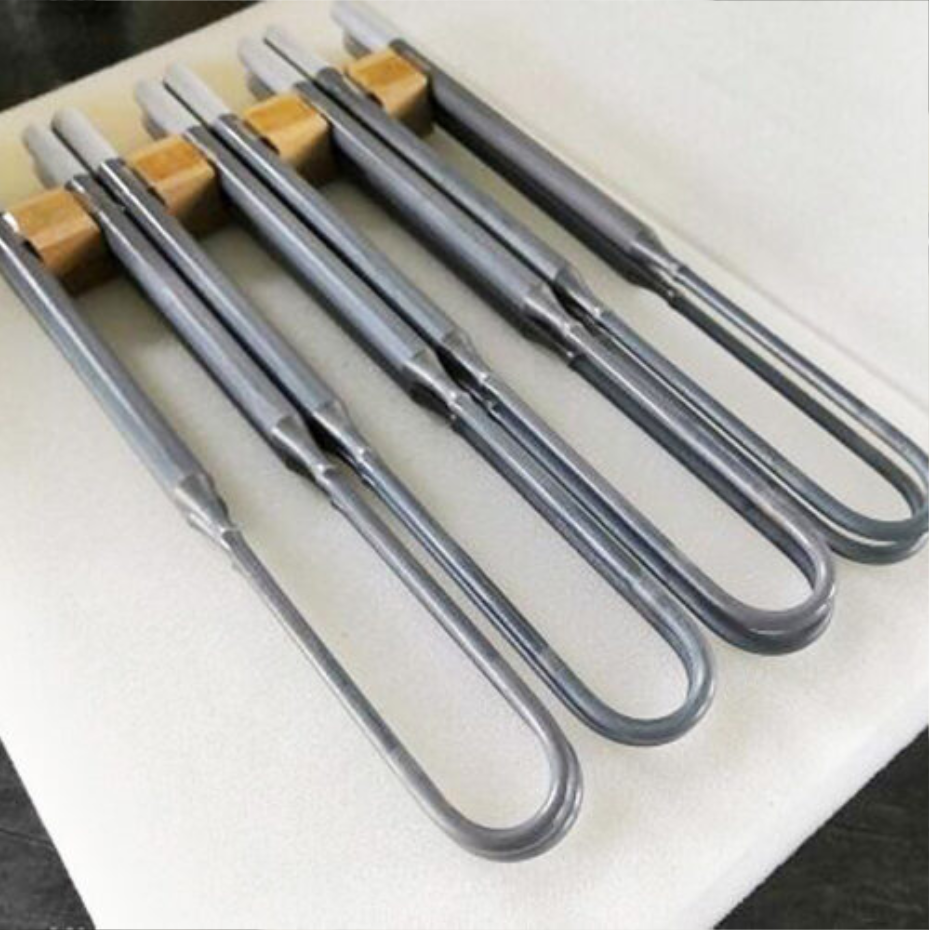
Choosing the right high temperature MoSi2 element for tunnel kiln applications is critical to furnace efficiency, product consistency, and long-term operating cost. From temperature range and atmosphere compatibility to element shape, watt loading, and installation layout, proper specification directly affects service life and heating performance. This guide explains the key factors engineers and buyers should evaluate before selecting a reliable solution.
Why is a high temperature MoSi2 element for tunnel kiln service different from standard heating selection?
Tunnel kilns create a demanding thermal environment. Unlike batch furnaces, they run continuously, often with moving loads, changing heat zones, frequent door-related disturbances, and long operating hours. That means a high temperature MoSi2 element for tunnel kiln duty must be specified as part of a complete thermal system, not as an isolated spare part.
In alloy, ceramic, powder metallurgy, and non-ferrous processing lines, tunnel kilns are expected to deliver stable peak temperature, controlled ramp profile, and even heating across the load width. If the element is underspecified, the result may be slow heat-up, poor zone control, oxidation imbalance, or premature breakage. If it is oversized without proper power matching, local overheating and avoidable energy loss can follow.
MoSi2 heaters are valued for high operating temperature capability, oxidation resistance in air, and suitability for demanding industrial kilns. However, the correct grade and geometry depend on furnace design, process temperature, atmosphere, product loading pattern, insulation efficiency, and electrical configuration. Buyers who only compare diameter and length often miss the factors that actually determine service life.
- Continuous tunnel kiln operation places stronger emphasis on thermal balance between preheating, firing, and cooling sections.
- Element spacing, hot zone length, and terminal temperature matter as much as nominal maximum furnace temperature.
- Mechanical installation must account for brick movement, vibration, and repeated thermal expansion over long campaigns.
What makes MoSi2 suitable for high-temperature tunnel kilns?
A molybdenum disilicide element forms a protective silica layer during high-temperature use in oxidizing conditions. This layer helps the heater resist further oxidation, making MoSi2 a practical solution for tunnel kilns operating at elevated temperatures where metallic heaters would struggle. It also supports high surface loading when design, control logic, and chamber airflow are properly engineered.
That said, MoSi2 is not a universal answer for every kiln. Reducing atmospheres, aggressive contaminants, unsupported spans, or poor cold-end cooling can shorten performance. Specification should therefore begin with actual process conditions rather than a catalog shortcut.
Which operating parameters should you confirm before ordering?
Before requesting quotation for a high temperature MoSi2 element for tunnel kiln use, engineers should confirm the thermal, mechanical, and electrical basics. These inputs allow a manufacturer to recommend the right element diameter, heated length, cold end design, resistance range, and installation arrangement.
The table below summarizes the most important specification points that affect element performance in alloy and high-temperature furnace applications.
| Parameter | Why It Matters | What to Provide |
| Working temperature and peak temperature | Determines heater grade, watt loading, and safety margin | Normal setpoint, maximum setpoint, soaking time, ramp profile |
| Kiln atmosphere | Affects oxidation behavior and service life | Air, low oxygen, mixed gas, contaminant sources, vapor exposure |
| Zone dimensions and load pattern | Controls layout, spacing, and thermal uniformity | Chamber width, height, product density, conveyor arrangement |
| Power supply and control mode | Defines resistance matching and electrical grouping | Voltage, phase, transformer data, SCR or thyristor control details |
| Mounting method and support structure | Influences mechanical stress and replacement ease | Vertical or horizontal installation, holders, clamps, terminal access |
When these details are available at the inquiry stage, the selection process becomes faster and more accurate. It also reduces the risk of ordering a high temperature MoSi2 element for tunnel kiln service that fits the drawing but fails under real operating conditions.
For many overseas buyers, this is where technical support from an integrated manufacturer becomes useful. A supplier that can review drawings, calculate heating power, and advise on layout can prevent mismatch between furnace design and actual heat demand.
Minimum data checklist for RFQ
- Target operating temperature by zone, not only overall kiln maximum.
- Required production throughput and product weight per hour.
- Existing element drawing or space limitation inside refractory wall.
- Electrical system details including transformer capacity and control mode.
- Any contamination source such as alkali vapor, zinc, glass dust, or metallic fume.
How do shape, size, and watt loading affect a high temperature MoSi2 element for tunnel kiln use?
MoSi2 heating elements are available in several forms, with U-shape and W-shape among the common options for industrial furnaces. In tunnel kilns, the selected geometry must match chamber depth, heat distribution target, maintenance access, and electrical grouping. Shape is not only a mechanical question. It also changes current path, hot zone exposure, and replacement convenience.
Diameter and heated length influence surface load. If the watt loading is too high for the actual zone environment, the element temperature can climb far above furnace setpoint, accelerating aging. If the loading is too low, more elements may be needed, increasing initial cost and structural complexity. Good design balances element temperature, furnace output, and allowable safety margin.
The comparison below helps buyers understand how selection variables interact in practice.
| Selection Variable | Higher Value or Larger Design | Practical Trade-Off |
| Element diameter | Improves mechanical strength and can lower stress per unit area | Needs more installation space and may alter resistance matching |
| Heated length | Expands radiating area and supports more even heat distribution | Requires kiln wall geometry and terminal positioning to be checked carefully |
| Watt loading | Can reduce element count and speed response | Raises element temperature and may shorten life in harsh zones |
| Element spacing | Wider spacing lowers installation density | May create cold bands or uneven roof-to-load heat pattern |
| Cold end length | Improves terminal protection outside hot chamber | Needs extra external space and suitable clamp arrangement |
There is no universal “best” geometry. For example, an alloy-related tunnel kiln handling dense loads may need more conservative watt loading than a lab-scale high-temperature furnace, even if the setpoint is similar. Heat absorption, car structure, and product emissivity change the real burden on the heater.
Common specification mistakes
- Selecting based only on maximum temperature rating while ignoring continuous operating temperature.
- Copying a previous element size from another kiln without checking chamber geometry and power supply.
- Using aggressive surface loading to reduce purchase cost, then losing more through short replacement cycles.
- Ignoring cold-end temperature protection and terminal connection quality.
Which tunnel kiln scenarios need different MoSi2 selection logic?
Different production lines use a high temperature MoSi2 element for tunnel kiln service in very different ways. The key is to match the heater to process stability, contamination risk, and maintenance expectations rather than to temperature alone.
The following application matrix is useful when evaluating whether one standard design can serve multiple zones or whether the project should use customized configurations.
| Application Scenario | Main Design Concern | Selection Suggestion |
| Ceramic or zirconia tunnel kiln | Uniformity across long heating zones | Prioritize balanced spacing, stable control grouping, and careful radiant coverage |
| Powder metallurgy sintering line | Atmosphere compatibility and thermal repeatability | Review gas composition, contamination source, and thermal cycle before final sizing |
| Non-ferrous alloy heat treatment tunnel kiln | Load density and vapor exposure | Use conservative watt loading and confirm protective measures around terminals |
| Glass-related thermal processing | Corrosive dust and alkali vapor | Assess chamber contamination and shorten inspection interval if necessary |
For alloy industry buyers, contamination and thermal shock are often underestimated. Metallic vapor, powder carryover, and process dust can attack insulation, terminals, and nearby refractory surfaces. A good heating element supplier should therefore discuss surrounding furnace components such as clamps, conductive belts, protection tubes, and insulation fittings instead of quoting the element alone.
When customization becomes necessary
Customization is usually justified when the tunnel kiln has unusual chamber depth, non-standard refractory wall thickness, tight maintenance access, mixed zone temperature targets, or existing transformer limitations. In these cases, OEM or ODM support based on drawings and furnace conditions can reduce installation changes and shorten commissioning time.
Liaoyang Jiaxin Carbide Co., Ltd. supports customized production for MoSi2 heaters and related furnace accessories, which is valuable when buyers need matching components rather than a single standard item. Integrated coordination between element design, clamps, conductive parts, and insulation pieces often improves on-site fit and replacement efficiency.
How should buyers compare cost, lifetime, and replacement risk?
Initial price is only one part of the decision. A cheaper high temperature MoSi2 element for tunnel kiln operation can become more expensive if it causes frequent stoppages, uneven heating, or unstable resistance matching between zones. The real comparison should include service interval, energy stability, spare inventory complexity, and labor cost during replacement.
Procurement teams often benefit from evaluating the total operating effect using the following checklist.
- Compare not only unit price, but also expected replacement frequency under the same kiln profile.
- Check resistance tolerance and batch consistency to reduce imbalance during grouped installation.
- Ask whether the supplier can support heating power calculation and layout review before production.
- Confirm export packaging, lead time, and technical after-sales support for overseas maintenance teams.
Why batch consistency matters
In tunnel kilns with multiple heating zones, resistance deviation between elements can influence control stability. Strict process control from raw material inspection to high-temperature sintering and finished resistance testing helps reduce variation. This is especially important when replacement is done by zone groups rather than one element at a time.
A manufacturer with full-process inspection capability can usually provide more predictable batch quality and better matching advice. That lowers the chance of field adjustments after shipment, which is a real cost for international buyers.
What should you ask a supplier before placing the order?
A capable supplier should help refine the specification, not simply repeat the drawing. For a high temperature MoSi2 element for tunnel kiln projects, the most useful suppliers ask process questions early and give practical recommendations on element arrangement, electrical grouping, and accessory compatibility.
Useful pre-order questions
- Can you review our kiln drawing and confirm whether the proposed heated length and cold end are suitable?
- Can you assist with heating power calculation for each tunnel kiln zone?
- What resistance tolerance can you control within one batch and one zone group?
- Which clamps, conductive belts, and insulation fittings should be ordered together?
- What is the production lead time for standard and customized specifications?
- Do you provide remote installation guidance and troubleshooting after delivery?
Liaoyang Jiaxin Carbide Co., Ltd. combines manufacturing, export service, customized production, inspection, and technical after-sales support. For buyers managing alloy or high-temperature industrial kilns across multiple regions, that integrated model can simplify communication from inquiry to installation. Support for sample trial orders, reasonable MOQ, and FOB, CIF, or DAP terms also helps procurement teams align technical and commercial planning.
FAQ about high temperature MoSi2 element for tunnel kiln projects
How do I know whether MoSi2 is better than another heater type for my tunnel kiln?
Start with working temperature, atmosphere, and continuity of operation. MoSi2 is often preferred for very high-temperature oxidizing environments where stable radiant heating is needed. If your process involves different atmosphere constraints or lower temperature zones, another heater type may be considered for those sections. The decision should be based on process profile, not on temperature alone.
What is the most overlooked factor when specifying a high temperature MoSi2 element for tunnel kiln use?
Many buyers overlook actual zone heat demand and terminal protection. They focus on the furnace maximum temperature but do not provide zone length, load weight, and control method. This can lead to incorrect watt loading or poor cold-end conditions, both of which reduce service life.
Should I replace only broken elements or replace by matched groups?
That depends on kiln design and control sensitivity. In many tunnel kiln systems, group replacement by zone gives better resistance balance and temperature stability than mixing old and new elements randomly. A supplier can advise based on your electrical grouping and production tolerance requirements.
What delivery information should I confirm for export orders?
Confirm drawing approval, quantity by resistance group, packaging method, lead time, Incoterms, and whether accessories are packed together. Standard fumigated wooden export packaging and clear labeling are useful for fragile high-temperature elements and can reduce handling errors after arrival.
Why choose us for tunnel kiln heating element projects?
If you are evaluating a high temperature MoSi2 element for tunnel kiln operation, the best result usually comes from combining product supply with technical review. Liaoyang Jiaxin Carbide Co., Ltd. focuses on high-temperature industrial heating elements, silicon carbide refractory parts, precision graphite components, and matched furnace accessories, allowing buyers to coordinate multiple critical parts through one supplier.
Our engineering team can support parameter confirmation, heating power calculation, heating layout review, accessory matching, and customized production based on drawings or special furnace conditions. We also provide inspection-based quality control, sample support, export packaging, multilingual response within 24 hours, and remote technical assistance for installation and troubleshooting.
You can contact us to discuss kiln temperature range, element dimensions, atmosphere conditions, replacement planning, delivery schedule, sample trial orders, and quotation details. If you already have a drawing, operating data, or photos of the existing tunnel kiln, sharing them at the inquiry stage will help speed up accurate product selection and commercial confirmation.
Đây là một trong những trang game tôi thích nhất 66b nguyễn sỹ sách p15 tân bình TONY07-20
please add me by whatsapp :+8615804230746
email : jiaxincarbide@outlook.com
Sau khi tham gia slot365 đăng nhập , mình thấy tốc độ phản hồi nhanh hơn mong đợi. TONY07-20
please add me by whatsapp :+8615804230746
email : jiaxincarbide@outlook.com