Meta Title: Silicon Carbide Heating Elements: Complete Guide for Industrial Furnaces
Meta Description: Learn everything about silicon carbide heating elements, including working principles, advantages, applications, specifications, selection guide, installation tips, and maintenance for industrial furnaces.
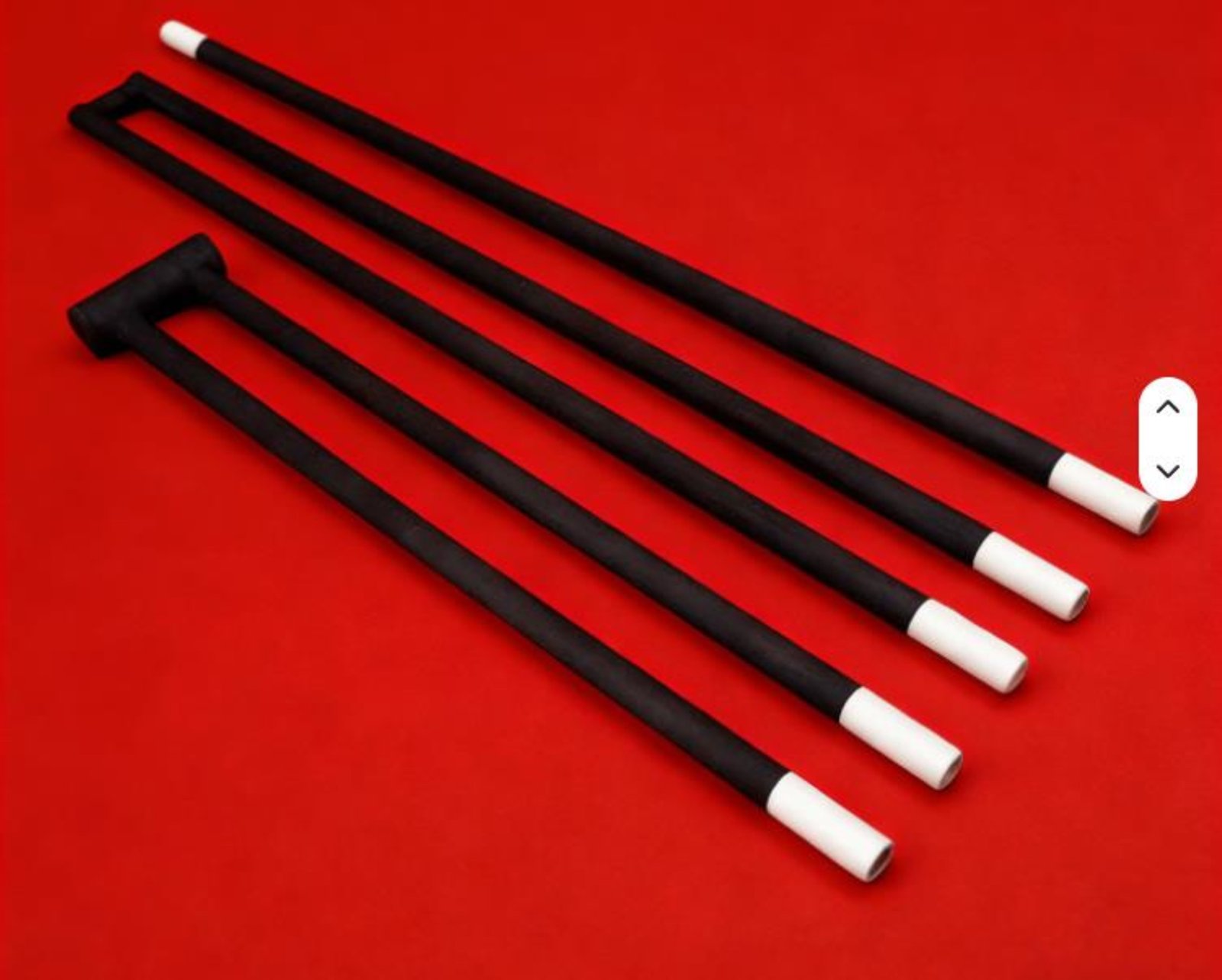
Industrial furnaces require heating components that can withstand extremely high temperatures while maintaining excellent thermal efficiency and long service life. Among today’s most reliable heating solutions, silicon carbide heating elements have become the preferred choice for ceramic, glass, metallurgy, powder metallurgy, electronics, and laboratory industries.
Compared with conventional electric heating materials, SiC heating elements provide outstanding oxidation resistance, rapid heating, excellent thermal conductivity, and long-term performance under demanding industrial conditions. Whether used in batch furnaces, tunnel kilns, or continuous production lines, they help manufacturers achieve higher productivity and lower maintenance costs.
This comprehensive guide explains everything you need to know about industrial furnace heating elements made from silicon carbide.
What Are Silicon Carbide Heating Elements?
Silicon carbide heating elements are non-metallic electric heating components manufactured from high-purity recrystallized silicon carbide. When electrical current passes through the conductive section, electrical resistance generates heat, allowing temperatures to reach as high as 1,600°C (2,912°F) in air.
Because of their exceptional temperature capability and chemical stability, they are widely used in high-temperature industrial furnaces worldwide.
Typical characteristics include:
Maximum operating temperature up to 1,600°C
Excellent oxidation resistance
High thermal conductivity
Fast heating response
Uniform heat distribution
Long service life
Easy installation and replacement
How Do SiC Heating Elements Work?
Like other resistance heaters, SiC heating elements convert electrical energy into heat through resistance.
The heating process follows these steps:
Electrical current passes through the conductive section.
Electrical resistance generates heat.
Heat transfers to the furnace chamber by radiation and convection.
The workpiece absorbs the thermal energy for processing.
One important characteristic is that the electrical resistance gradually increases during operation due to surface oxidation. Modern furnace control systems compensate for this change by adjusting voltage through transformers or SCR power controllers.
Main Advantages of Silicon Carbide Heating Elements
1. Extremely High Operating Temperature
One of the biggest advantages of silicon carbide heating elements is their ability to operate continuously at temperatures up to 1,600°C.
This makes them suitable for:
Ceramic kilns
Glass melting
Heat treatment
Laboratory furnaces
Powder metallurgy
2. Fast Heating Speed
SiC possesses excellent thermal conductivity.
Compared with traditional metallic heating elements, SiC heating elements heat up much faster, reducing furnace startup time and improving production efficiency.
Benefits include:
Faster production cycles
Lower energy consumption
Improved temperature control
3. Excellent Oxidation Resistance
At high temperatures, silicon carbide naturally forms a protective silica (SiO₂) layer.
This layer protects the element from further oxidation and significantly extends service life.
4. Uniform Temperature Distribution
Industrial furnaces require consistent heating to produce high-quality products.
Because silicon carbide radiates heat evenly, temperature uniformity throughout the furnace chamber is greatly improved.
Applications requiring precise temperature uniformity include:
Technical ceramics
Electronic ceramics
Glass products
Semiconductor materials
5. Long Service Life
Properly designed industrial furnace heating elements made from silicon carbide can operate for thousands of hours under normal conditions.
Factors affecting service life include:
Furnace atmosphere
Operating temperature
Power control
Installation quality
Thermal cycling frequency
Common Types of Silicon Carbide Heating Elements
Different furnace designs require different element configurations.
Straight Rod Type
The simplest design.
Suitable for:
Laboratory furnaces
Small kilns
Box furnaces
Advantages:
Easy installation
Low cost
Simple replacement
U-Shaped Heating Elements
Ideal when electrical connections need to remain on one side of the furnace.
Commonly used in:
Ceramic kilns
Industrial ovens
Heat treatment furnaces
W-Shaped Heating Elements
Provide greater heated length inside compact furnace chambers.
Suitable for:
High-capacity furnaces
Dense heating layouts
Spiral Silicon Carbide Elements
Used where customized heating distribution is required.
Applications include:
Special laboratory equipment
Customized industrial heating systems
Applications of Silicon Carbide Heating Elements
Because of their versatility, SiC heating elements serve numerous industries.
Ceramic Industry
Used for:Porcelain firing
Technical ceramics
Sanitary ware
Ceramic tiles
Advantages include:
Stable firing temperatures
Uniform heating
Reduced defects
Glass Industry
Ideal for:
Glass bending
Glass tempering
Glass melting
Quartz processing
Metallurgy
Widely used for:
Heat treatment
Annealing
Sintering
Brazing
Forging
Powder Metallurgy
High-temperature sintering requires accurate temperature control.
Silicon carbide heaters provide:
Stable operation
High efficiency
Uniform heating
Electronics Industry
Applications include:
Ceramic substrates
Electronic components
Ferrite materials
Semiconductor processing
Laboratory Furnaces
Research laboratories value silicon carbide heating elements because they deliver:
Precise temperature control
Fast heating
Reliable repeatability
Technical Specifications
Typical specifications vary by manufacturer.
| Parameter | Typical Value |
| Maximum Temperature | 1,600°C |
| Material | Recrystallized Silicon Carbide |
| Diameter | 8–54 mm |
| Heated Length | Customized |
| Cold End Length | Customized |
| Voltage | Customized |
| Resistance Tolerance | ±20% |
| Furnace Atmosphere | Air, Neutral, Some Protective Atmospheres |
How to Select the Right Industrial Furnace Heating Elements
Choosing the proper industrial furnace heating elements depends on several factors.
Furnace Temperature
Select elements with sufficient temperature margin.
Example:Furnace operating at 1,400°C
Choose elements rated for 1,500–1,600°C
Furnace Size
Consider:Chamber dimensions
Heating zone length
Available installation space
Furnace Atmosphere
Atmospheres affect element life.
Examples include:
Air
Nitrogen
Argon
Hydrogen (special considerations)
Vacuum (application dependent)
Power Requirements
Determine:
Total furnace power
Voltage
Current
Phase configuration
Proper electrical matching ensures optimal performance.
Heating Uniformity
Element spacing influences temperature consistency.
Proper layout minimizes:
Cold spots
Hot spots
Temperature fluctuations
Installation Tips
Correct installation significantly improves service life.
Recommended practices include:
Avoid mechanical stress.
Ensure proper alignment.
Maintain adequate spacing.
Prevent element contact.
Tighten electrical connections correctly.
Use appropriate support fixtures.
Allow thermal expansion.
Maintenance and Troubleshooting
Routine inspection reduces downtime.
Regular Inspection
Check for:Surface damage
Cracks
Oxidation
Loose terminals
Resistance Monitoring
Since resistance increases with age, periodically measure resistance values.
Replace elements when performance becomes unstable.
Replace Elements in Sets
For multi-element furnaces, replacing elements in matched groups helps maintain balanced electrical loads and uniform heating.
Keep Furnace Clean
Remove accumulated dust and process residues to improve heat transfer and reduce contamination.
Silicon Carbide Heating Elements vs. Molybdenum Disilicide Heating Elements
| Feature | Silicon Carbide Heating Elements | Molybdenum Disilicide (MoSi₂) |
| Maximum Temperature | 1,600°C | 1,800°C |
| Cost | Lower | Higher |
| Thermal Shock Resistance | Excellent | Very Good |
| Heating Speed | Fast | Fast |
| Replacement Cost | Lower | Higher |
| Typical Applications | General industrial furnaces | Ultra-high-temperature furnaces |
For temperatures below approximately 1,550–1,600°C, silicon carbide heating elements often provide the most cost-effective solution.
Why Manufacturers Choose SiC Heating Elements
Industrial manufacturers increasingly choose SiC heating elements because they offer:
Lower operating costs
Excellent reliability
High thermal efficiency
Easy maintenance
Long service life
Flexible customization
Compatibility with various furnace designs
These advantages make them one of the most trusted industrial furnace heating elements available today.
Frequently Asked Questions (FAQ)
How long do silicon carbide heating elements last?
Service life depends on operating temperature, furnace atmosphere, and maintenance. Under proper operating conditions, they can provide thousands of hours of reliable service.
What is the maximum temperature of SiC heating elements?
Most standard SiC heating elements operate continuously up to 1,600°C in air.
Can silicon carbide heating elements be customized?
Yes. Manufacturers typically offer customized diameters, heated lengths, cold-end lengths, resistance values, voltages, and terminal configurations to suit different furnace designs.
Are silicon carbide heating elements energy efficient?
Yes. Their high thermal conductivity, rapid heat-up, and efficient radiant heating help reduce energy consumption and shorten production cycles.
What industries commonly use industrial furnace heating elements made from silicon carbide?
They are widely used in ceramic manufacturing, glass processing, metallurgy, powder metallurgy, electronics, laboratories, chemical processing, and heat treatment industries.
Conclusion
When it comes to reliable, high-temperature electric heating, silicon carbide heating elements remain one of the best choices for modern industrial furnaces. Their ability to operate at temperatures up to 1,600°C, combined with rapid heating, excellent oxidation resistance, uniform heat distribution, and long service life, makes them indispensable across a wide range of industries.
Whether you are upgrading an existing furnace or designing a new thermal processing system, selecting the right SiC heating elements can significantly improve production efficiency, product quality, and overall operating costs. By understanding their working principles, selecting the correct specifications, and following proper installation and maintenance practices, manufacturers can maximize the performance and lifespan of these high-performance industrial furnace heating elements.