MoSi2 heating element replacement cost in 2026 depends on size, temperature, customization and downtime risk. Learn what really affects pricing and how to cut total replacement costs.
Wondering about MoSi2 heating element replacement cost in 2026? Prices can vary widely depending on element size, furnace temperature, material grade, customization and supplier support. For industrial users seeking stable performance and lower downtime, understanding these cost drivers is the first step to making a smarter purchasing and maintenance decision.
In most cases, MoSi2 heating element replacement cost in 2026 is not just about the unit price of a single element. Buyers usually need to evaluate the full replacement budget, including element specification, quantity, shipping, installation risk, service support and the cost of unplanned furnace downtime.
For plant managers, kiln operators and furnace OEM buyers, the practical question is simple: how much will replacement really cost, and how can you avoid paying more later because of poor fit, short service life or unstable heating performance?
What Is the Real MoSi2 Heating Element Replacement Cost in 2026?
The short answer is that pricing can range from relatively moderate to quite high, depending on the furnace design and operating conditions. Standard MoSi2 elements for common industrial furnaces may cost far less than custom-shaped elements designed for high-temperature, corrosive or space-limited installations.
In 2026, buyers should expect replacement cost to be influenced by both product and service factors. A low quoted element price may look attractive at first, but total ownership cost often rises if the dimensions are inaccurate, the resistance is inconsistent or technical guidance is missing during replacement.
For this reason, experienced purchasers rarely compare offers on price alone. They compare usable life, thermal stability, matching accuracy, lead time, packaging reliability and after-sales responsiveness, because these factors directly affect whether the replacement reduces downtime or creates another maintenance cycle soon after installation.
What Usually Determines the Price of a Replacement MoSi2 Heating Element?
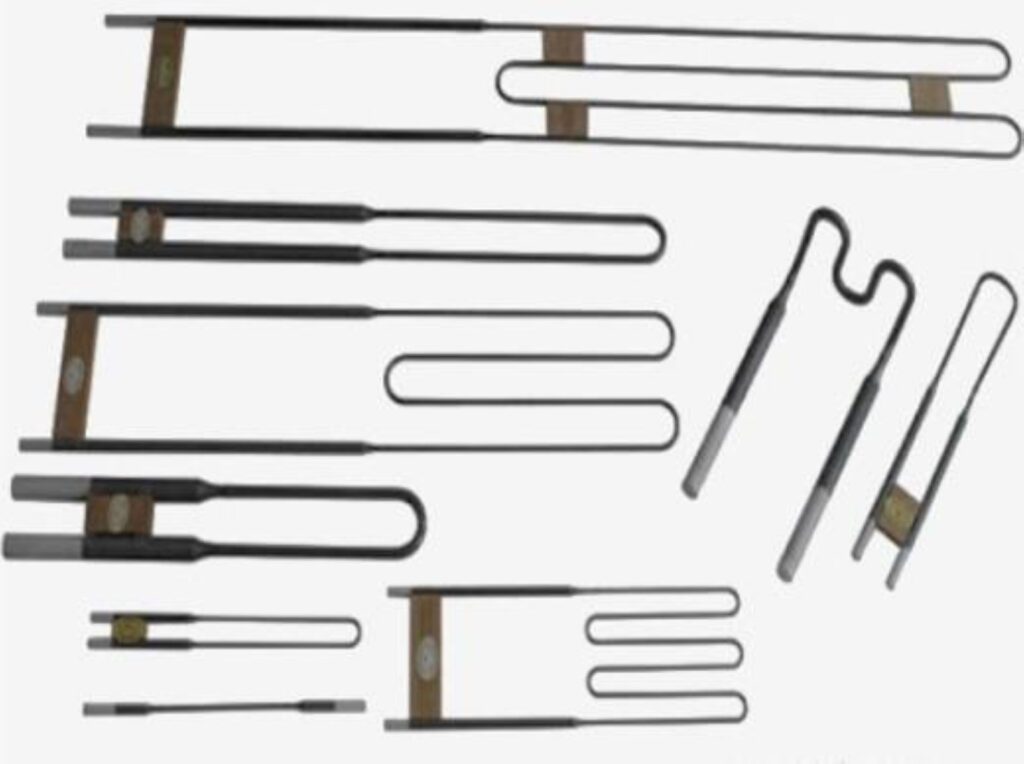
The first major factor is element size and shape. Diameter, hot zone length, cold end length, terminal section and overall geometry all influence material consumption, production complexity and inspection requirements. Larger or non-standard elements naturally cost more than standard straight or U-shaped configurations.
The second factor is working temperature. MoSi2 heaters are widely used in high-temperature furnaces, often up to 1700C or higher depending on design. Elements intended for more demanding thermal conditions usually require tighter material control and more stable manufacturing quality, which raises cost.
Another important factor is the grade and consistency of the raw material. Better-quality molybdenum disilicide material and stricter resistance tolerance help ensure uniform heating and service stability. This does not always produce the cheapest quote, but it often lowers the cost of premature failure and temperature deviation.
Customization also matters. If the replacement element must match an existing furnace exactly, especially in older imported or modified equipment, the supplier may need drawing verification, tolerance adjustments or special connector arrangements. Those engineering steps add value, but they also affect the final replacement price.
Order volume can change the unit cost as well. Buyers replacing one or two failed elements in an emergency often pay more per piece than customers placing planned batch orders. If a facility has recurring replacement demand, stocking critical sizes in advance can improve budget control.
Why the Lowest Quotation Is Often Not the Lowest Actual Cost
Many industrial buyers learn this the hard way. A low-priced MoSi2 heating element may arrive with dimensional deviation, unstable resistance or weak packaging. If the part breaks during transport or does not fit the furnace correctly, the user pays again through delays, labor loss and additional shipping.
Even when the element can be installed, poor batch consistency may create uneven heating inside the chamber. That affects product quality, temperature control and energy efficiency. In processes such as ceramic firing, zirconia sintering or powder metallurgy, those hidden losses can quickly exceed the difference between two supplier quotes.
There is also the cost of shortened service life. If an element fails too early, the buyer does not just replace a component. The business also absorbs furnace cooling time, maintenance labor, production interruption and possibly rejected output. In many factories, downtime is more expensive than the heater itself.
That is why serious procurement teams increasingly focus on replacement value rather than only purchase price. A slightly higher initial quote may be the more economical choice if it brings stable heating, longer service intervals and faster technical support when problems occur.
How to Estimate Your Total Replacement Budget More Accurately
To estimate MoSi2 heating element replacement cost in a realistic way, start with the exact element specification. Confirm model type, dimensions, resistance value, working temperature, installation method and terminal connection details. Inaccurate input data is one of the main reasons replacement projects exceed budget.
Next, calculate the quantity required. Some users replace only the failed element, while others replace a full matched set to maintain balanced electrical performance. The right choice depends on furnace age, operating history and how much deviation exists among the remaining installed elements.
Then add logistics and trade costs. International buyers should include export packing, freight method, import duty, customs clearance and inland delivery. For urgent shutdown cases, air freight may sharply increase the total bill, even if the element price itself remains unchanged.
Installation and technical support should also be included in the estimate. If your team is experienced, replacement may be routine. If not, remote guidance from the supplier can reduce the risk of mounting errors, connector damage or improper startup procedures that shorten element life.
Finally, include downtime cost. This is the item many companies ignore at first. If a production furnace remains idle for one day, the financial impact may be much greater than the spare parts invoice. A faster, better-matched replacement often saves money even when the unit price is higher.
When Should You Replace One Element, and When Should You Replace a Full Set?
This is one of the most common buyer concerns. Replacing a single MoSi2 element may seem cheaper, but it is not always the best decision. If the remaining elements have aged significantly, mixing a new element with old ones can lead to electrical imbalance and uneven chamber temperature.
In furnaces where product quality depends on precise heat distribution, partial replacement may increase process instability. Operators may then spend extra time correcting temperature profiles or adjusting power input, and the expected savings from buying fewer elements can disappear.
On the other hand, if the failure was caused by accidental mechanical damage and the rest of the set is still within a normal service condition, replacing one element may be completely reasonable. The right approach should be based on measured resistance, age profile and process sensitivity.
A qualified supplier can help evaluate this choice. Providing furnace photos, previous operating temperature, element layout and service duration often allows the engineering team to recommend whether single-piece replacement or full-set replacement is the more cost-effective path.
Which Industries Tend to Have Higher Replacement Costs?
Replacement cost is usually higher in industries with continuous high-temperature operation, frequent thermal cycling or strict product quality requirements. Lithium battery materials processing, advanced ceramics, glass treatment and powder metallurgy are common examples where stable element performance is especially important.
Dental zirconia sintering and laboratory high-temperature furnaces may also require tighter dimensional and temperature control, especially when chamber size is compact and heating uniformity matters. In these cases, the acceptable tolerance for replacement parts is smaller, which can raise manufacturing and inspection cost.
Non-ferrous metallurgy and refractory production may create additional challenges because furnace atmospheres, loading conditions or contamination risks can shorten heater life. When operating conditions are harsh, buyers should focus more on service life and matching design than on obtaining the lowest visible quote.
In other words, the more sensitive your process is to temperature stability, the more important it becomes to view MoSi2 heating element replacement cost as a production risk decision, not just a parts purchase decision.
How Can Buyers Reduce MoSi2 Heating Element Replacement Cost Without Sacrificing Quality?
One effective method is preventive planning. Instead of waiting for complete failure, monitor service time, operating resistance and furnace temperature behavior. Planned replacement reduces emergency freight cost and gives buyers time to compare suppliers, confirm drawings and consolidate orders.
Another method is to standardize specifications across similar furnace lines where possible. If your plant uses several compatible heater sizes, stocking standard spare models can reduce lead time and avoid rushed custom production. This is especially useful for facilities running multiple kilns or batch furnaces.
It also helps to work with a supplier that supports OEM and ODM customization from drawings and real operating parameters. A manufacturer that understands furnace power calculation, heating layout and working condition adaptation can often prevent repeated replacement problems caused by poor design matching.
Proper installation and operation matter just as much as procurement. Incorrect clamping force, contamination during handling, mechanical impact and improper startup can all shorten service life. A supplier that offers technical guidance may save more money over time than a cheaper seller offering no support.
What to Ask a Supplier Before Ordering Replacement Elements
Before placing an order, ask whether the supplier can confirm dimensions from your drawings or samples, verify resistance tolerance and recommend the correct element configuration for your furnace temperature range. These are basic questions, but they reveal whether the supplier understands application realities.
You should also ask about production lead time, packaging method, export experience and after-sales response speed. For international buyers, secure packaging and responsive communication are not secondary issues. They directly affect whether the replacement project stays on schedule.
It is wise to ask whether the supplier can support troubleshooting if the furnace shows abnormal heating after installation. In real operations, replacement cost includes the value of solving issues quickly. Technical support can be critical when a production line cannot afford a long shutdown.
Finally, request clarity on warranty terms, sample policy, MOQ and trade terms such as FOB, CIF or DAP. A clear commercial framework helps purchasing teams compare quotations fairly and avoid hidden handling costs later in the procurement process.
Why Manufacturer Capability Matters in 2026 Procurement Decisions
As global buyers face tighter quality expectations and more pressure to control downtime, supplier capability has become a central part of cost evaluation. A manufacturer with stable production, full-process inspection and export experience usually provides more predictable replacement performance than a trading source with limited technical depth.
Liaoyang Jiaxin Carbide Co., Ltd., founded in 2007, focuses on high-temperature industrial heating elements, silicon carbide refractory parts, graphite components and related furnace accessories. Its business covers R&D, customized production, inspection, global sales and technical after-sales service for industrial users worldwide.
For buyers of MoSi2 heaters, that matters because replacement success depends on more than shipment. It depends on drawing-based customization, resistance and dimension testing, packaging reliability and engineering support during installation and operation. Those capabilities directly influence the true replacement cost.
For furnace manufacturers and end users in ceramics, lithium battery materials, metallurgy, zirconia sintering, laboratory furnaces and refractory production, a technically capable supplier can help reduce risk from both specification errors and avoidable repeat failures.
Final Takeaway: How Should You Judge MoSi2 Heating Element Replacement Cost in 2026?
The best way to judge MoSi2 heating element replacement cost in 2026 is to treat it as a total value question. Unit price matters, but fit accuracy, service life, heating stability, delivery speed and technical support often matter more in real industrial use.
If your furnace process is valuable, continuous or quality-sensitive, the cheapest element is rarely the cheapest decision. A well-matched replacement with reliable manufacturing and responsive after-sales support usually produces the lower real cost over the full operating cycle.
For buyers comparing offers this year, the practical approach is clear: confirm specifications carefully, estimate total replacement cost instead of parts cost alone, and choose a supplier that can support both product quality and furnace application needs. That is how you make a more economical and lower-risk replacement decision.
Theo mình thì game xn88 phù hợp với người mới vì rất dễ sử dụng. TONY07-20
please add me by whatsapp :+8615804230746
email : jiaxincarbide@outlook.com
Mình thường online buổi tối và thấy sportzfy app download apk vẫn chạy mượt. TONY07-20
please add me by whatsapp :+8615804230746
email : jiaxincarbide@outlook.com