
Title:MoSi2 Element Export Trade Terms | Jiaxin Carbide
Keyword :MoSi2 element export,trade terms,Jiaxin Carbide,heating elements,alloy industry
Description :Learn FOB, CIF and DAP options for MoSi2 element export. Jiaxin Carbide helps global buyers choose the right term for safer, faster delivery.
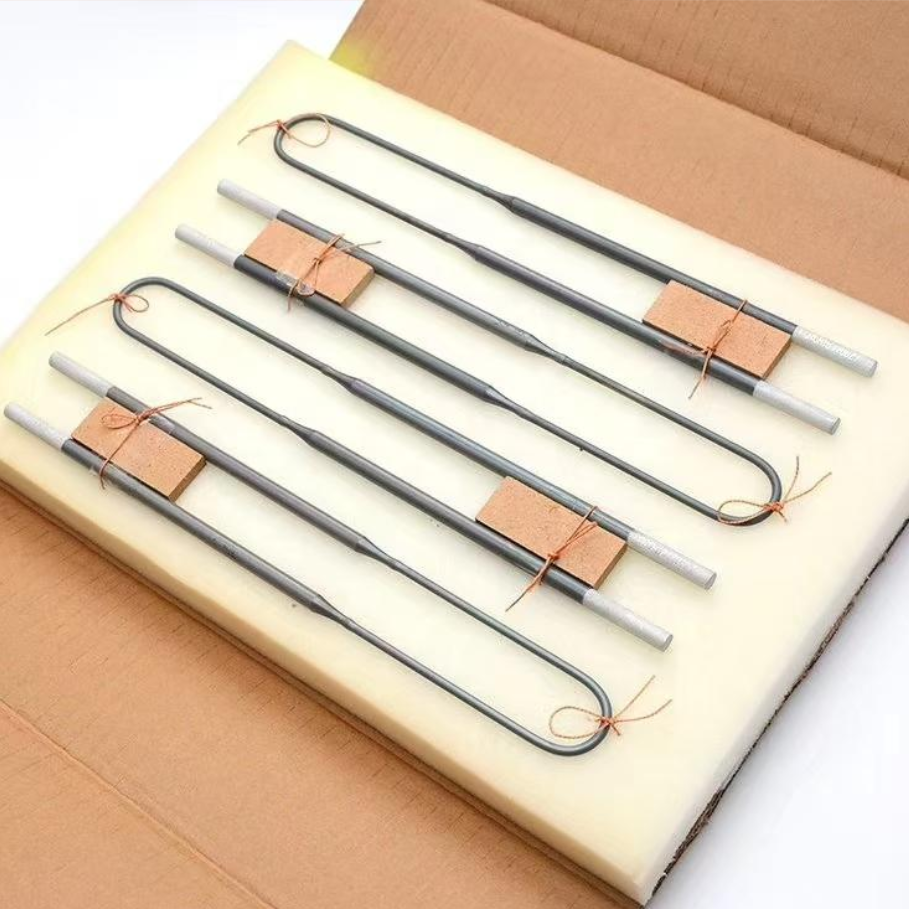
What trade terms are available for MoSi2 element export? Explore FOB, CIF and DAP options, compare costs and delivery duties, and choose the best term for safe, efficient furnace project shipping.
If you are asking what trade terms are available for MoSi2 element export, the answer depends on your purchasing process, shipping preferences and customs support needs. For global buyers of industrial heating elements, flexible terms such as FOB, CIF and DAP can help balance cost control, delivery efficiency and import convenience while reducing procurement risks.
For buyers in alloy processing, non-ferrous metallurgy, powder metallurgy, laboratory furnace manufacturing and ceramic sintering, trade terms are not just shipping language. They directly affect landed cost, customs workload, delivery responsibility, claim handling and project timing.
When exporting MoSi2 heating elements, especially customized shapes for high-temperature furnaces operating at 1300°C to 1800°C, the right Incoterm helps align technical delivery, packaging, freight and after-sales support. It is also one of the first points global purchasers should clarify before issuing samples, trial orders or batch contracts.
Liaoyang Jiaxin Carbide Co., Ltd., founded in 2007, supplies MoSi2 heaters together with SiC heaters, graphite parts, protection tubes and furnace accessories for customers across Asia, Europe, North America, Latin America, the Middle East and Africa. With independent export qualification and full-process quality control, the company supports several practical trade terms for different project types.
Common Trade Terms for MoSi2 Element Export
When discussing what trade terms are available for MoSi2 element export, the most commonly used options are FOB, CIF and DAP. Each term distributes responsibility differently between seller and buyer, especially in freight booking, insurance, customs clearance and final delivery.
For industrial alloy and furnace buyers, these differences become important when the order includes fragile U-shape or W-shape MoSi2 elements, fumigated wooden export packing, and urgent delivery windows of 7 to 25 days.
How FOB, CIF and DAP differ in practice
The following comparison shows how the main trade terms work in actual MoSi2 element export projects. It helps procurement teams understand which side controls freight, risk transfer and customs coordination at each stage.
| Trade Term | Seller Responsibility | Buyer Responsibility | Best Fit Scenario |
| FOB | Production, testing, export packing, inland transport to port, export customs | Ocean freight, insurance, destination clearance, local delivery | Buyer has own freight forwarder and wants stronger freight cost control |
| CIF | FOB scope plus sea freight and basic cargo insurance to destination port | Import customs, duty, terminal charges, inland trucking after port arrival | Buyer wants one quoted shipping cost to port and simplified shipment arrangement |
| DAP | Production, export procedures, main transport, destination delivery to named place | Import customs clearance, taxes and unloading if not otherwise agreed | Buyer needs door-side convenience for project sites, labs or furnace workshops |
In most cases, FOB is preferred by experienced importers, CIF suits buyers comparing landed cost to destination port, and DAP works well for customers who value delivery convenience over direct freight control. For fragile high-temperature alloy-related components, clear packaging and handling responsibility is as important as the nominal unit price.
Why these terms matter for MoSi2 elements
MoSi2 heating elements are not generic metal parts. They are brittle high-temperature components used in precise furnace environments. A mismatch between trade term and logistics arrangement can lead to 3 common issues: delayed customs clearance, transit breakage claims and unclear freight liability.
For example, if a buyer orders 20 to 200 pieces of customized 1700-grade elements with specified cold-end dimensions, terminal block matching and furnace layout requirements, the supplier must coordinate not only manufacturing but also safe export packaging and proper commercial documentation.
- Key export service points typically included
- Sample trial support for small qualification orders
- Reasonable MOQ depending on shape, diameter and heating zone length
- Production lead time commonly within 7 to 20 working days for standard batches
- Fumigated wooden export packaging for long-distance transport protection
- Remote installation and troubleshooting support after delivery
These service points become easier to execute when both parties define the trade term before confirming PI, drawings and payment schedule. That is why the question of what trade terms are available for MoSi2 element export should be settled early, not after production starts.
How to Choose the Right Trade Term for Your Furnace Project
The best trade term depends on order size, destination, internal import capacity and urgency. A buyer ordering replacement elements for an operating furnace has different priorities from an OEM furnace manufacturer shipping complete batches every month.
In alloy-related heating applications, downtime can be expensive. If one furnace line is stopped for even 24 to 72 hours because spare elements are late or customs documents are incomplete, the logistics decision quickly becomes a production issue.
4 practical buyer profiles and suitable terms
The table below matches common buyer situations with recommended export terms. This helps purchasers move from a general shipping question to a more operational buying decision.
| Buyer Profile | Typical Order Pattern | Recommended Term | Reason |
| Experienced importer | Monthly or quarterly bulk orders, 50 to 500 pieces | FOB | Better control of shipping line, consolidation and total logistics budget |
| New overseas buyer | First trial order, 5 to 30 pieces | CIF | Simplifies sea shipment arrangement while keeping import control at destination |
| Project-based end user | Urgent replacement for furnace maintenance shutdown | DAP | Reduces coordination work and speeds delivery to site or warehouse |
| Furnace OEM | Customized recurring orders with drawings and matched accessories | FOB or CIF | Depends on whether OEM has contracted forwarders and destination logistics team |
The main conclusion is simple: there is no single best Incoterm for every export order. The right choice comes from balancing 4 factors at once: freight control, customs ability, delivery urgency and internal purchasing manpower.
Questions buyers should confirm before quoting
- What is the delivery destination: port, city warehouse or factory site?
- Do you have your own customs broker and forwarder?
- Is the order a sample, urgent spare part batch or planned production purchase?
- Do you need sea freight, air freight or multimodal transport?
- Are the elements standard dimensions or custom-built according to furnace drawings?
With these 5 answers, a supplier can usually recommend the most practical term within 24 hours and prepare a more accurate quotation, packing list structure and delivery schedule.
Export Process, Packaging and Risk Control for MoSi2 Elements
Understanding what trade terms are available for MoSi2 element export is only part of the decision. The next step is knowing how export execution works, because trade terms must match the realities of inspection, packing and transportation.
MoSi2 elements are often ordered together with clamps, conductive belts, ceramic insulation parts or protection tubes. This means export packing should protect mixed cargo types while keeping identification clear for customs and installation teams.
Typical export workflow in 5 steps
Step 1: Technical confirmation
The supplier checks voltage, power, hot zone length, cold end size, bending type, operating temperature and furnace atmosphere. For custom orders, drawing confirmation usually prevents dimensional mismatch and installation delay.
Step 2: Quotation and trade term selection
At this stage, FOB, CIF or DAP is matched to destination and buyer workflow. For urgent requirements, air shipment may be discussed separately, especially for small batches under 50 kg to 200 kg gross weight.
Step 3: Production and quality inspection
Full-process quality control generally includes raw material review, sintering control, resistance checking and dimension verification. For export orders, buyers often expect at least 2 inspection dimensions: electrical consistency and physical tolerance.
Step 4: Packaging and export documents
Standard fumigated wooden cases are commonly used for long-distance shipping. Inside the package, layered protection and position separation help reduce breakage risk for brittle sections during handling and port transfer.
Step 5: Shipment and after-sales support
After dispatch, shipment tracking, packing details and basic installation guidance can be shared with the customer. For complex furnace systems, remote troubleshooting support after arrival is often more valuable than price-only sourcing.
Risk points to watch under different terms
The table below highlights practical risk control points for MoSi2 element export. These points matter because the product is both technical and fragile, and because different trade terms shift different responsibilities.
| Risk Point | Possible Impact | Control Suggestion |
| Incomplete dimension confirmation | Installation failure or furnace downtime | Confirm drawing, tolerance and terminal matching before PI approval |
| Weak packing for brittle elements | Transit breakage during inland movement or sea transport | Use reinforced internal support and fumigated wooden cases |
| Wrong trade term selection | Unexpected charges, delayed customs clearance, delivery disputes | Match Incoterm to actual import capability and destination handling needs |
| No spare planning for maintenance cycle | Production interruption when one element fails unexpectedly | Buy 5% to 10% spare quantity for critical furnace lines when feasible |
A well-structured export process reduces avoidable loss. In many industrial purchasing cases, the cost of one delayed furnace shutdown is much higher than the extra cost difference between two trade terms.
Frequently Asked Questions from Global Buyers
Can MoSi2 elements be exported on a sample basis?
Yes. Sample or trial orders are common, especially for first cooperation, furnace retrofit verification or replacement qualification. Small sample quantities help buyers check dimensional fit, heating performance and packaging quality before larger repeat orders.
Is DAP better than FOB for every customer?
Not always. DAP reduces coordination work, but buyers with mature import systems may prefer FOB because they can negotiate freight rates directly and combine shipments with other alloy or furnace components. The better term is the one that fits your internal process.
How long does export delivery usually take?
Production lead time often falls within 7 to 20 working days for standard or semi-custom orders, while shipping time depends on destination and transport mode. Sea freight can take several weeks, while urgent air shipments are faster but more expensive per kilogram.
What documents should buyers prepare?
At minimum, buyers should confirm consignee details, destination address, customs contact information and product specification list. For smoother import handling, they should also align HS code practice and local documentation requirements with their broker before shipment.
Can one supplier handle accessories together with the elements?
Yes, and this often improves procurement efficiency. When MoSi2 heaters, clamps, conductive belts, insulation fittings and related furnace accessories are supplied together, the buyer reduces vendor coordination time and can simplify packaging, inspection and shipment planning.
For international buyers evaluating what trade terms are available for MoSi2 element export, the practical answer usually centers on FOB, CIF and DAP. The right choice depends on whether you prioritize freight control, import convenience, delivery speed or total project coordination.
Liaoyang Jiaxin Carbide Co., Ltd. supports customized MoSi2 element export with flexible trade terms, technical confirmation, controlled lead time, standard export packaging and long-term after-sales service. If you need a quote based on drawings, furnace parameters or delivery destination, contact us now to get a tailored export solution, product details and the most suitable trade term for your order.
Pingback: How to Evaluate a Custom Shape MoSi2 Heater Manufacturer
add me by whatsapp : +8615804230746
Mình thấy slot365 win có cách bố trí rất dễ tìm kiếm trò chơi. TONY07-20
please add me by whatsapp :+8615804230746
email : jiaxincarbide@outlook.com
Mình thấy bài viết này chia sẻ khá thực tế về picasso movie . TONY07-20
please add me by whatsapp :+8615804230746
email : jiaxincarbide@outlook.com