
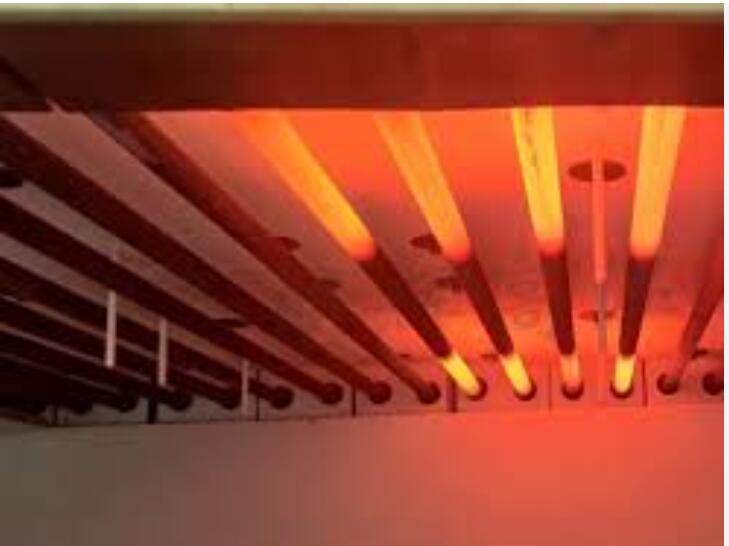
Silicon carbide (SiC) and molybdenum disilicide (MoSi2) represent two cornerstone materials in high-temperature heating technology, yet their distinct atomic structures and material properties cater to specialized industrial needs. Understanding these differences is critical for optimizing thermal processes across sectors ranging from semiconductor fabrication to aerospace engineering.
Material Composition and Fundamental Properties
SiC heaters are synthesized through the reaction of silicon and carbon, forming a covalent bond that results in a hard, crystalline structure. This composition grants SiC exceptional thermal conductivity (85-120 W/m·K), comparable to metals like aluminum. In contrast, MoSi2 heaters are intermetallic compounds composed of molybdenum and silicon, featuring a layered structure that provides high-temperature stability but lower thermal conductivity (about 50 W/m·K). These disparities directly influence their performance in heating applications.
Thermal Performance and Oxidation Resistance
SiC heaters excel in environments up to 1,600°C, maintaining structural integrity due to the formation of a protective SiO₂ layer when exposed to oxygen. This layer self-heals at high temperatures, preventing further oxidation. MoSi2 heaters, however, can operate at even higher temperatures (up to 1,800°C) and form a more robust silica glass layer. This layer offers superior oxidation resistance but becomes vulnerable in low-oxygen or reducing atmospheres where volatile MoO₃ can form, leading to material degradation.
Electrical and Mechanical Behavior
SiC exhibits semiconductor properties, with resistivity decreasing as temperature rises. This allows for precise temperature control through electrical input modulation. MoSi2, conversely, behaves as a metallic conductor at high temperatures, requiring careful power regulation to avoid thermal runaway. Mechanically, SiC’s hardness (Mohs 9.5) and low thermal expansion coefficient (4.5×10⁻⁶/K) make it resistant to thermal shock, while MoSi2’s brittleness (KIC ~2 MPa·m½) necessitates engineered support structures to prevent cracking under mechanical stress.
Application-Specific Advantages
In semiconductor manufacturing, SiC heaters are the preferred choice for rapid thermal processing (RTP) due to their fast heat-up rates (up to 100°C/second) and uniform temperature distribution (±1°C). Their resistance to corrosive gases like HCl and NF₃ also extends service life in chemical vapor deposition (CVD) chambers. MoSi2 heaters dominate in aerospace material testing, where ultra-high temperatures are required to simulate reentry conditions for heat shields. They are also indispensable in sintering advanced ceramics like silicon nitride and zirconia, where precise temperature profiles above 1,700°C are critical.
Cost-Effectiveness and Lifecycle Considerations
SiC heaters generally offer a lower initial investment and longer lifespan in oxidizing environments, making them ideal for continuous industrial processes. MoSi2 heaters, while more expensive, provide unmatched performance in niche high-temperature applications. However, their susceptibility to thermal cycling fatigue and environmental degradation in certain atmospheres may increase long-term operational costs if not properly managed.
Selecting the Right Material for Your Needs
When choosing between SiC and MoSi2, engineers must evaluate factors beyond peak temperature requirements. Chemical compatibility, thermal response time, power density, and budget constraints all play pivotal roles. For applications involving frequent start-stop cycles or exposure to reactive gases, SiC’s robustness often outweighs its limitations. Conversely, MoSi2’s unique ability to maintain stability at extreme temperatures makes it indispensable for cutting-edge research and specialized manufacturing processes.
By leveraging the strengths of each material, industries can achieve optimal efficiency, reduce downtime, and enhance product quality. As materials science advances, ongoing innovations in SiC and MoSi2 composites continue to push the boundaries of high-temperature engineering, promising even greater performance and reliability in the future.