
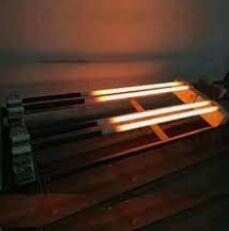
In industrial furnace applications, choosing the right heating element is crucial for efficiency and performance. Two common options are SiC (Silicon Carbide) heating elements and MoSi2 (Molybdenum Disilicide) heating elements. Let’s compare them to help you make an informed decision.
First, let’s look at SiC heating elements. They are made from silicon carbide, a robust ceramic material. SiC elements work well in medium to high-temperature environments, typically up to 1600°C. They are known for their good thermal conductivity, which helps distribute heat evenly in the furnace. Also, they have a relatively long lifespan under proper operating conditions.
On the other hand, MoSi2 heating elements are composed of molybdenum and silicon. They excel in higher temperature ranges, often reaching up to 1800°C or more. This makes them suitable for extreme heat applications. MoSi2 elements are also resistant to oxidation at high temperatures, which is a big advantage in certain industrial processes.
When it comes to thermal shock resistance, SiC heating elements are more sensitive. Rapid temperature changes can cause them to crack. In contrast, MoSi2 heating elements handle thermal shocks better. This makes MoSi2 a better choice for furnaces with frequent temperature fluctuations.
Installation and maintenance are other key factors. SiC elements are generally easier to install due to their simpler design. They also require less frequent replacement in moderate temperature settings. However, MoSi2 elements, while a bit trickier to install, offer better performance in high-heat, harsh environments, which can offset maintenance efforts.
Cost is another consideration. SiC heating elements are usually more affordable upfront. Yet, MoSi2 elements might be more cost-effective in the long run for high-temperature applications because of their durability in extreme conditions.
In terms of application scope, SiC heating elements are widely used in industries like ceramics, glass, and metallurgy. They are ideal for processes that require stable heat output at medium to high temperatures.
MoSi2 heating elements, on the other hand, are preferred in industries where extremely high temperatures are needed. Examples include advanced ceramics sintering, semiconductor manufacturing, and certain metal heat treatments. Their ability to withstand higher temperatures without degrading makes them valuable in these demanding settings.
To sum up, SiC heating elements are a reliable choice for medium to high-temperature industrial furnaces, offering good performance at a reasonable cost. MoSi2 heating elements, meanwhile, are the go-to option for extreme high-temperature applications, providing superior heat resistance and durability. Your specific temperature requirements, operating conditions, and budget will guide which one is best for your industrial furnace.
Hello. And Bye.
BYE