
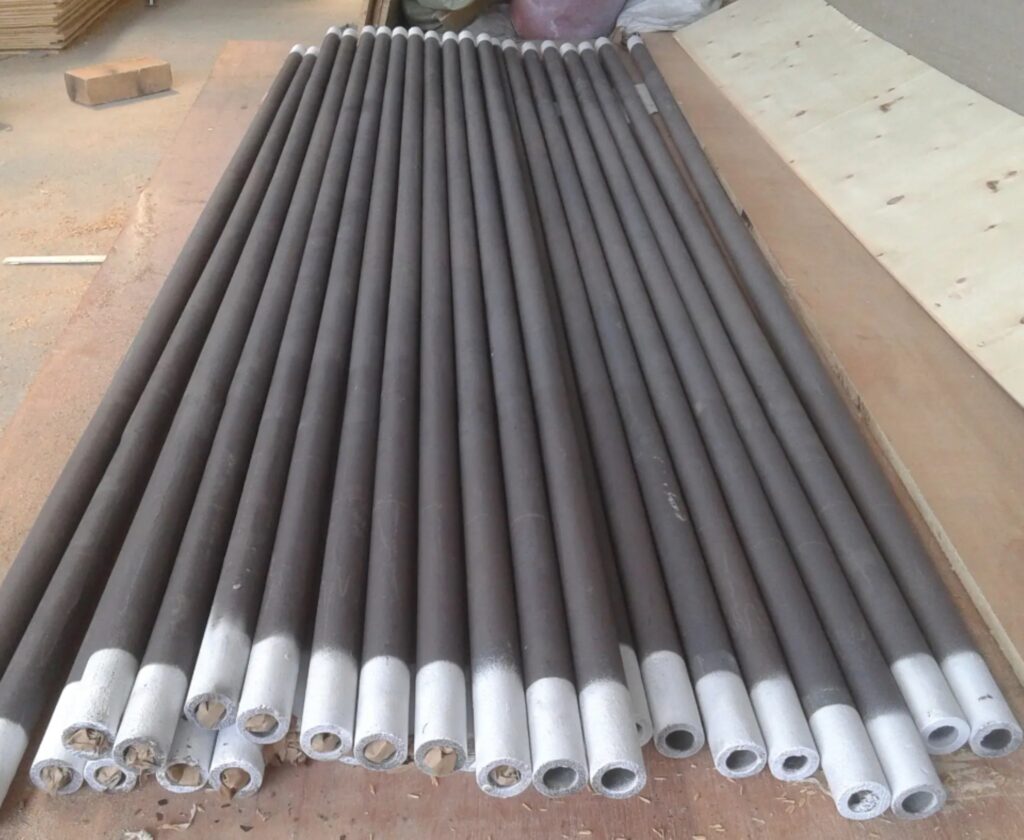
In various industries, from manufacturing to advanced technology, the demand for materials that can endure extreme conditions is constantly on the rise. Among these, the question of whether certain substances can withstand high temperatures is of particular interest. Have you ever wondered which materials can endure extremely high temperatures? One material that stands out prominently is silicon carbide. So, can silicon carbide withstand high temperature? The answer is a resounding yes.
To understand the significance of silicon carbide’s high – temperature resistance, we first need to know the challenges high temperatures pose to materials. At high temperatures, most materials experience structural degradation, melting, or chemical reactions that compromise their integrity. For instance, common metals like iron start to lose their strength at around 400°C and melt at 1538°C. This is where silicon carbide shines.
Silicon carbide has an impressive high – temperature resistance. In an air environment, it can endure temperatures as high as 1600°C. But how does it manage to do this? Well, when the temperature reaches 1200°C, something remarkable happens. Silicon carbide forms a protective silicon oxide coating on its surface through a process called passivation. This coating acts like a shield. It effectively prevents the material from oxidation, a common issue at high temperatures. Additionally, it also protects silicon carbide from other chemical reactions that could potentially damage the material. This protective layer not only safeguards the internal structure of silicon carbide but also maintains its mechanical and physical properties, such as hardness and electrical conductivity, even in searing heat.
The applications of silicon carbide’s high – temperature resistance are far – reaching. In the automotive industry, it is used in high – performance engines. The engine compartments of modern cars can reach very high temperatures during operation. Silicon carbide components can withstand these heat levels, improving engine efficiency and reducing fuel consumption. In the power generation sector, especially in advanced gas turbines, silicon carbide parts enable the turbines to operate at higher temperatures. This higher operating temperature means more efficient energy conversion, leading to increased electricity output. Moreover, in the emerging field of space exploration, where spacecraft face extreme heat during re – entry into the Earth’s atmosphere, silicon carbide is considered a promising material for heat – shield components.
Compared with other high – temperature – resistant materials, silicon carbide has distinct advantages. Traditional ceramics, while also having good heat resistance, may lack in mechanical strength and durability. Refractory metals, on the other hand, are often heavy and expensive. Silicon carbide, with its combination of high – temperature resistance, relatively low density, and reasonable cost, offers a more practical solution for many high – temperature applications.
In conclusion, silicon carbide’s unique ability to form a self – protective layer makes it an excellent choice for high – temperature applications. Whether in industrial furnaces or aerospace components, silicon carbide’s high – temperature resistance makes it a reliable and durable material. As industries continue to seek more efficient and high – performing materials, the role of silicon carbide in high – temperature scenarios is likely to become even more crucial in the future.