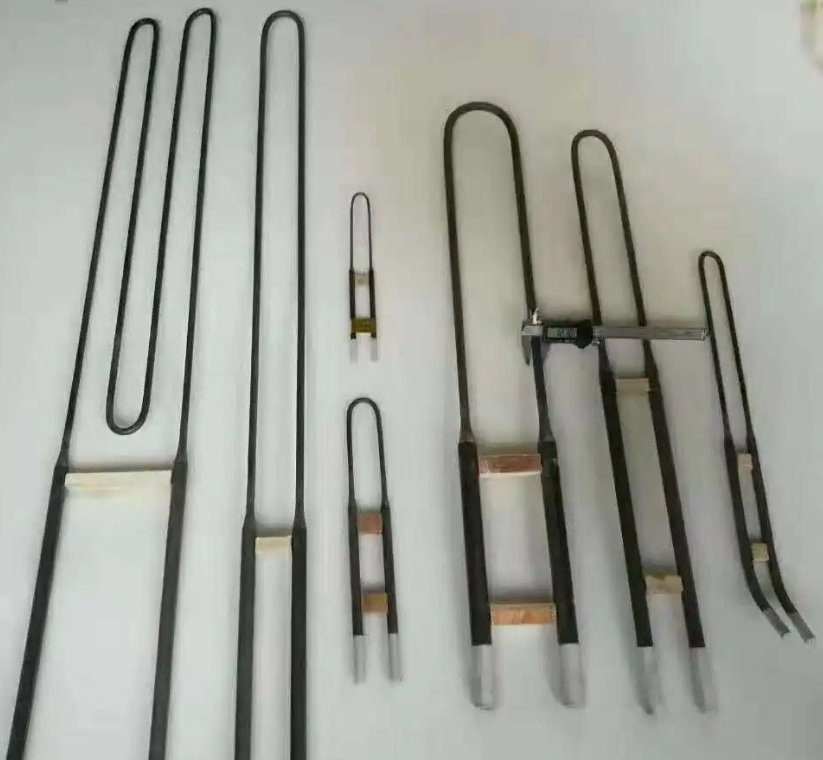
Choosing the right mosi2 furnace heating element is critical for stable high-temperature performance, energy efficiency, and service life.
The practical challenge is simple.
A furnace may reach the target temperature, yet still fail in uniformity, element life, or operating cost.
That usually comes from a mismatch between temperature rating, element shape, and physical size.
A good selection process focuses on furnace design, atmosphere, workload, cycle pattern, and installation space.
This guide breaks down how to evaluate a mosi2 furnace heating element in a way that supports reliable purchasing decisions.
Start with the Real Operating Temperature
Temperature is the first filter for any mosi2 furnace heating element selection.
But the rated temperature on paper is not enough.
The more useful question is the actual element surface temperature during production.
For example, a furnace chamber set at 1600°C may push the element much higher.
That gap becomes larger when loading is heavy, heat loss is high, or insulation is weak.
In practical evaluation, check these points first:
- Maximum continuous furnace temperature
- Peak temperature during cycles
- Heating and cooling frequency
- Load density and product mass
- Heat loss through doors, vents, and insulation
- Furnace atmosphere and contamination risk
A mosi2 furnace heating element performs best when it has a temperature margin.
That margin helps reduce overload, hot spots, and accelerated aging.
It also gives more stable resistance behavior over long production runs.
If the furnace often runs near the limit, choosing the lowest acceptable grade is usually a false economy.
Match the Element Shape to the Furnace Layout
Shape is not just a mechanical detail.
It directly affects heat distribution, installation method, replacement speed, and electrical connection design.
Common mosi2 furnace heating element shapes include U type, W type, straight type, and custom bent designs.
U Type for General Industrial Furnaces
U-shaped elements are widely used because they fit many chamber layouts.
They are suitable for side-wall or top-mounted heating arrangements.
This shape is often preferred when maintenance access is limited but regular replacement is expected.
W Type for Higher Power Density
A W-shaped mosi2 furnace heating element provides a longer hot zone within the same opening.
That can improve heat output where installation space is restricted.
It is useful for compact furnaces that still need strong thermal response.
Straight Type for Special Designs
Straight elements are less common in standard chamber furnaces.
They are more often used in custom systems or laboratory equipment.
The main benefit is layout flexibility, but support design becomes more critical.
When comparing shapes, look beyond the drawing.
Review thermal uniformity, terminal position, suspension method, and access for future replacement.
A shape that saves space today can create long shutdowns later.
Choose the Right Size, Not Just a Standard Size
Size selection determines whether the mosi2 furnace heating element will run efficiently and safely.
The key dimensions usually include hot zone length, cold end length, diameter, center distance, and overall length.
Each one matters.
If the hot zone is too short, heating can become concentrated.
If it is too long, the temperature field may spread unevenly.
If the cold end is undersized, terminal overheating becomes more likely.
A practical sizing review should cover:
- Chamber width, height, and effective heating zone
- Wall thickness and mounting hole dimensions
- Required voltage, current, and total power
- Target watt loading per element
- Spacing between neighboring elements
- Clearance from insulation and workpieces
Many selection problems start with using a convenient catalog size.
That works only when the furnace geometry truly matches the design assumptions.
For retrofit projects, measure the actual furnace instead of relying on legacy drawings.
Small dimensional errors can lead to poor contact, thermal stress, or premature fracture.
Do Not Ignore Atmosphere, Insulation, and Support Materials
A mosi2 furnace heating element does not work alone.
Its performance depends on the full thermal system.
Atmosphere affects oxidation behavior, contamination, and long-term resistance change.
Insulation quality affects how hard the element must work to hold temperature.
Support materials affect mechanical stability around the mounting area.
In some furnace designs, using proper insulation upgrades can extend element life more than changing the element itself.
For example, a well-chosen ceramic fiber board can help reduce heat loss and improve temperature retention.
That lowers unnecessary stress on the mosi2 furnace heating element during holding periods.
This is especially relevant in batch furnaces with frequent door opening.
Also review whether vapors, dust, glaze, or metal oxides may contact the hot zone.
Even a correctly sized element can fail early in a contaminated chamber.
Compare Electrical Design Before Final Approval
Electrical matching is often checked too late.
That creates avoidable problems during commissioning.
A mosi2 furnace heating element must fit the transformer capacity, control method, and circuit arrangement.
Check the element resistance at operating temperature, not only at room temperature.
Then confirm phase balance, current limits, and terminal connection reliability.
Useful approval questions include:
- Can the existing power supply support startup and stable holding?
- Will the selected element resistance keep current within design range?
- Is the parallel or series configuration suitable for maintenance and balancing?
- Are clamps and braided connectors sized for long-term thermal cycling?
This stage also helps compare vendors more fairly.
Two elements may look similar in dimensions, yet differ in resistance stability and usable life.
Use a Risk-Based Evaluation Checklist
A solid selection process should reduce technical risk before purchase.
The best approach is to review the mosi2 furnace heating element against failure points, not just specification tables.
- Risk of underestimating real thermal load
- Risk of poor heat uniformity from wrong shape
- Risk of installation interference from wrong size
- Risk of terminal overheating from short cold ends
- Risk of contamination from process atmosphere
- Risk of downtime from difficult replacement access
- Risk of overspending on unnecessary temperature grade
This kind of checklist keeps the decision grounded in operating reality.
It also makes internal comparison easier when multiple furnace lines have different process conditions.
Supplier Capability Still Matters
Even a correct specification needs reliable manufacturing support.
Liao yang jia xin carbide co ltd is a high and new technology enterprise focused on SiC heating elements, MoSi2 heating elements, silicon carbide protective pipes, and graphite products.
Established in 2007, the company brings more than 20 years of production experience.
Its products are exported to the USA, Germany, France, Poland, Spain, Turkey, Russia, Ukraine, Japan, Korea, Singapore, Vietnam, Thailand, and Iran.That background matters when custom dimensions, stable quality, and
replacement consistency are part of the evaluation.
A capable supplier should provide clear dimensional confirmation, electrical data, and application guidance for the selected mosi2 furnace heating element.
Final Selection Logic
A strong mosi2 furnace heating element choice follows a clear order.
- Define the true operating temperature and cycle pattern.
- Select the shape that fits the heating layout and maintenance path.
- Confirm exact size from real furnace measurements.
- Review atmosphere, insulation, and support materials.
- Verify electrical compatibility and replacement strategy.
That sequence helps avoid the most common selection errors.
It also improves the odds of longer service life, steadier furnace performance, and lower total operating cost.
When temperature, shape, and size are matched carefully, a mosi2 furnace heating element becomes a stable production asset rather than a recurring maintenance problem.
Sau khi tham gia thop tv for android tv , mình thấy mọi thao tác đều khá dễ hiểu. TONY07-20
please add me by whatsapp :+8615804230746
email : jiaxincarbide@outlook.com
Chơi ở slot365 poker cảm giác khá thoải mái và ít gặp lỗi đăng nhập. TONY07-20
please add me by whatsapp :+8615804230746
email : jiaxincarbide@outlook.com