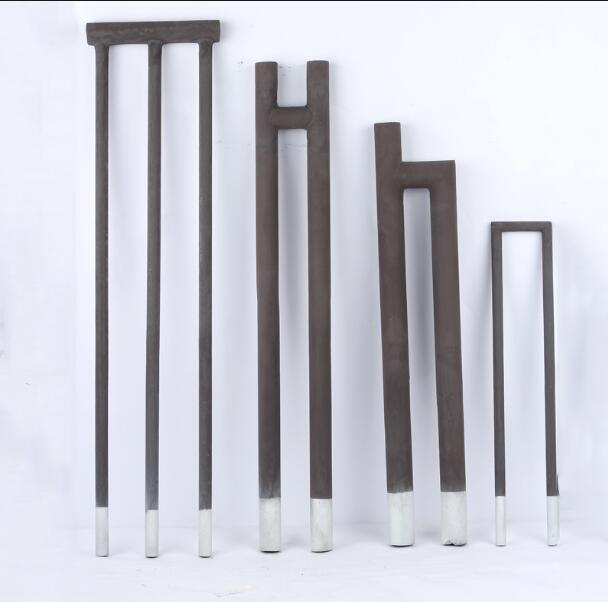
India’s rapid industrialization, coupled with its ambitious EV and renewable energy goals, demands robust heating solutions that withstand extreme conditions. Silicon carbide (SiC) heating elements, with their exceptional resistance to high temperatures, corrosion, and voltage fluctuations, have emerged as the ideal choice for industries ranging from steel processing to electric vehicle battery manufacturing. At Jiaxin Carbide, we specialize in delivering cutting-edge SiC heating elements designed to meet India’s unique operational requirements.
Why Silicon Carbide Heating Elements Excel in India’s Market
Unmatched High-Temperature Performance
SiC heating elements can operate efficiently at temperatures up to 1600°C , making them ideal for India’s energy-intensive industries like ceramics, glass melting, and metallurgy. Unlike traditional metal elements, SiC maintains structural integrity even in oxidizing environments, ensuring long-term reliability in India’s harsh industrial settings.
Optimized Resistance for 230V/50Hz Systems
India’s standard voltage (230V) and frequency (50Hz) require precise resistance design to avoid energy losses. Jiaxin Carbide’s elements are engineered with a high cold-to-hot resistance ratio, ensuring stable power output and energy efficiency under Indian grid conditions . This feature reduces downtime and lowers operational costs for industries such as foundries and heat treatment facilities.
EV and Renewable Energy Applications
The surge in India’s EV sector demands advanced heating solutions for battery production. SiC heating elements are critical for battery electrode sintering and thermal management systems, where uniform heat distribution and rapid response are essential . Additionally, in solar panel manufacturing, our elements enable precise temperature control during silicon wafer annealing, enhancing panel efficiency and durability .
Corrosion and Oxidation Resistance
Indian industries often operate in corrosive environments (e.g., chemical processing, waste incineration). SiC’s natural resistance to chemical degradation and its protective SiO₂ layer formed during operation make our elements a cost-effective choice, reducing replacement frequency and maintenance overhead.
Key Technical Advantages
- Resistance Stability: SiC’s resistivity (600–1400 Ω·mm²/m at 1050°C) ensures consistent heating performance across temperature ranges .
- Surface Load Optimization: Our elements are designed to handle recommended surface loads (W/cm²) to prevent premature failure, even in high-duty cycles .
- Customization: We offer tailored geometries (rod, U-shaped, or special designs) to fit India’s diverse furnace configurations, including those used in the country’s growing EV battery kilns .
Why Choose Jiaxin Carbide for India’s Market?
- Localized Expertise: We understand India’s industrial challenges, from voltage fluctuations to extreme heat. Our elements are tested to meet IS standards and integrate seamlessly with Indian-made furnaces.
- Cost-Effective Solutions: As a leading Chinese manufacturer, we combine advanced technology with competitive pricing, offering 30–50% cost savings compared to European/US suppliers without compromising quality .
- Sustainability: Our energy-efficient elements align with India’s carbon neutrality goals, reducing energy consumption by up to 20% compared to traditional heating systems .
Applications Across Indian Industries
- Steel & Foundries: Forging and heat treatment furnaces.
- Ceramics & Glass: Kilns for tile, pottery, and glass melting.
- EV Manufacturing: Battery electrode sintering and thermal management.
- Renewable Energy: Solar panel production and biomass gasifiers.
Conclusion
Jiaxin Carbide’s silicon carbide heating elements are engineered to empower India’s industrial growth, EV revolution, and renewable energy ambitions. With superior resistance to heat, corrosion, and voltage variations, our solutions deliver unmatched reliability and efficiency. Contact us today to explore how our tailored SiC elements can optimize your processes while reducing operational costs.