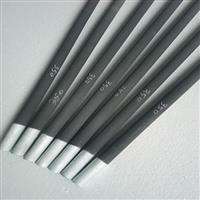
Bangalore’s R&D labs are at the forefront of innovation, tackling projects that demand extreme heat. From material science to advanced ceramics research, high-temperature environments are essential. In these settings, SiC Rods have proven to be invaluable, thanks to their exceptional high-temperature performance.
Firstly, SiC Rods thrive in extreme heat. Many lab experiments require temperatures exceeding 1600°C, a range where traditional heating elements fail. SiC Rods, however, maintain their structure and efficiency even at these levels. This ability ensures experiments run smoothly without interruptions from equipment breakdowns.
Moreover, they offer stable heat output. Consistency is key in research, as even small temperature fluctuations can ruin results. SiC Rods deliver steady heat across their surface, providing the uniform conditions labs need. Whether testing new alloys or synthesizing ceramics, this stability makes them a reliable choice.
Additionally, SiC Rods heat up quickly. Labs often work on tight schedules, and waiting for heating elements to reach target temperatures wastes time. SiC Rods reduce this wait, reaching high temperatures in minutes. This speed cuts down on experiment duration, allowing researchers to complete more work in less time.
Another advantage is their resistance to thermal shock. R&D labs frequently adjust temperatures during experiments, which can damage fragile heating elements. SiC Rods handle rapid temperature changes well, avoiding cracks or breaks. This durability lowers replacement costs and reduces downtime for repairs.
Local labs in Bangalore have already seen the benefits. A materials research lab recently switched to SiC Rods for their high-temperature furnace. They reported more accurate results and a 30% reduction in equipment maintenance. Such success stories highlight why more labs are choosing SiC Rods.
In conclusion, SiC Rods are a top choice for Bangalore’s R&D labs due to their ability to perform in extreme heat, deliver stable output, heat quickly, and resist thermal shock. They support precise, efficient research, making them a vital tool for innovation.